
Simple Homemade Curry Powder
Curry powder is a blend of spices that come together to give a warm and robust flavor to whatever dish it is used in.
Traditional Indian curries get their flavor from whole spices that are toasted and ground as needed for cooking (and vary depending on the dish). But, our simple homemade curry powder is an easy way to have easy, instant access to a great starting place for curry flavor. And it uses spices that you probably already have in your pantry!
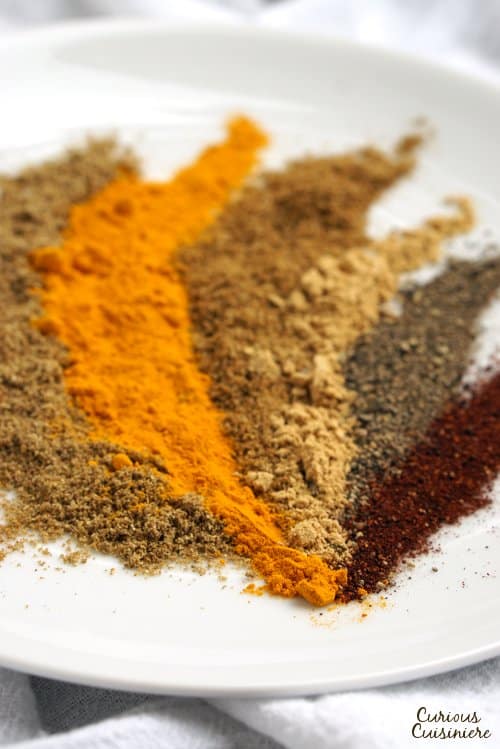
Is curry powder Indian?
You've probably seen jars of curry powder in the spice aisle and figured this mix was essential in creating Indian dishes. The interesting thing is that you won't find curry powder in India.
The concept of "curry powder'" is actually a Bristish invention by the Indian spice merchants. It was an attempt to bring the flavor of Indian dishes that British colonists came to love home.
Where does the term "curry" come from?
In fact, the term "curry" is a British take on the Tamil word "kari" which refers to meat.
From the British colonizers to American useage, the word curry has now become common to describe many types of seasoned dishes with South Asian origin.
Really, the term "curry" could be used as a substitute for the word "masala" which means a "mix of spices".
All Indian dishes start start with a specific masala (spice mix). These mixes can vary from region to region and household to household, as well as from dish to dish.
What is curry powder?
The spice blend that the British created was loosely based on the North Indian spice mix garam masala.
As the mix became popular in America, unfortunately, "curry powder" became synonymous with Indian curry, which is quite a misrepresentation of the vast array of Indian curries and flavors that they bring.
However, a pantry curry powder is a great way to easily lend some Indian-inspired flavors to your cooking.
As we dive into the possible ingredients below, you will see that the list is quite varied, which will hopefully encourage you to try adding some new spices to your curry powder, or try out a curry that uses toasted spices.
What are the ingredients in curry powder?
Since the term "curry" is so general and not well defined, you will find the spice mixture used to make up a "standard" curry powder differs greatly from jar to jar.
In India, each family has their own preference for how they put spices together for their masalas.
Think about it like the way an Italian Grandmother would season her meatballs or pasta sauce. There's no ONE gold standard Italian recipe for either of those. The flavors will vary from region to region and chef to chef.
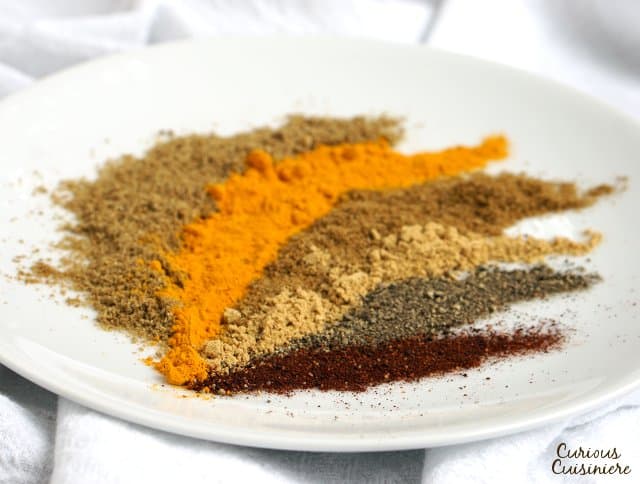
Most curry powder recipes do include a few common ingredients:
- coriander
- turmeric
- cumin
- chili peppers
Other spices that could be added are:
- fenugreek
- ginger
- garlic
- fennel
- caraway
- cinnamon
- clove
- mustard
- nutmeg
- black pepper
And the list goes on.
Each region in India, each family, and each dish have their own twist on what spices are commonly used. While you won't find ALL of these spices in any one Indian masala, they appear in different combinations throughout the country.
As you can see, once you have the basics, there are SO MANY ways you could tweak your own curry powder recipe to make it your own.
How to make homemade curry powder from scratch
Traditionally, a masala (spice mix) is made by first toasting whole spices. Toasting releases some of the oils in the spices and makes the mixture more fragrant.
The toasted and cooled spices are then ground finely in to a powder or pounded into a paste and then used for the day's dish.
Typically, this spice mixture is made fresh for each dish. That way, Indian chefs and home cooks really aren't tied to any one flavor combination. (Like a set "Italian seasoning blend".) They can vary the flavors, sweetness, heat, and so on, of their curry powder spice mix depending on what flavors they are looking for in their dish.
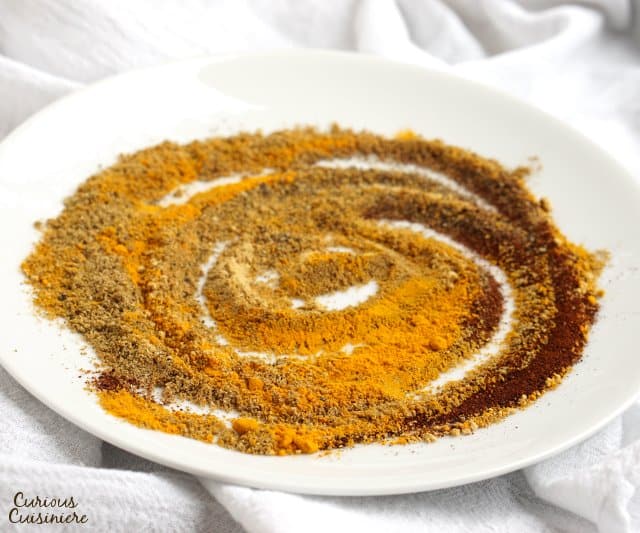
Our easy homemade curry powder recipe
While toasting whole spices and grinding them fresh for each recipe will give you the most fragrant and flavorful curry powder, sometimes you just want easy access to curry powder, without the extra steps.
Our goal with today's recipe is to give you a recipe you can have pre-mixed, on-hand to make your weeknight-cooking easier.
We chose ingredients for our curry powder that you probably already have in your pantry.
- coriander
- cumin
- turmeric
- black pepper
- chili powder
- ginger
We take a shortcut and use each of these spices in their already ground form, so all you have to do is mix them together.
Seriously, we told you this curry powder was really easy to make!
(As a side note, you can always purchase these spices in their whole, dried form, lightly toast them over medium-low heat in a dry pan until fragrant, let them cool, then grind them.)
Substituting ingredients in this curry powder
If you do find yourself wanting a bit of a different flavor in your curry powder, feel free to use our recipe as a springing off point.
Add some of the other ingredients we mentioned earlier. Whichever sound like they'll go well with the dish you're making.
With this easy curry powder recipe, making curry powder isn't much of a commitment at all. So you can add a pinch of this and a dash of that and not have to worry about re-toasting and re-grinding small additions of spices as you find your perfect curry powder.
(Or, find your perfect blend using the ground spices and then give your blend a try using whole spices. See what you think of the flavor difference between pre-ground and whole.)
How to store homemade curry powder
You will want to store your homemade curry powder in a glass jar with a well-fitting lid, in the pantry, away from heat and moisture.
Using pre-ground spices it will stay fresh for about 1-2 months. After that it will still be good, but you may notice that the flavor isn't quite as strong.
If you decide to use whole spices and grind them yourself, your mixture will store for a bit longer (2-3 months) before it starts to slowly lose flavor intensity.
What is the difference between curry powder and garam masala?
Garam masala and curry powder are both spice blends that are often called for in Indian recipes. However, garam masala is a spice blend that is used in many traditional Indian kitchens, while curry powder (like we discussed above) is not.
Garam masala means 'hot spice', its name comes not from heat, but from the warming nature of the spices.
It does not include turmeric (like curry powder does), and so is more brown in color.
It does include spices like coriander, cumin, black pepper (similar to curry powder) along with cinnamon, cardamom, and cloves which give it a more sweet flavor.
Garam masala is added to the end of cooking to give warm flavor to the dish. (Curry powder is typically added towards the beginning of cooking.)
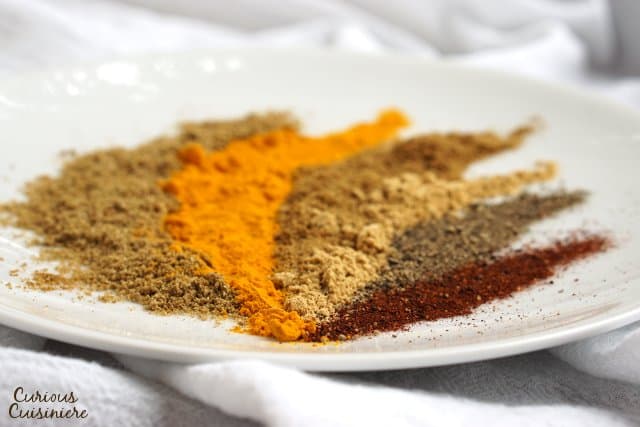
How to use curry powder
Curry powder is truly a unique combination of spices. It's slightly sweet, slightly savory, quite earthy, with a bit of heat.
The nice thing about curry is that you can use pretty much anything you have on hand to make a delicious curry. Here are some of our favorite, easy curry recipes:
- Cauliflower and winter squash curry
- Paneer and potato curry
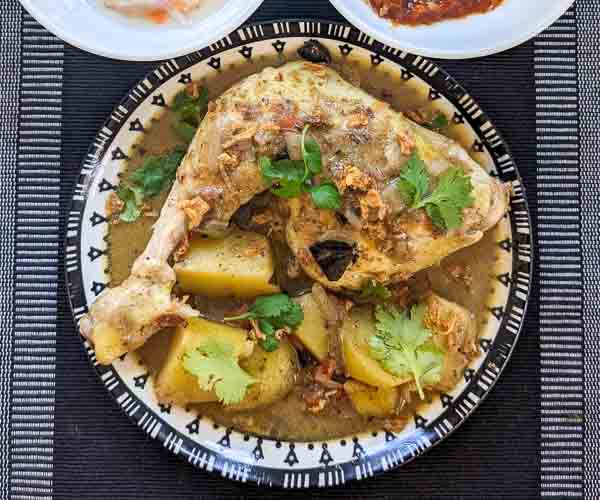
- Kenyan coconut chicken curry
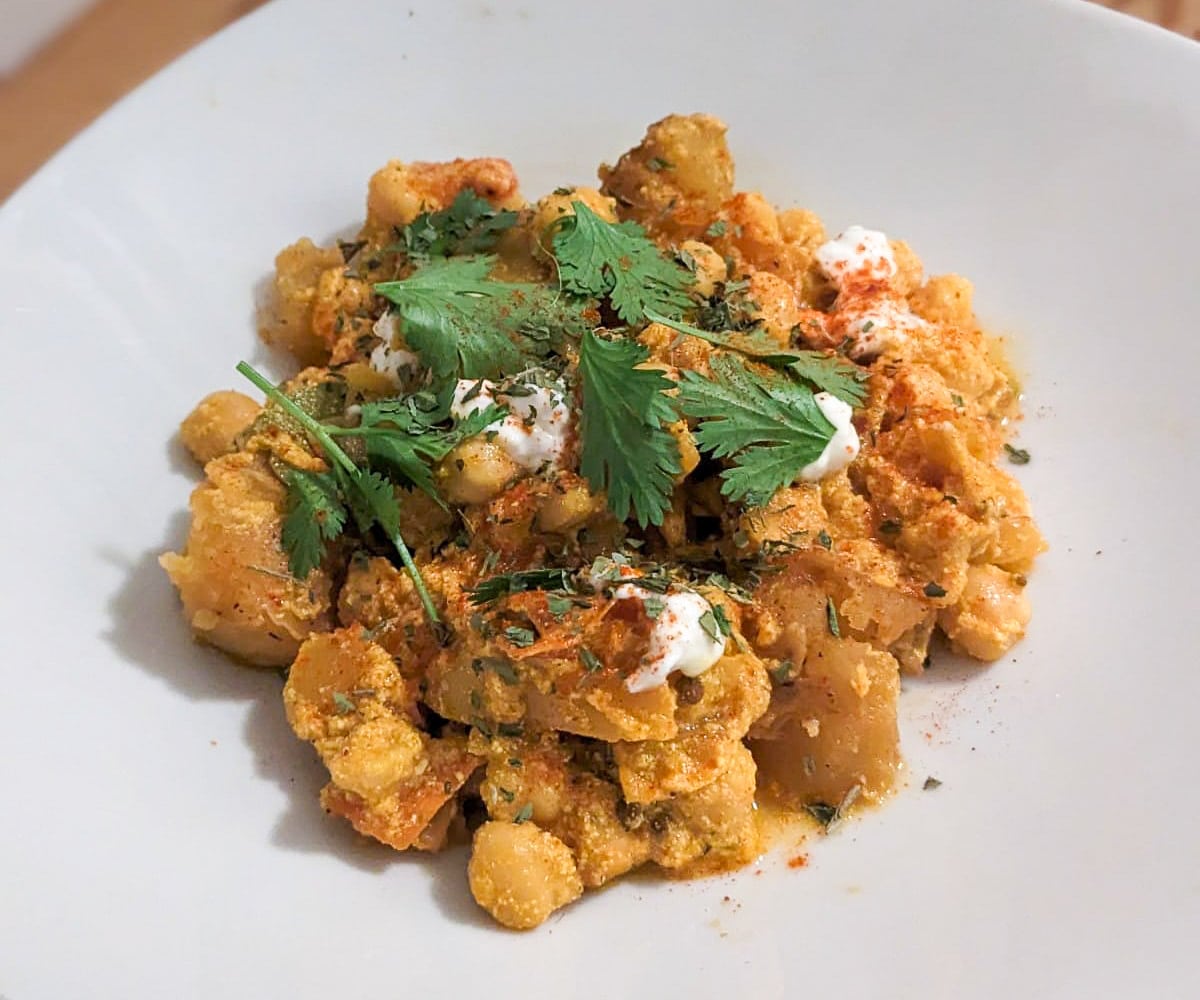
- Curried chickpeas
- Singapore noodles
- Shri Lankan chicken curry
You also use curry powder in South African dishes like bobotie and bunny chow.
And, you can't talk about curry powder without mentioning the classic German take on curry: currywurst!
So the next time you find yourself craving curry with no curry powder in sight, don't worry. Just whip up a quick batch of this easy curry powder!
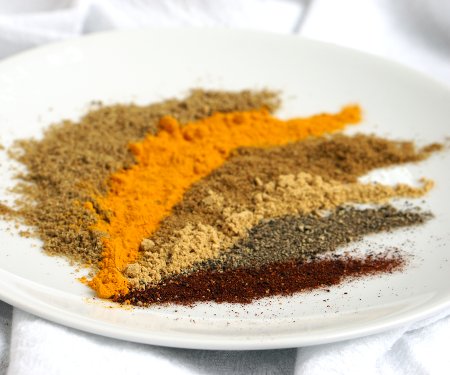
Easy Homemade Curry Powder (Small Batch)
Ingredients
- 1 Tbsp ground coriander seeds
- 1 ½ teaspoon cumin
- 1 teaspoon turmeric
- ½ teaspoon ground black pepper
- ½ teaspoon chili powder
- ½ tsp ground ginger
Instructions
- In a small bowl, mix all the ground spices.
- Use immediately, or store in an air-tight container in a cool, dry place for up to 2 months.
Notes

Sarah founded Curious in 2010 as a way to save her recipe creations and share culinary experiences. Her love for cultural cuisines was instilled early by her French Canadian Grandmother. Her experience in the kitchen and in recipe development comes from over 10 years working in professional kitchens. She has traveled extensively and enjoys bringing the flavors of her travels back to create easy-to-make recipes.

Hi Sarah,
Great recipe... do you have any ideas about how to use the powder to make a really simple chicken curry?
Thank you,
Dave
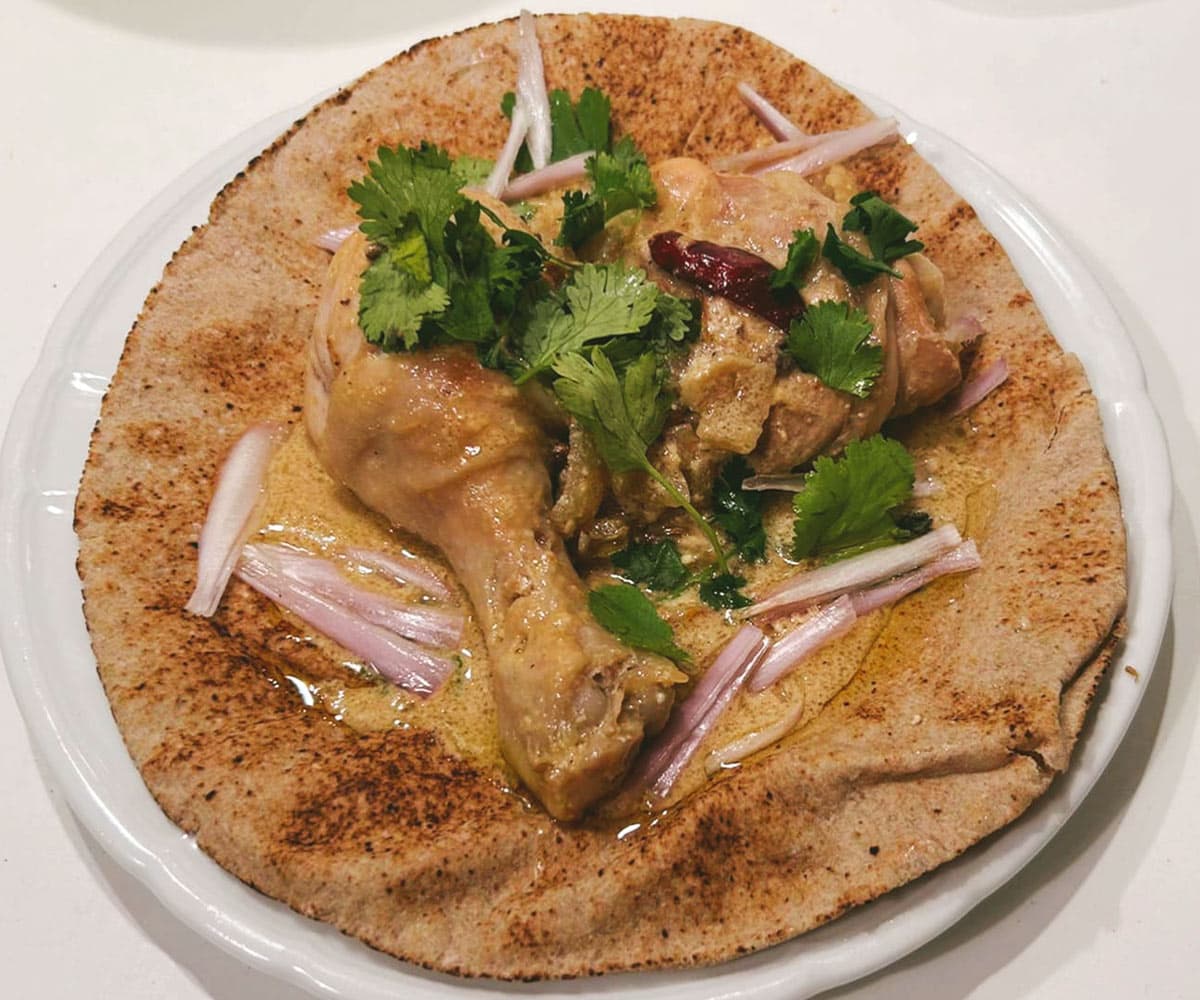
Hi Dave. We have a couple simple curries that use this curry powder and can be adapted to what you have on hand. This mango chicken curry uses yogurt, this potato and paneer curry uses tomatoes and could be adapted to add chicken (or substitute chicken for the paneer and/or potatoes), and this African coconut milk chicken curry.
Thanks. I ran out of curry for a recipe and this was exactly what I need and had around the house!
Glad you found us Arlette!
Interesting concepts on Curry. I am surprised that as foodie researchers, you really didn’t breakdown the different locations as the spice pallet of the South is different then the North (as a simple basis of comparison).
Thanks for your note Geoffrey. There is so much variety in the spice pallet across India, and it’s not just South vs North even. We’ll have to save breaking down those preferences for a different article!
No offense but fenugreek is essential not cumin.
Definitely add some fenugreek in, if that flavor is essential to you in your curries!
Actually cumin (jeera) comes in most dishes from the start depends on the dish, there are three forms of fenugreek (methi) and depends on what kind of dish is used
Thanks for sharing Heta!
Hi Sarah,
Thanks for the recipe. When I add up the volume of all ingredients, the sum is 7 tsp. Are we missing 1 tsp of another ingredient? This sum uses a conversion factor of 3 tsp per 1 Tbsp, which is the standard I see on the web. Alternatively, are you using 4 tsp per 1 Tbsp? Is that why you mention 2 Tbsp is enough for 4 people? At 4 tsp per 1 Tbsp, this would match the stated recipe yield (8 tsp), but when using the standard conversion factor a small amount of powder would be left over.
Hello. You are correct, the 8 tsp yield was a typo, which we have corrected. Thank you. And yes, the small batch recipe yields slightly more than you would need for a recipe for 4 people. We did that in the interest of keeping the measurements of the ingredients simple. And, it's nice to have a little extra for those who like their curries a bit more punchy in flavor. Enjoy!
Great information. Always loved curries. A friend makes her own African curry powder. Last couple of dishes have upset my digestive system. Trying to find out which ingredient is the cause. It’s definitely not chilli powder. Any suggestions please?
Hi Patti. It's hard to say what would upset your system without knowing your friend's recipe, since there are SO many ways to make up a curry powder, and an African one may have even more variance.
After a couple of serious operations following a broken neck, I could not comfortably ingest spicy food (or sometimes any food). My solution was to peel aloe vera leaves, liquefy them and swallow a desertspoonful before each meal, gradually reducing this to occasions when I intended to eat particularly spicy food). The slimeyness coats the digetive canal, so that food passes through without causing irritation. Now I can eat anything without negative effect. If you cannot get fresh leaves, some healthfood shops sell bottles of liquified aloe vera. Good luck!
I am looking forward to using this base recipe as a way to replicate some that I bought at a farmer's market years ago.
Great! We hope you enjoy it!
I like curry but unfortunately I'm allergic to cinnamon, so your recipe is a great starting point for me to experiment with
What an unfortunate allergy! We're glad you found our recipe and hope you can adjust it to your needs!
The ingredient "Chili powder" is generally a combination of spices. Do you use that type of Chili powder, or do you use "ground chili peppers" for your curry?
For those who like a little extra heat, I find that ground Arbol (Chile de árbol) adds a nice flavor hue that Cayenne does not.
Hi Jen. Thanks for your question. For simplicity’s sake in this recipe we just use a standard, general chili powder that you could find at any grocery store, that is made up of ground chili peppers. Yes, using specific ground chile peppers would definitely change the flavoring (not necessarily in a bad way). And, using cayenne in place of the chili powder would give quite a kick. Enjoy.
What do you mix your increiants with is it water or stock
Hi Patrick. That depends on the recipe we are following. If you're trying to make your own, stock will always give more flavor to a recipe.
Traditionally in Indian masala or curry dishes start with onions, several, very thinly sliced, I either uses some ghee and water or olive oil and water, cook those down into a mush, I also add fresh garlic and fresh ginger at this point and cook that in. Then add Coriander, Cumin, Turmeric, red chilli powder, black pepper. If I feel I need salt I add garlic salt, I also use roasted fennel seeds and some garam masala to taste if I feel its needed. Any other vegetable that does not cook quickly add it then, you can then add meat and any vegetable or fruit that cooks quickly add it last.
Your recipe is fantastic and I have all the ingredients on hand. like things a bit spicy. What could I add to make this more of a Magras curry powder? Perhaps a bit of cayenne?
Cayenne would be a great addition to kick it up a bit.
Great recipe. You can play around to make a curry that suits your taste when it comes to mild or spicy, red curry, green curry, reddish orange curry, black curry. Curry comes in a variety of every combination of spices, its versatile, and so much flavor, comes from curry's spice ingredients, it's a delicious spice combination, that just takes your soul and taste buds on a flavor journey that you'll have to experience yourself.
Very well said! Thanks Nicholas!
Thank you for this. My husband loves Indian food and I am not a fan. I am trying to find a way to meet in the middle where I can enjoy it with him. This might do the trick, is the turmeric absolutely essential? Or is it simply for colouring? I as as this is something that I dislike the flavour of. Thanks again!
Hi Sassy, It definitely does add some flavor as well as color. But, if you're not a fan of the flavor, then try leaving it out and see what you guys think. I'd also take a look at the list in our article of common curry powder ingredients to see if there are other ingredients that you both may like. Then, have fun creating your own curry blend!
Thank you for simple and interesting recipe. That is uniquely special. I have found my own special curry.
Enjoy Tina!
Thank you for this simple but interesting curry powder recipe. I was looking at several curry powders, to see if this spice combo was safe to serve to someone with high blood pressure; none of the recipes I found require salt, so this is likely to be a fine way to season food for an older gent with HBP. Thanks again!
You're welcome Ann. Enjoy!
@Sarah Ozimek, just a note: In your list of ingredients: Haven't you confused caraway seed for black cumin seed/nigella sativa/kalonji, which is used in north Indian curries?
Hi Jenna. We have seen some store bought blends that do use caraway seeds in them. But, you are correct that black cumin would be much more authentic of the region.