
Simple Homemade Curry Powder
Curry powder is a blend of spices that come together to give a warm and robust flavor to whatever dish it is used in.
Traditional Indian curries get their flavor from whole spices that are toasted and ground as needed for cooking (and vary depending on the dish). But, our simple homemade curry powder is an easy way to have easy, instant access to a great starting place for curry flavor. And it uses spices that you probably already have in your pantry!
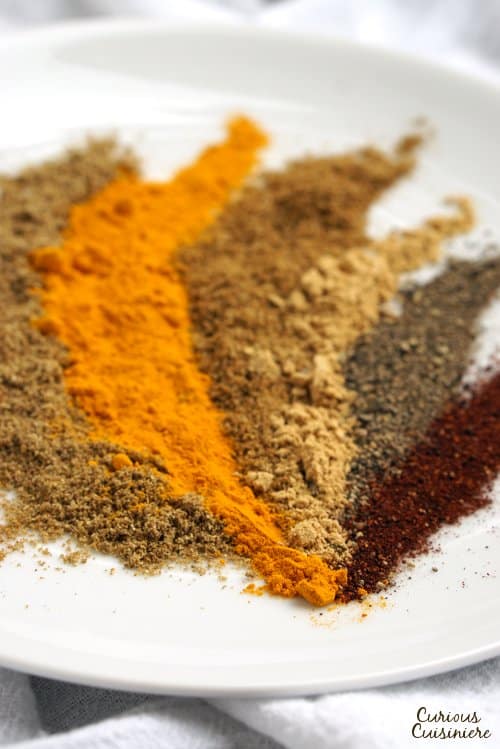
Is curry powder Indian?
You've probably seen jars of curry powder in the spice aisle and figured this mix was essential in creating Indian dishes. The interesting thing is that you won't find curry powder in India.
The concept of "curry powder'" is actually a Bristish invention by the Indian spice merchants. It was an attempt to bring the flavor of Indian dishes that British colonists came to love home.
Where does the term "curry" come from?
In fact, the term "curry" is a British take on the Tamil word "kari" which refers to meat.
From the British colonizers to American useage, the word curry has now become common to describe many types of seasoned dishes with South Asian origin.
Really, the term "curry" could be used as a substitute for the word "masala" which means a "mix of spices".
All Indian dishes start start with a specific masala (spice mix). These mixes can vary from region to region and household to household, as well as from dish to dish.
What is curry powder?
The spice blend that the British created was loosely based on the North Indian spice mix garam masala.
As the mix became popular in America, unfortunately, "curry powder" became synonymous with Indian curry, which is quite a misrepresentation of the vast array of Indian curries and flavors that they bring.
However, a pantry curry powder is a great way to easily lend some Indian-inspired flavors to your cooking.
As we dive into the possible ingredients below, you will see that the list is quite varied, which will hopefully encourage you to try adding some new spices to your curry powder, or try out a curry that uses toasted spices.
What are the ingredients in curry powder?
Since the term "curry" is so general and not well defined, you will find the spice mixture used to make up a "standard" curry powder differs greatly from jar to jar.
In India, each family has their own preference for how they put spices together for their masalas.
Think about it like the way an Italian Grandmother would season her meatballs or pasta sauce. There's no ONE gold standard Italian recipe for either of those. The flavors will vary from region to region and chef to chef.
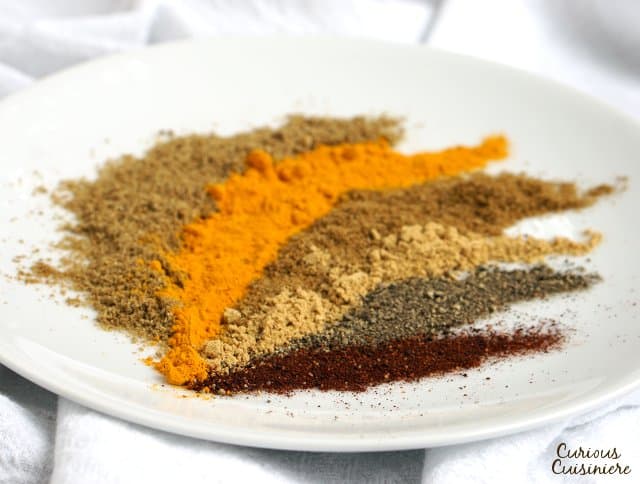
Most curry powder recipes do include a few common ingredients:
- coriander
- turmeric
- cumin
- chili peppers
Other spices that could be added are:
- fenugreek
- ginger
- garlic
- fennel
- caraway
- cinnamon
- clove
- mustard
- nutmeg
- black pepper
And the list goes on.
Each region in India, each family, and each dish have their own twist on what spices are commonly used. While you won't find ALL of these spices in any one Indian masala, they appear in different combinations throughout the country.
As you can see, once you have the basics, there are SO MANY ways you could tweak your own curry powder recipe to make it your own.
How to make homemade curry powder from scratch
Traditionally, a masala (spice mix) is made by first toasting whole spices. Toasting releases some of the oils in the spices and makes the mixture more fragrant.
The toasted and cooled spices are then ground finely in to a powder or pounded into a paste and then used for the day's dish.
Typically, this spice mixture is made fresh for each dish. That way, Indian chefs and home cooks really aren't tied to any one flavor combination. (Like a set "Italian seasoning blend".) They can vary the flavors, sweetness, heat, and so on, of their curry powder spice mix depending on what flavors they are looking for in their dish.
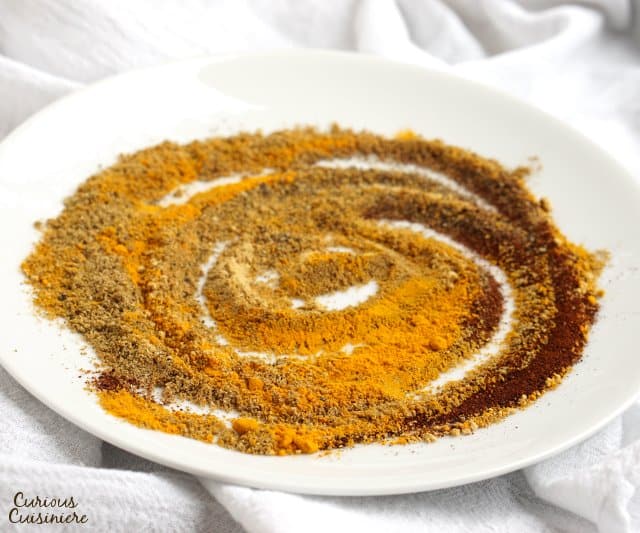
Our easy homemade curry powder recipe
While toasting whole spices and grinding them fresh for each recipe will give you the most fragrant and flavorful curry powder, sometimes you just want easy access to curry powder, without the extra steps.
Our goal with today's recipe is to give you a recipe you can have pre-mixed, on-hand to make your weeknight-cooking easier.
We chose ingredients for our curry powder that you probably already have in your pantry.
- coriander
- cumin
- turmeric
- black pepper
- chili powder
- ginger
We take a shortcut and use each of these spices in their already ground form, so all you have to do is mix them together.
Seriously, we told you this curry powder was really easy to make!
(As a side note, you can always purchase these spices in their whole, dried form, lightly toast them over medium-low heat in a dry pan until fragrant, let them cool, then grind them.)
Substituting ingredients in this curry powder
If you do find yourself wanting a bit of a different flavor in your curry powder, feel free to use our recipe as a springing off point.
Add some of the other ingredients we mentioned earlier. Whichever sound like they'll go well with the dish you're making.
With this easy curry powder recipe, making curry powder isn't much of a commitment at all. So you can add a pinch of this and a dash of that and not have to worry about re-toasting and re-grinding small additions of spices as you find your perfect curry powder.
(Or, find your perfect blend using the ground spices and then give your blend a try using whole spices. See what you think of the flavor difference between pre-ground and whole.)
How to store homemade curry powder
You will want to store your homemade curry powder in a glass jar with a well-fitting lid, in the pantry, away from heat and moisture.
Using pre-ground spices it will stay fresh for about 1-2 months. After that it will still be good, but you may notice that the flavor isn't quite as strong.
If you decide to use whole spices and grind them yourself, your mixture will store for a bit longer (2-3 months) before it starts to slowly lose flavor intensity.
What is the difference between curry powder and garam masala?
Garam masala and curry powder are both spice blends that are often called for in Indian recipes. However, garam masala is a spice blend that is used in many traditional Indian kitchens, while curry powder (like we discussed above) is not.
Garam masala means 'hot spice', its name comes not from heat, but from the warming nature of the spices.
It does not include turmeric (like curry powder does), and so is more brown in color.
It does include spices like coriander, cumin, black pepper (similar to curry powder) along with cinnamon, cardamom, and cloves which give it a more sweet flavor.
Garam masala is added to the end of cooking to give warm flavor to the dish. (Curry powder is typically added towards the beginning of cooking.)
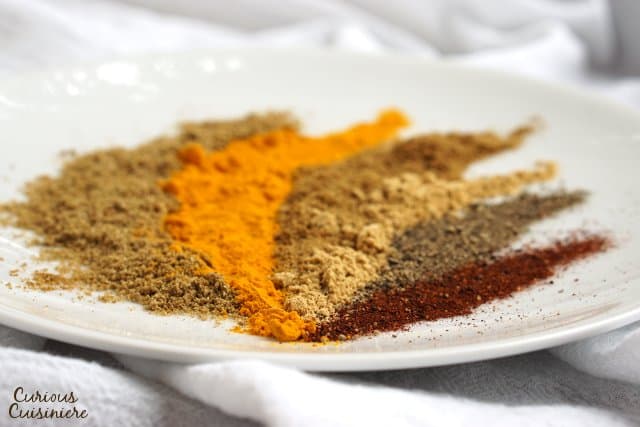
How to use curry powder
Curry powder is truly a unique combination of spices. It's slightly sweet, slightly savory, quite earthy, with a bit of heat.
The nice thing about curry is that you can use pretty much anything you have on hand to make a delicious curry. Here are some of our favorite, easy curry recipes:
- Cauliflower and winter squash curry
- Paneer and potato curry
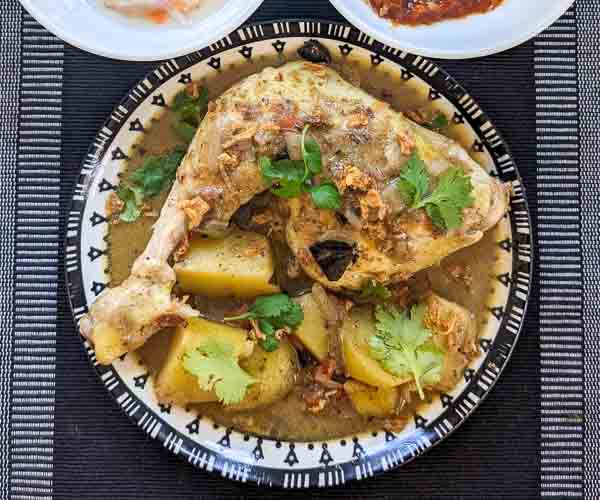
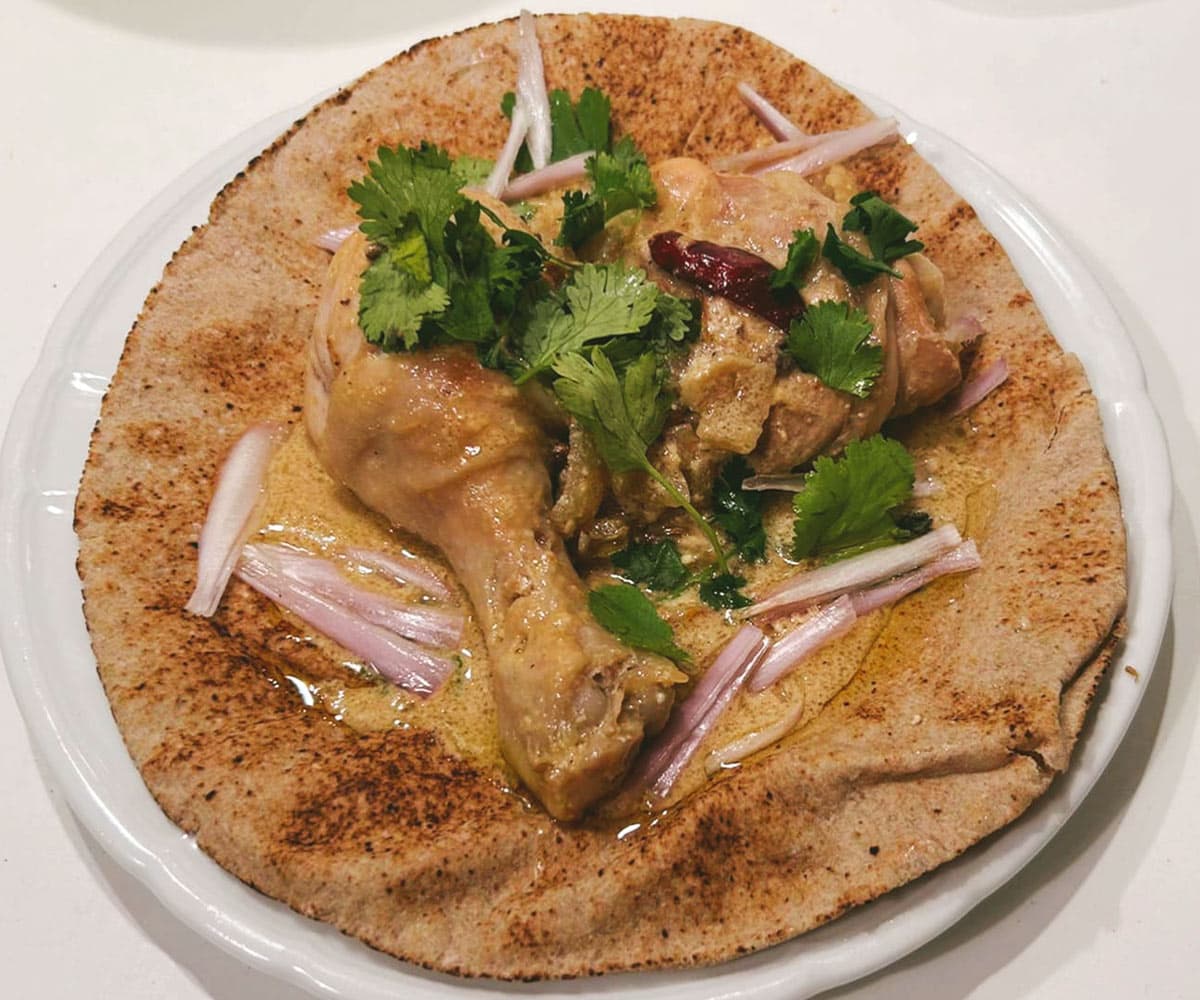
- Kenyan coconut chicken curry
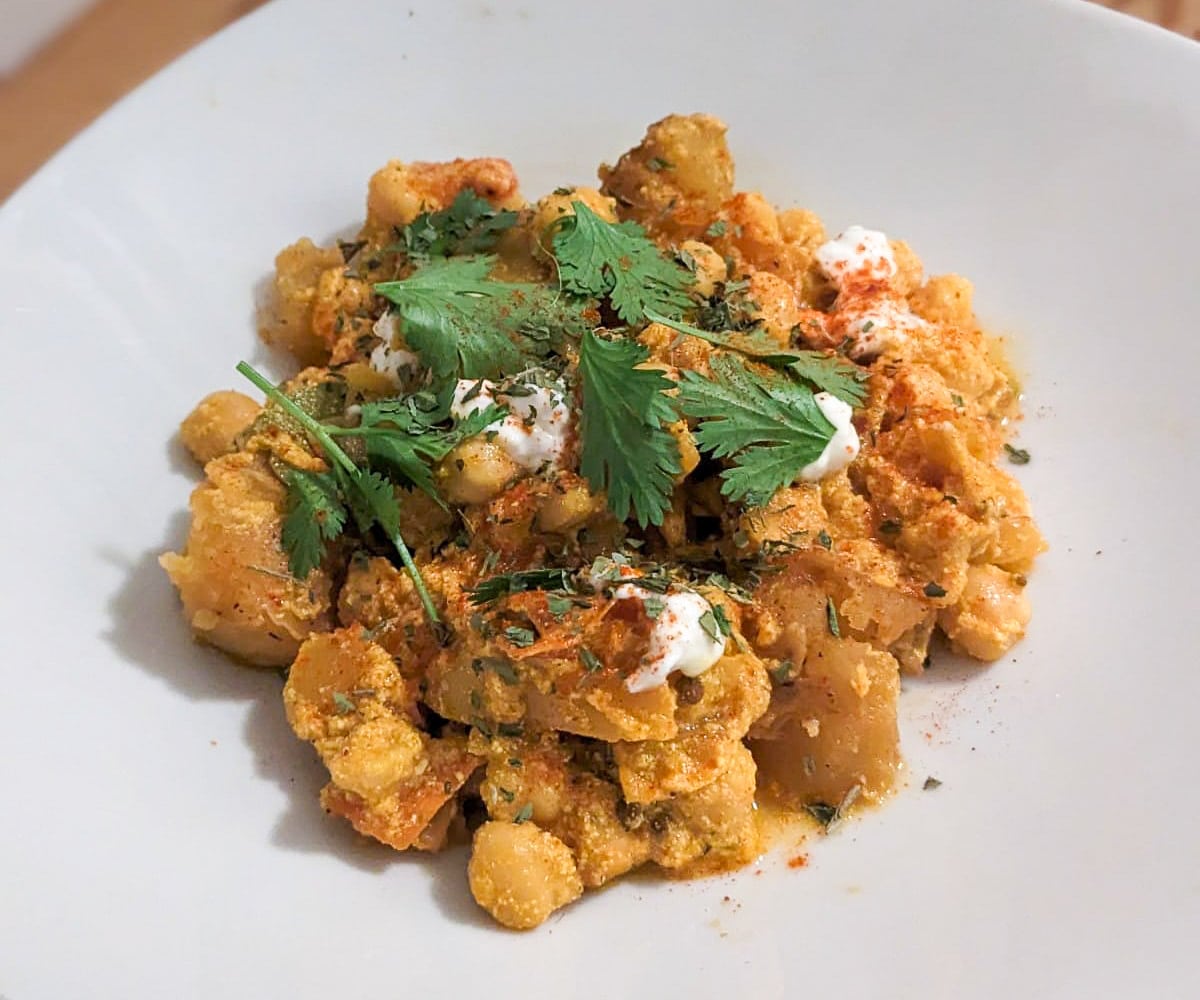
- Curried chickpeas
- Singapore noodles
- Shri Lankan chicken curry
You also use curry powder in South African dishes like bobotie and bunny chow.
And, you can't talk about curry powder without mentioning the classic German take on curry: currywurst!
So the next time you find yourself craving curry with no curry powder in sight, don't worry. Just whip up a quick batch of this easy curry powder!
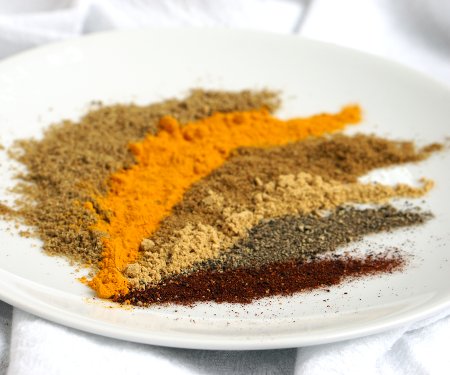
Easy Homemade Curry Powder (Small Batch)
Ingredients
- 1 Tbsp ground coriander seeds
- 1 ½ teaspoon cumin
- 1 teaspoon turmeric
- ½ teaspoon ground black pepper
- ½ teaspoon chili powder
- ½ tsp ground ginger
Instructions
- In a small bowl, mix all the ground spices.
- Use immediately, or store in an air-tight container in a cool, dry place for up to 2 months.
Notes

Sarah founded Curious in 2010 as a way to save her recipe creations and share culinary experiences. Her love for cultural cuisines was instilled early by her French Canadian Grandmother. Her experience in the kitchen and in recipe development comes from over 10 years working in professional kitchens. She has traveled extensively and enjoys bringing the flavors of her travels back to create easy-to-make recipes.

Thanks for a great introduction to curry flavouring! I always wondered what went into my favourite curry dishes.
You're welcome!
Thank you for this beautiful recipe! I'm making a curry right now and it smells like I just walked into my favorite Indian restaurant!
So glad you enjoyed the curry powder!
Thanks so much for this article. Pls what can I use to preserve my curry powder?
If your curry powder is just made up of dry spices, you can just keep it in a glass jar (with a lid) in your pantry. It will keep for a long time that way. But, over a year or two the spices will start to lose their potency.
Hi, thank you for the time and dedication you have with providing recipes for people who want to try various dishes from around the world. I enjoy eating curry chicken and tried to copy a chef on tv to make my own. He did not provide any measurements and poured the ingredients into the pot from a small dish. I tried to figure out the measurements from the tiny dish he had of each ingredient and couldn’t get that traditional curry flavor/taste in my curry chicken dinner.
I will try to make another dish tonight using your recipe, but what is the liquid ingredient and what is the measurement of it to have a nice curry sauce to pour over my rice?
I would greatly appreciate your help.
Thank you for sharing your love of cooking.
Hi Yiyana. The amount of curry powder and liquid (as well as which liquid) will depend on the flavor you are looking for and the type of dish you are making. You could simply mix the curry powder in with some onions and diced tomatoes and chicken until you liked the flavor, so you can get much more elaborate. I'd encourage you to take a look at the recipes we have linked before the recipe to give you an idea of how the individual curry recipes go together. Keep in mind that even if a recipe is for a vegetarian curry, you can replace some (or all) of the vegetables called for with chicken, if that is what you are looking for.
Thank you, Sara. I am excited to add this to our rice dinners. You mention an alternative list of ingredients that can be added... fenugreek, mustard, etc etc. How can we know how much of each thing to add to the base curry mix? Thank you.
Karen
Hi Karen. There are so many ways to blend a curry powder. I would recommend letting your nose guide you. If you enjoy the fragrance of one or more of the spices listed, add some in, then taste a bit (or mix it with some olive oil and dip some bread in it). Keep tweaking until you find a combination you enjoy. Alternately, you can use it to season some rice, and add the others in until you find a flavor you enjoy. (Just remember to keep a record of what and how much you add for future reference!)
Interesting, I never knew about curry powder.
What a perfect thing to do on a snowed in/ Pandemic Saturday Morning! I was cruising recipes and this is the first one scaled down for normal household condiments; our local spice shelves are BARE. THANK YOU and stay safe.
Enjoy! Stay warm!
@Sarah Ozimek, I believe the spices will help with our warming needs 🙂 🙂
True!
Hi Sarah,
Thank you for this article and the recipes. What are the differences between in Thai Curry, specifically: Red Curry, Green Curry and Matsaman Curry? Which spices or combination of spices make it a Red Curry, Green Curry, etc?
Thanks.
Hi Kristin. Great question! We have articles about Thai red curry and Thai green curry that I think you will find helpful.
You responded to one reader who asked if chili powder is just ground chili peppers. You said yes. That's not true. If you buy a jar of chili powder from the grocery store, it will have ground chili peppers plus other ingredients such as oregano, cumin, and perhaps garlic powder. Since the amount of chili powder you suggest is small relative to the other ingredients, it's no big deal, but it's misleading to suggest it is simply ground chili peppers.
Hi Martha. We are both correct. It depends on where you are getting your chili powder. Many store brands of chili powder do have other spices or additives mixed in, but you can also find chili powder that is simply dried chiles.
I love curry, but I have no idee how to mix different spices together to get the perfect curry blend that I love!I need Help please?
Hi Linda. This blend would be a start. Try smelling each spice we list in the article individually, and adding more of the ones that appeal to you.
To make things even more confusing, there is also a plant called curry(Murraya koenigii) pronounced (kadi patta in Hindi) and the leaves are used in Indian recipes too.
Good point. Thanks for sharing Jonathan!
Hello,
Can this recipe be turned into a sweet curry recipe, I get terrible heart burn so can’t do spicy or is there a way to make this mild?
Thank you
Hi Christina. Yes, definitely! You could substitute the chili powder for sweet paprika. You could also adjust the amount of black pepper, if needed. This is a great base recipe that you can play around with until you find a flavor and heat that works for you. Enjoy!
Hi Christina. I have chronic esophagitis, gastritis, duodenitis, and GERD. So I absolutely have to avoid peppers, paprika, garlic, and a few other things. Fortunately most of the spices in curry are great for the digestion. Here is my curry recipe, more or less (Sometimes I add more ginger if I am in the mood)
2 Tablespoons coriander
2 tablespoons cumin
1 and a half tablespoons turmeric
1 tablespoon ginger
A half tablespoon each of cardamom and ginger.
All of these spices are good for people with acid reflux,and I love the taste.
Correction: Half a tablespoon cardamom and cinnamon.
Curry powder is called Masala in India. The ingredient posted is the same. The word curry comes from Takari in Hindi meaning ‘made in curry’ (eg. Murgh tadkari which is chicken made in curry). Sauce in Hindi is ‘surwa’. The British misheard words in Hindi and pronounced them inaccurately, tadkari is one. The name says of several cities are other examples: Mumbai was heard as Bombay, Kolkata was heard as Calcutta.
How interesting. Thanks for sharing!
Is chili powder just ground chili peppers? Would cayenne pepper work well with this?
Hi Jeremy. Yes, chili powder is ground chili peppers of a mild-medium heat. Cayenne would work, but I would reduce the amount, as cayenne will definitely give more of a spicy kick. (Unless of course you enjoy a spicy curry!)
So easy , tasty flavourful combination and quantities. I did same recipe with shop bought and though a bit hotter wasn’t anywhere near as nice. Won’t be returning to shop bought ever again. Thanks will now follow you
So glad you found us and enjoyed the curry powder Jayne. There is something about making it yourself!