Chupe de Camarones (Peruvian Shrimp Chowder)
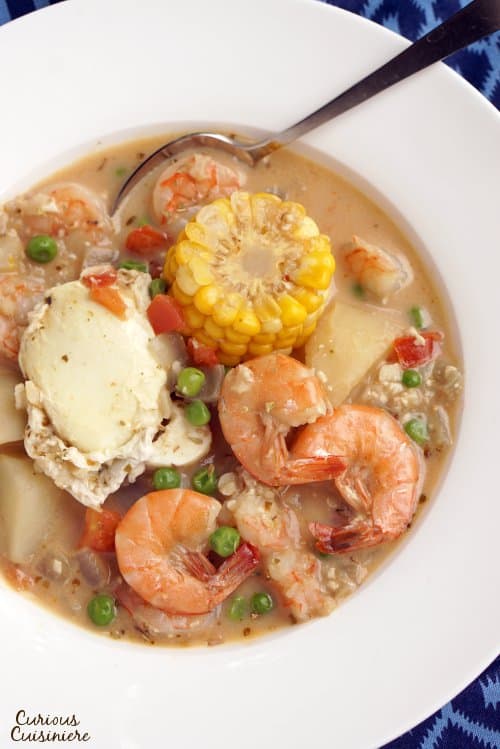
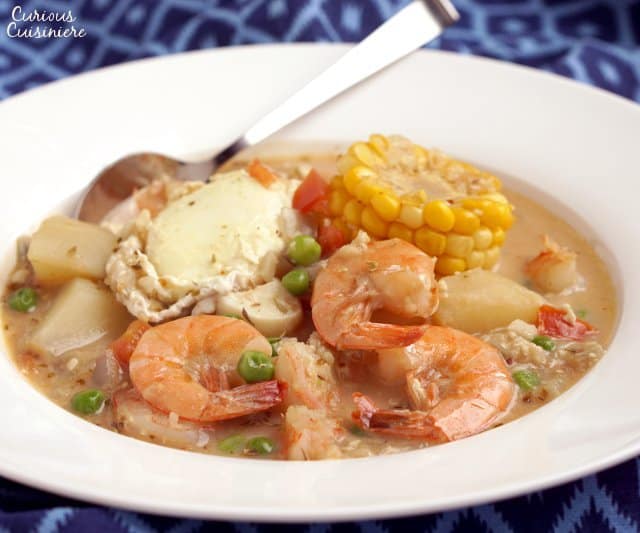
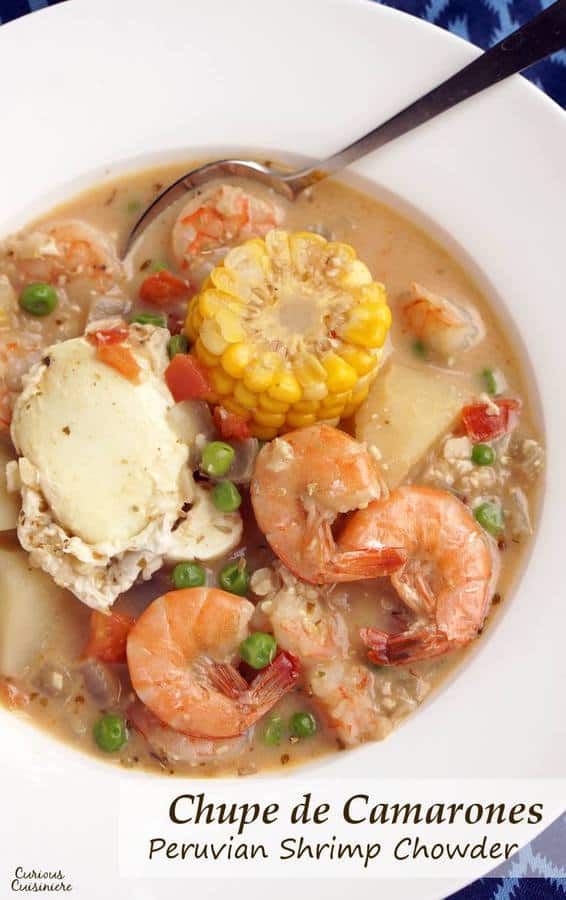
Chupe de Camarones is a unique Shrimp Chowder from Peru that combines a spicy broth with chunky vegetables, poached eggs, and lots of tasty shrimp. This is chowder like you have never seen it before.
 What is Chowder?
Typically when we think of chowder, we think of creamy New England seafood chowder. And, sometimes, tomato-based Manhattan chowder.
But what about adding a poached egg or whole corn on the cob?
What about adding spice?
Chupe de Camarones
In Peruvian cuisine, the shrimp chowder takes on a very different look than these American chowders.
Shrimp chupe was a soup that the indigenous Incas in Peru had been making for ages, but it was when the Spanish settlers introduced eggs and milk into their diet in the early 1800s that chupe de camarones began to evolve into the shrimp chowder that we find in Peru today.
Each region of Peru has their own version of this soup, and they vary slightly from each other, but the most widely known version of shrimp chupe is originally from Arequipa, in the southern, coastal region of Peru.
Most traditionally, this dish calls for using crayfish, but shrimp has become the common seafood for use in chupe.
This soup is typically served during the winter as a first or main course. Which makes sense, because it is hearty and chock full of fun and tasty ingredients.
How To Make Homemade Fish Stock
An important element of the chupe de camarones is the fish stock. You can always get some fish stock from the store, and that will work quite well.
But, making your own fish stock is quite easy, so if you'd like to give it a try, this recipe is a great way to start out making homemade fish stock.
What you will need first is a couple pounds of fish heads or bones. Typically your grocery store's butcher (or seafood specialist) can special order these for you.
After the fishy ingredients, a fish stock calls for basic stock ingredients like onion, carrots, bay leaf, peppercorn, and salt.
The real difference making fish stock is that it only boils for 20 minutes and then steeps for 10 minutes. No hours of simmering like you were making chicken stock or beef stock. Fish stock has a much more delicate flavor, so you don't need that LONG cooking time.
What Makes Peruvian Shrimp Chowder Different
We've already touched a little on what makes Peruvian shrimp chowder different from other chowders. But one more element is the spice.
Traditionally, this chupe uses fresh rocoto chilies. These are small, HOT HOT chilies, for which the best substitute is a habanero pepper.
These chilies will create a VERY HOT chowder.
For our chupe de camarones recipe below, we have used crushed red pepper to give this shrimp chowder a little bit of heat, without a burning glow.
If you love spice, feel free to add more crushed red pepper to you soup, or, if you're really adventurous, grab a habanero, chop it up, and add it in there. (We'd probably vein and seed it first.)
If you try the shrimp chupe, leave us a comment and let us know what you think!
More fish and seafood stew recipes from around the world
If you love fish and seafood then you will want to check out these recipes for soups and stews that are a comforting way to serve seafood in the cooler months.
- Guacho de Mariscos (Panamanian Seafood Stew)
- Ukha (Russian Fish Soup)
- Cacciucco (Tuscan Seafood Stew)
- Moqueca (Brazilian Fish Stew)
- Manhattan Fish Chowder
- New England Seafood Chowder
Chupe de Camarones (Peruvian Shrimp Chowder)
Ingredients
- ½ tablespoon olive oil
- ½ red onion, diced
- 2 garlic cloves, crushed
- ½ teaspoon red pepper flakes or habanero pepper, if desired
- 4 c fish stock
- ½ lb russet potatoes, peeled and cut into ¾ inch cubes
- 1 ear of corn, cut into 1 inch wheels
- 1 tomato, finely chopped
- 2 tablespoon white rice, dry
- 1 ½ teaspoon tomato paste
- 1 ½ teaspoon fresh oregano, chopped or 1 teaspoon dry
- 1 lb shrimp, peeled and deveined
- ½ c peas, thawed if frozen
- ½ c evaporated milk
- 2 oz (⅓ c) queso fresco, crumbled
- 4 eggs
- Salt and ground black pepper (to taste)
Instructions
- Heat the oil in a large soup pot over medium heat. Add the onion and sauté 3-5 minutes, until softened.
- Add the garlic and chili flakes and sauté additional 1-2 minutes.
- Add the seafood stock, potato cubes, chopped ears of corn, diced tomato, rice, tomato paste, and oregano. Simmer for 20 minutes.
- Add the shrimp, peas, evaporated milk, and cheese. Mix and bring the mixture to a simmer.
- Add the eggs, one at a time, and let them poach in the broth for 2 minutes.
- Taste the soup and season with salt and pepper as desired.
Notes

Sarah founded Curious in 2010 as a way to save her recipe creations and share culinary experiences. Her love for cultural cuisines was instilled early by her French Canadian Grandmother. Her experience in the kitchen and in recipe development comes from over 10 years working in professional kitchens. She has traveled extensively and enjoys bringing the flavors of her travels back to create easy-to-make recipes.
I can not access Manhatten Fish Chowder recipe from the list of fish soup recipes. Thought you would want to know.
Thank you for letting us know Jeanne! The link has been updated!
I looked up the recipe for Guacho from Panama. I'm Panamenian and I wanted to make this recipe. However, I'm sadden to know that you use or recommend using Goya Sofrito. I'm highly allergic to MSG which that product has a lot of it. Please be careful to point this out when you recommend using a product, since many people don't even realized the hidden dangers of prepared foods.
Hi Linda. I think you meant to leave this comment on our Guacho recipe here: https://www.curiouscuisiniere.com/guacho-de-mariscos-seafood-stew/. Thank you for your concern about MSG in the Goya product. We will look into it.
Totally wrong. Chupe de Camarones is made with river shrimp, they can be the size of a small lobster!
Very interesting Kevin, thanks for sharing! You could definitely use small lobster or prawns in this recipe if you feel that it is more authentic!
Hi Sarah I think what Kevin is referring to is that in Peru this dish usually is made with river crustaceans collectively know as “camerones” but unlike most South and Central American countries the word actually refers to the Peruvian equivalent of a crawfish (typically smaller clawed and physically more shrimp like but similar in flavor to a Louisiana crawfish) having a more red color and mineral enriched flavor than a standard shrimp. Your dish is still legit but would be called a “Chupe de Langostinos” Langosta being lobster and in other countries Langostino or little lobster meaning a crawfish instead in Peru the terms are interchanged and a Langostino means shimp like you used while a Camerone is the crawfish. Peru is just a very unique place! As an avid cook I was lucky to marry a Peruvian and for Peru to become my second home. Hope you guys one day have a chance to travel there and enjoy the amazing food and music!
Thanks for the clarification Gabrielle!