
Homemade Pork Potstickers
Would you believe that you can make homemade pork potstickers, like they serve in restaurants? They're not as tricky as you might think!!
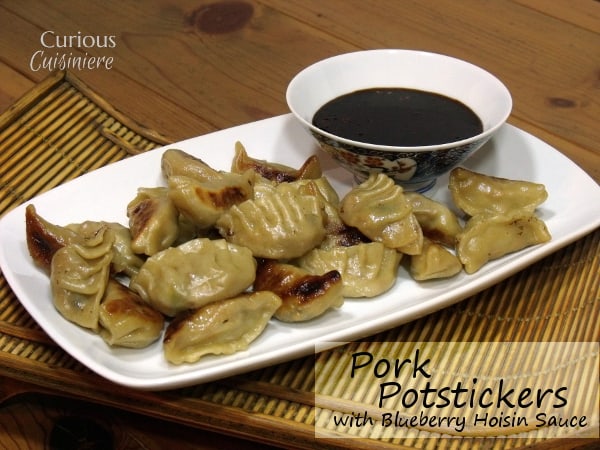
If you've ever made ravioli or pierogi, you know the basic concept to Asian dumplings.
If not, now's your time to try it!
Chinese Potstickers
Potstickers originated in China, where they are called guotie. They are a version of Chinese dumplings (jiaozi) that have been pan-fried on one side and steamed on the other, giving them an irresistible crisp and soft texture duo. The dumpling's Chinese name, guotie literally means "wok stick," which is where we get the name 'potstickers.'
These have been a Chinese delight since roughly 1000 AD when, legend has it, a chef in the imperial court burned some dumplings, but didn't have enough time to make a second batch. He served the 'bad' batch, passing it off as a new creation, and it was a hit!
Don't you wish all your kitchen mess ups could turn out like that?
Japanese Potstickers
You will also find a variation of potstickers in Japanese cuisine. Japanese soldiers stationed in northern China during WWI tasted Chinese potstickers and bought the idea back to their home country when they returned.
Japanese potstickers, called gyoza, tend to be smaller than Chinese potstickers, more of an appetizer or side dish, rather than a meal.
Making Homemade Pork Potstickers
Potstickers are made with a boiled water dough, like all Chinese dumplings. Apparently, the Chinese have really figured this dumpling dough thing out, because hot water is a trick they have been using for ages.
The hot water better activates the gluten proteins in the flour, creating a dough with greater elasticity. That means the dough will hold its shape better as it is rolled out and cooked.
Genius!
You might be tempted to use wonton wrappers instead of making your own jiaozi dough. And, while it wouldn't be the end of the world, wonton wrappers are thinner than jiaozi wrappings, and wonton dough contains eggs and salt, while jiaozi use a very simple dough of only flour and water.
 Make a Big Batch of Homemade Potstickers!
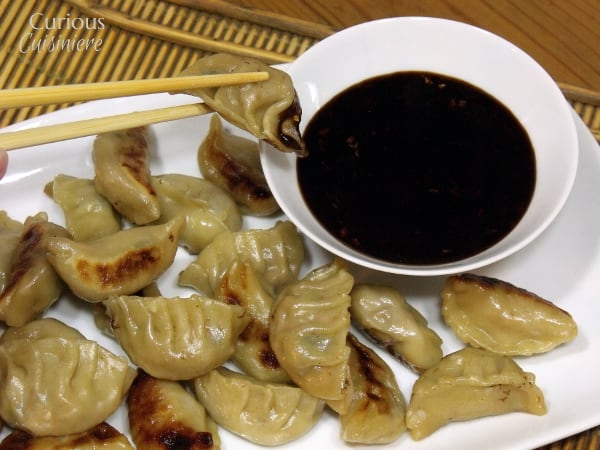 Make a Big Batch of Homemade Potstickers!
Like we do for ravioli and pierogi, these dumplings are great to make in a big batch and freeze.
First, freeze them in a single layer on a baking sheet for a half hour. Once they are mostly frozen, they can be transferred to an air-tight bag or container for longer storage (3-6 months).
Cook them directly from frozen to keep them from sticking to each other and getting soggy.
How To Serve Potstickers
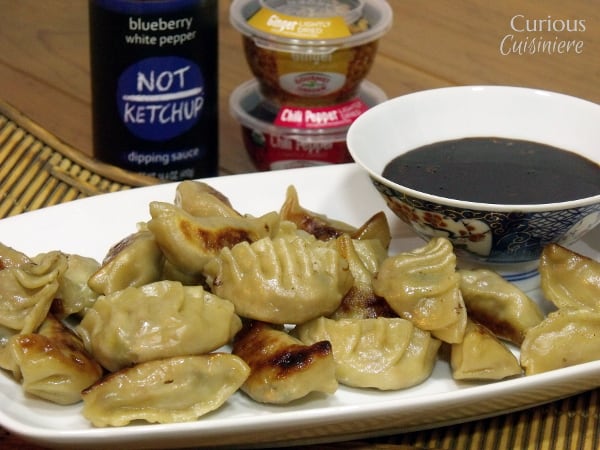
While we made our pork potstickers smaller, more Japanese gyoza style, we are serving them with a Chinese inspired Blueberry Hoisin sauce, created using a combination of Blueberry White Pepper Not Ketchup dipping sauce and lightly dried ginger and red pepper flakes from Gourmet Garden. (If you'd like to serve them with a more traditional Hoisin Sauce, you can make your own too!)
Both the sauce and the pot stickers were incredibly tasty, with the slightly spicy blueberry creating a perfect complement to the pork.
If you love dumplings, be sure to check out our Chinese dumpling recipe where we give a great vegetarian option!
Pork Potstickers
Ingredients
For the Dumpling Dough
- 2 c unbleached all-purpose flour
- ½ c boiling water
For the Filling
- ½ c cabbage shredded
- ½ teaspoon salt
- 1 c cooked pork (you could also use 8 oz raw, ground pork), diced
- 2 tablespoon leeks, sliced
- 1 teaspoon soy sauce
- 1 teaspoon rice wine vinegar (you can use white wine vinegar in a pinch)
- ½ teaspoon dry ginger, ground
- ½ teaspoon salt
- ½ teaspoon canola oil
- ½ c water
Instructions
- Before you start the dough, prep the cabbage: Toss the cabbage with ½ teaspoon salt and place it in a colander to drain for 20 minutes while you make your dough.
For the Dough
- Place flour in a medium bowl. Pour the boiling water over the flour, mixing to combine. Turn the dough out onto the counter and knead for 10 minutes. (Don't skimp on the kneading time, this will develop the gluten proteins that give the dough its texture.)
- Shape the dough into a 1 inch diameter snake. Cover the dough with a damp tea-towel and let rest for 30 minutes.
For the Filling
- In a medium bowl, mix together pork, sliced leeks, soy sauce, vinegar, ginger, and salt.
- Press any excess moisture out of the cabbage and add it to the pork mixture. Mix well and set aside.
Making the Dumplings (Jiaozi)
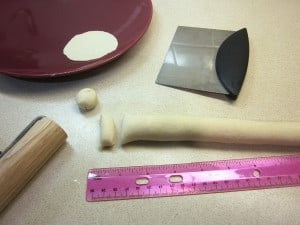
- Cut the snake into ½ inch pieces. Keep the dough pieces you are not working with covered with the damp towel.

- Roll one piece of dough into a roughly 3 inch diameter circle. Fill with 2 teaspoon of filling and spread a little water on the outside edge of the circle of dough.
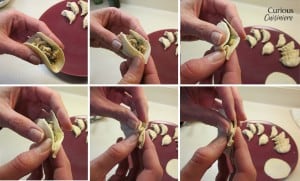
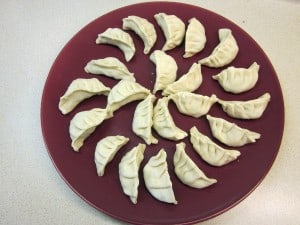
- Fold the dough around the filling and crimp the edges by folding one side over itself 5-7 times and pressing it against the opposite side of the dough. (See the pictures below.)

- Set the dumpling on a plate and continue with the remaining dough.*
Making Potstickers (Guotie)
- Heat ½ teaspoon oil in a large skillet with a lid. Place dumplings in a single layer in the skillet, so they are not touching. Cook the dumplings in the oil over medium-high heat, until crisp, 1-2 minutes.
- Add ½ c of water to the pan and cover tightly. Reduce the heat to low and cook 5-7 minutes, until most of the water has steamed out.
- Uncover and cook until any remaining water has evaporated, 1-2 min.
- Serve immediately with a dipping sauce.
Notes
Nutrition
Blueberry Hoisin Sauce
Ingredients
- ¼ c Blueberry White Pepper Not Ketchup
- 2 tablespoon soy sauce
- 1 teaspoon dry ginger, ground
- ½ teaspoon crushed red pepper flakes
Instructions
- Combine all ingredients in a small bowl and mix to combine.*
Notes
DISCLOSURE: We received the Blueberry White Pepper Not Ketchup and Gourmet Garden Herbs used in this recipe. We were not compensated for our time. All opinions are our own.

Sarah founded Curious in 2010 as a way to save her recipe creations and share culinary experiences. Her love for cultural cuisines was instilled early by her French Canadian Grandmother. Her experience in the kitchen and in recipe development comes from over 10 years working in professional kitchens. She has traveled extensively and enjoys bringing the flavors of her travels back to create easy-to-make recipes.
Do you think this could work with Cassava flour?
Hi Gwyn. I have not tried these using cassava flour. It may work, but I would be careful with adding the water. It may need less or more than called for, since it absorbs water differently than all purpose. If you give it a try, let us know how it turns out for you!
I cheat and use wonton wrappers for my potstickers. Pork and shrimp is also a great combo. 🙂
That's a great way to save time! Pork and shrimp sounds like a delicious combo!
The dumplings look amazing!
Thanks Amy!
These look insanely delicious! Though I would totally use my cheater potsticker mold. Lol.
I had no idea they make potsticker molds. I bet that would make them go so quck!
Great detailed instructions and dontcha love that blueberry sauce?
Thanks! The blueberry sauce is super tasty!
Blueberry Hoisin? Oh my goodness, sounds amazing! Now I need potstickers ASAP! Yum, Hugs, Terra
Thanks Terra! Blueberry and pork might just be one of my new favorite combos!
I'm so impressed that you not only made your own dumplings, you made the dough too! I've been wanting to try my hand at homemade dumplings I may need to do this!
You should, Erin. It's not as difficult as you would think.
I wish I had these to eat right now! I love potstickers and they look so good!
I miss dumplings. I used to order them every time I ordered Chinese, but haven't in aYEARS! I should just make some. I shoudl just make these! They look oh so tasty. Pinned.
I have never made my own dough. Okay, I will now! Thanks for sharing.
Lovely little bites of love. Thanks for sharing.
These look delicious and super easy to make!!!