
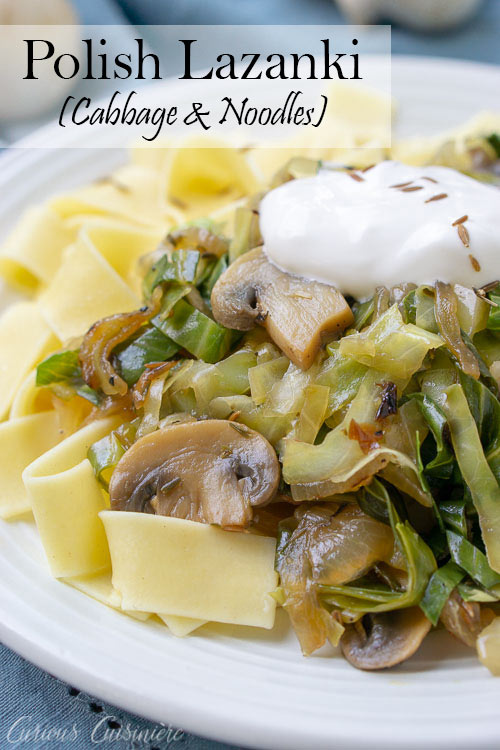
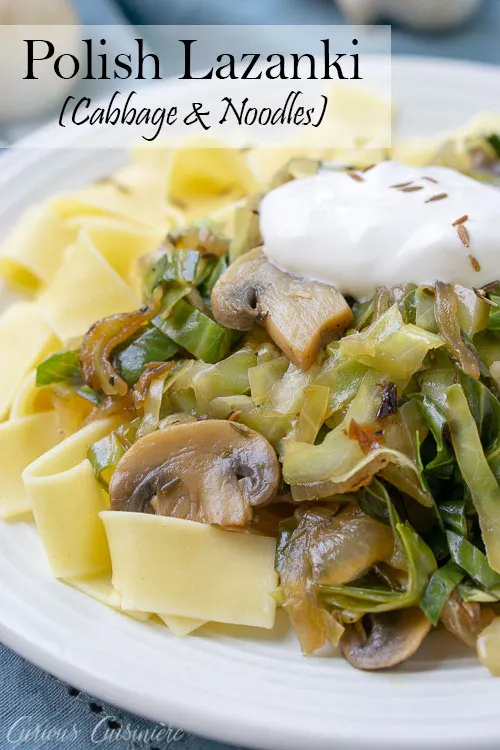
An unexpected combination of flavors comes together to create Lazanki. With cabbage, noodles, sour cream and mushrooms, this dish could be called the Polish version of stroganoff.
 What happens when 16th century Poland gets an Italian queen?
High Italian cuisine starts to trickle into Polish culture, giving us interesting, but quite tasty, fusion dishes, like lazanki.
What is Lazanki?
At its most basic, lazanki combines pasta from Italian cuisine with a classic Polish cabbage preparation.
Cabbage, sauerkraut, mushrooms, and herbs come together to make a uniquely Polish pasta topping.
Does the combo sound a bit odd to you? It did to us too.
Making Polish Cabbage and Noodles
Honestly, as we read lists of ingredients to make lazanki, I was skeptical of how they would work together.
But, it sounded like an easy dinner recipe, so we decided to take the plunge.
Even until the last step, when I tasted the cabbage mixture, I still couldn’t put it all together in my head. I think it’s because, as Americans, we’re not used to the vinegar tang of sauerkraut and the earthiness of mushrooms paired together.
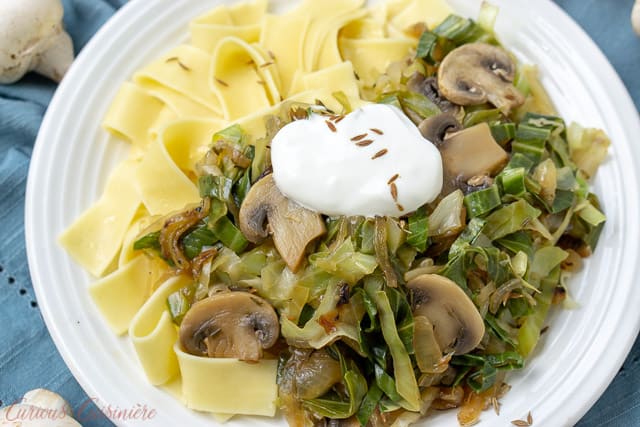
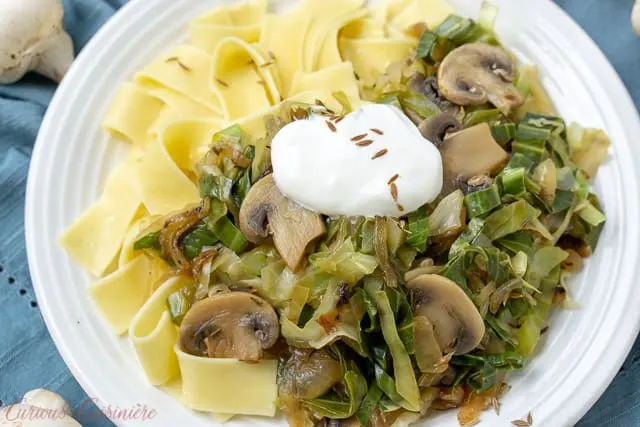
But, as I mixed in the sour cream at the final step, the creamy sauce mellowed the sauerkraut tang. And, the dish’s flavors finally came together into something vaguely reminiscent of a stroganoff.
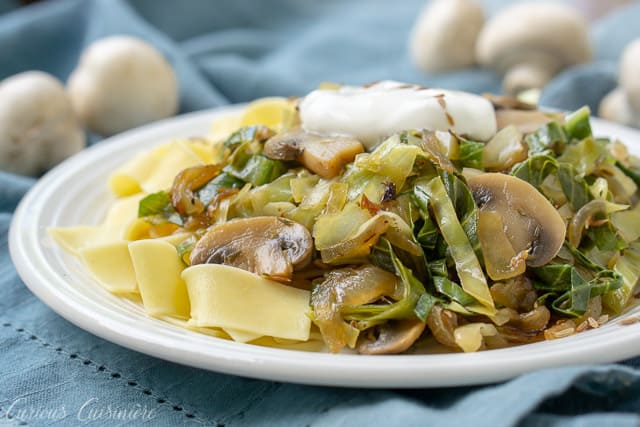
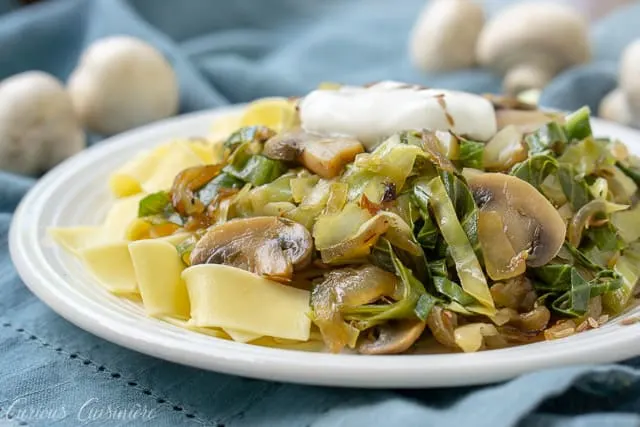
It is definitely different, but it was one of those dishes that grew on us as we ate it. By the end, we were wishing we had made more, so we could eat leftovers the next day.
If you like stroganoff, take a step out of our your comfort zone and give lazanki a try.
You might just find a new favorite!
Our Lazanki Recipe
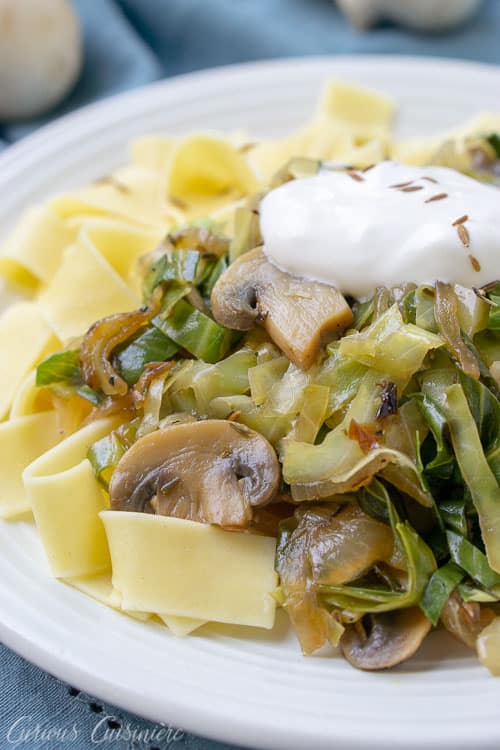
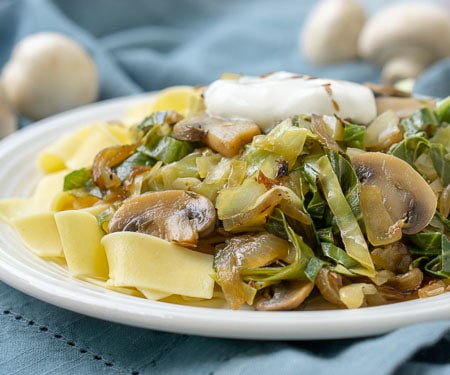
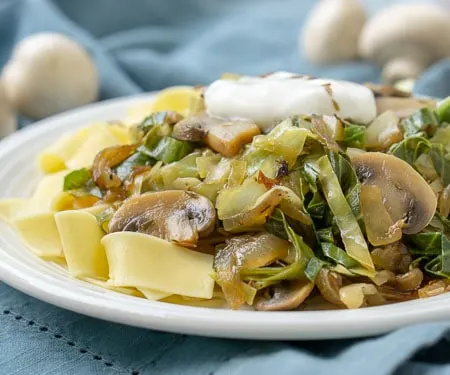
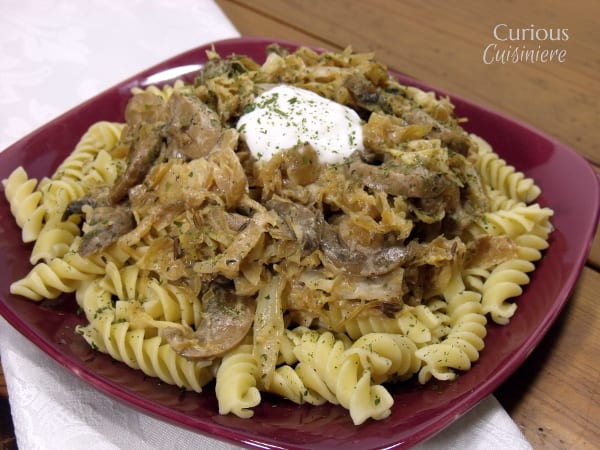
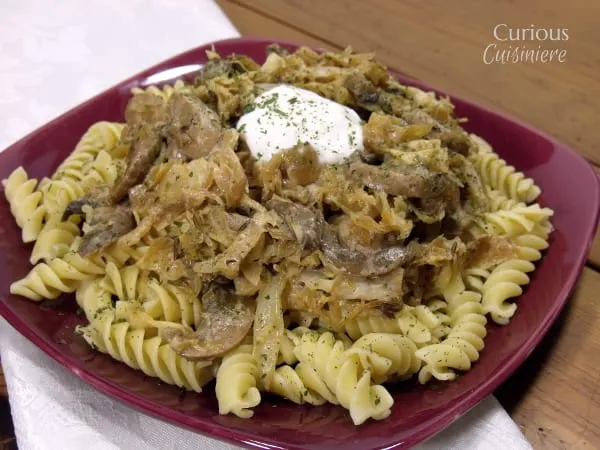
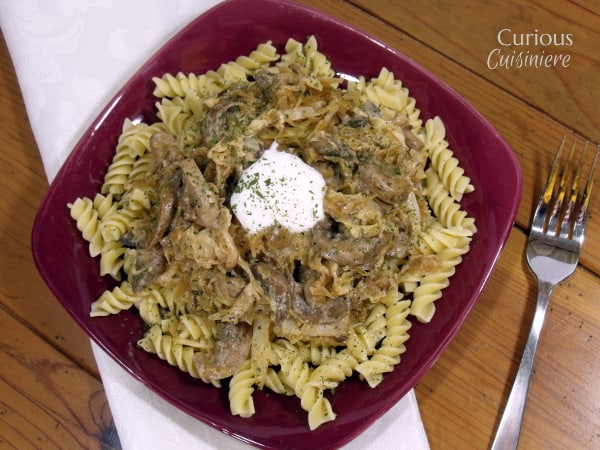
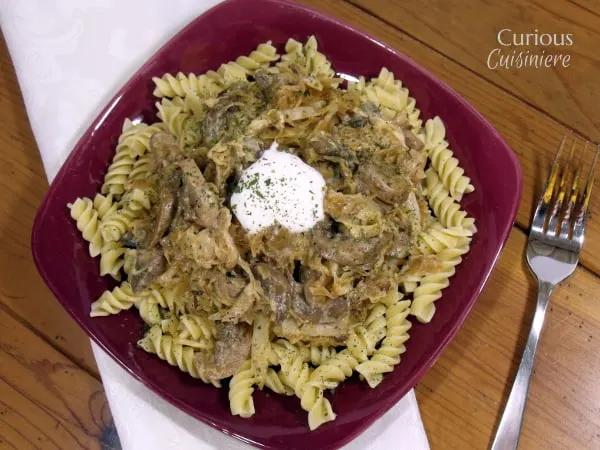
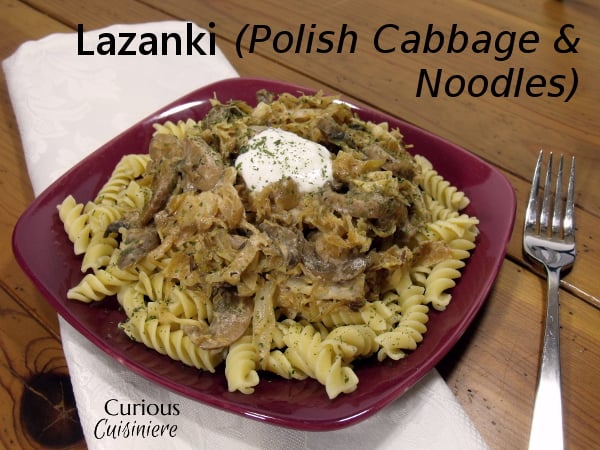
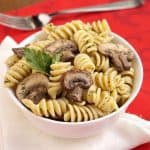
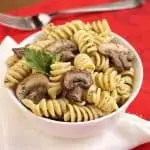
Traditionally, lazanki is prepared with flat rectangular-shaped, homemade noodles. We’ve made this dish numerous times since we first shared the recipe, and sometimes we do use rotini, in a pinch (see our pictures below).
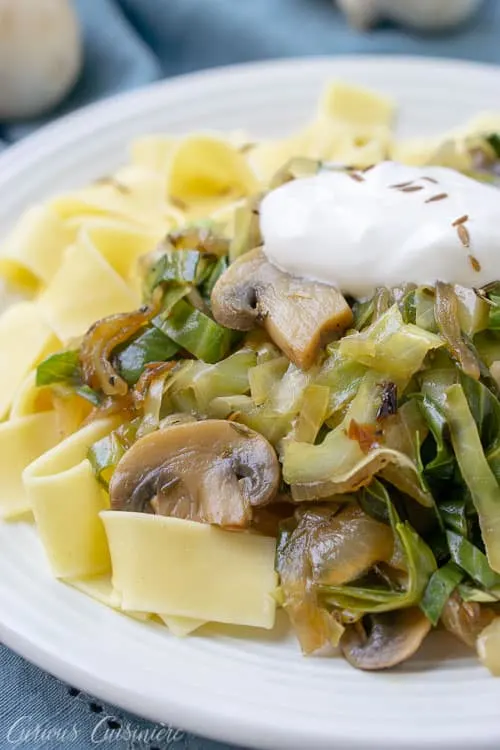
However, there is something much more rustic and much more Polish about using a wide flat noodle. Find the widest egg noodle you can, and that will really make the dish.
Polish Cabbage and Noodles (Lazanki)
Ingredients
- 1 small onion, chopped
- 2 c cabbage, sliced into 2” strips
- 1 c sauerkraut, drained
- 1 (4 oz) can mushrooms, drained
- 1 tsp caraway seeds
- ¼ c water
- 1 bay leaf
- ½ tsp thyme
- ¼ tsp oregano
- ½ tsp paprika
- 1/8 tsp ground black pepper
- ¾ tsp salt
- 6 oz small noodles, dry (egg noodles are closest to the traditional Polish noodles)
- ¼ c sour cream
Instructions
- In a large, cast iron or non-stick skillet, heat onions with 2 Tbsp water over medium-low heat. Cover and cook 30 minutes until dark brown and caramelized, checking frequently and adding water if necessary to prevent burning.
- Add remaining ingredients except noodles and sour cream. Simmer over low heat for 20-30 min, until cabbage is tender.
- Bring some water to a boil in a medium saucepan. Add noodles and cook 7-9 minutes, until al dente. Drain and set aside.
- Remove the cabbage mixture from the heat. Add sour cream and mix thoroughly. Add drained noodles and toss until well mixed.
- Top with a sprinkling of parsley.
Nutrition
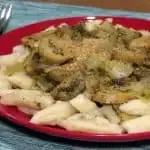
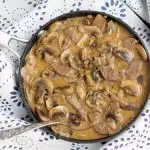
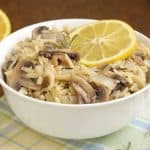
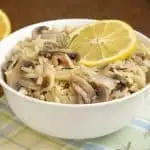
This is one of the recipes from the early days of Curious Cuisiniere. We’ve updated our pictures since we first shared it, but we’ve left some originals here, in case you’ve found us in the past and are looking for that old, familiar image. (This version we did use rotini instead of the traditional, wide noodles.)

If you liked this recipe, here are some similar dishes you may enjoy!











Sarah founded Curious in 2010 as a way to save her recipe creations and share culinary experiences. Her love for cultural cuisines was instilled early by her French Canadian Grandmother. Her experience in the kitchen and in recipe development comes from over 10 years working in professional kitchens. She has traveled extensively and enjoys bringing the flavors of her travels back to create easy-to-make recipes.
Alexandra
Thursday 12th of May 2022
By cooking the sauerkraut, don't you lose the probiotic benefits of it? What if the sauerkraut was served on the side, cold or at room temperature?
Sarah Ozimek
Saturday 14th of May 2022
Hi Alexandra. Yes, you would lose the probiotic benefits by cooking the cabbage. If that is your goal, you would want to serve it on the side.
Władysław Łoś
Tuesday 11th of January 2022
Łazanki are not a dish, they are a Polish variety of italian pasta, dating back at least to the 17th century and named then so after the Italian lasagna. The name is in diminutive and means something like "the small lasagna", and they are indeed as a lasagne sheet cut in the small rectangles, squares, or rhombi. Many various dishes may be made of łazanki, łazanki with cabbage being only one of them. On the other hands many other kinds of kluski, including pasta (makaron in Polish), may be made with cabbage and then they are just kluski, or makaron z kapustą (with cabbage), like the dish shown here in the picture.
Sarah Ozimek
Thursday 13th of January 2022
Thank you for sharing! Just to be sure I am understanding, you are saying that the dish in our recipe would be called kluski or makaron z kapustą?
Liv
Monday 28th of September 2020
Traditionally, the recipe for Łazanki calls for: sauerkraut lazanki noodles onions mushrooms (optional) sausage or bacon streaks vegetable oil salt pepper.
We never use oregano or thyme in this dish if it's made traditionally.
Lazanki noodles: 1.5 cups of flour 2 eggs pinch of salt water 2 tablespoons of vegetable oil
Sift the flour and pour it onto the pastry board. Form a mound of flour and make a recess in the middle and add eggs to it. We also add a pinch of salt, 2 tablespoons of oil and 1/4 cup of water.Stir with a fork and then carefully knead until a hard dough is obtained (it should be a little harder than for dumplings).Cut them into 4 parts, cover with a cloth and leave for about 15 minutes. Then each part must be rolled out - a little thicker than for pasta. Finally, cut the rolled out dough into small squares of 1x1 inch. Leave it on a clean cloth to dry.If we get too many noodles, we can dry them and use them at the next opportunity. It is best to dry the noodles all night and then pour them into a closed jar.
Sarah Ozimek
Monday 28th of September 2020
Hi Liv. Thanks for sharing your recipe! We have seen many traditional Polish recipes that are variations of this as well.
Sam
Thursday 2nd of January 2020
Been looking for this recipe forever. Thk u.
Sarah Ozimek
Sunday 5th of January 2020
Hope you enjoy it!
Val
Saturday 19th of October 2019
Great recipe. Noodles are noodles. I remember cooking Łazanki while in army. It was awesome.
Sarah Ozimek
Sunday 20th of October 2019
Thanks Val!