Thai Massaman Curry
Thai Massaman Curry, has a gentle-yet-full aroma, rich coconut-and-peanut broth, and must-have chunky potatoes (or eggs and carrots, if you're in the South). This curry recipe seems to be one of Thailand's most favored dishes by Westerners.
Where is Massaman curry from?
Did you know that this luxurious Thai curry might actually be an adoption of a Malaysian dish?
In Thailand's Deep South, about an hour away from the Thai border with Malaysia, the old capital of the Sultanate of Pattani keeps alive the dish's untold story.
While strolling around the markets of the region's capital city, Pattani, you find many Khao Gaeng (literally rice and curry) restaurants selling their family recipe of a dish called "Gaeng Massaman" (literally "Muslim curry") by some and "Gula Lakhing" by others. However, they're inherently the same dish.
"Gula Lakhing" is a Thai pronunciation of the Malaysian dish "Gulai Daging", which simply means "beef curry".
However, the word "Gulai" often refers to a specific type of curry, where you grind some "wet" aromatic in a mortar and pestle (shallots, garlic, etc) and fry them in creamy coconut milk with a special mix of "dry" spices (star anise, cardamom, and more).
Tracking Massaman's Curry origins may take us even further than Malaysia, all the way to India, Persia, and even to Arab cooking traditions. However, that's a story for another day.
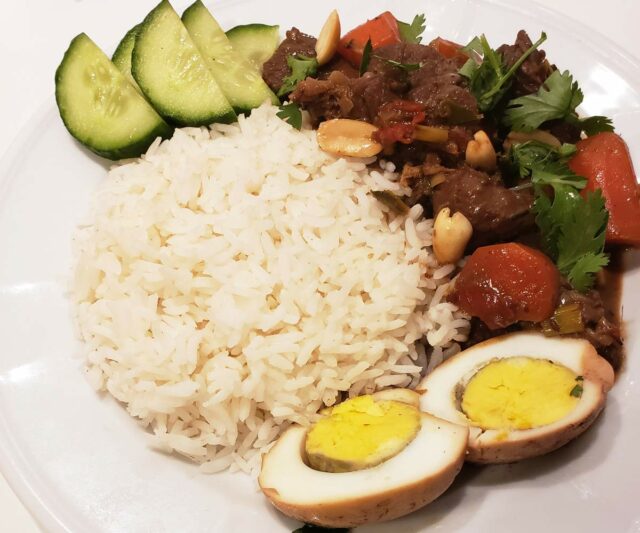
Thailand's Deep South
The Deep South of Thailand consists of three main ethnic groups: native Southern Thais (mostly Buddhists), Southern Chinese refugees (from Hainan and Fujian also mostly Buddhists) and Thai (and Malaysian) Muslims.
The cuisine of this regions heavily relies on seafood and fresh vegetable. There are some cultural exchange between the groups. But generally, each group has it's own, unique cuisine.
Thai Muslim population has a deep Middle Eastern and South Indian influence on its culture and its cuisine, due to the path Islam took to arrival to the region.
You see this influence in this dish, in the Indian dry spices included in the curry.
What does Thai Massaman curry taste like?
Be warned that this dish is incredibly aromatic and hearty. It makes you feel as if you are back in your granny's kitchen, cooking her hearty holiday stew.
I remember buying a tiny bag full of "Gaeng Massaman" in one of the food markets in Pattani.
A couple of hours later, I was sitting on the sidewalk. The food was already cold, but I just couldn't stop eating, indulging in the curry's strong aroma.
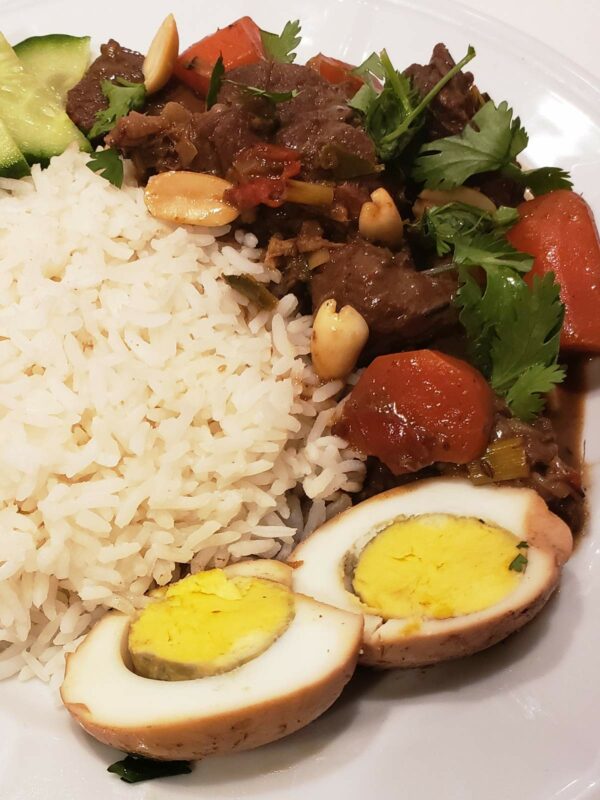
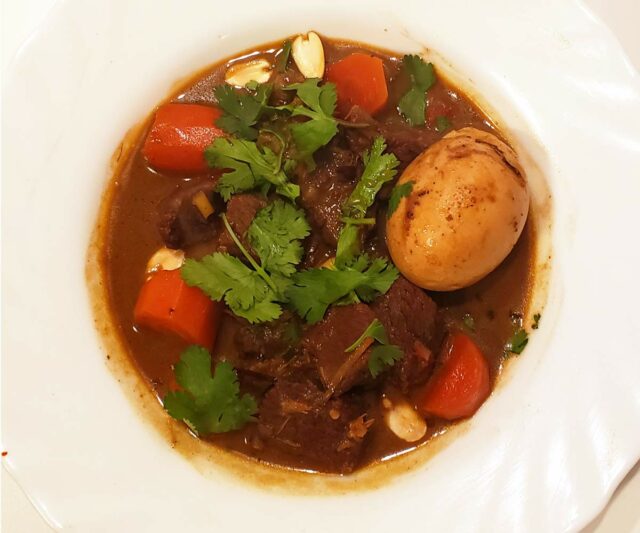
As a great alternative to the traditional meat and potato version, you can add boiled eggs and carrots to the meat instead.
This is exactly how they prepare Massaman curry in Pattani!
What is in Massaman curry paste?
This curry is an incredibly aromatic dish. The aroma and flavor come from a combination of wet and dry ingredients that come together in a way that makes this dish unlike any other.
Many of the wet ingredients in this dish are typical ingredients in Thai cuisine.
- Lemongrass is an herb with a distinct lemon aroma and flavour. However, it is *not* a substitute for lemon or vinegar. You can often find lemongrass with other refrigerated fresh herbs in your grocery store's produce section. There isn't really a good substitute if it is not available.
- Galangal is a plant from the ginger family. Its root is used in cooking and traditional medicine. In this recipe, galangal can be substituted with fresh ginger. However, in other dishes, where galangal is more dominant, a substitution is less recommended (Tom Kha for example. Kah means galangal, so it's obviously a substantial part of this dish).
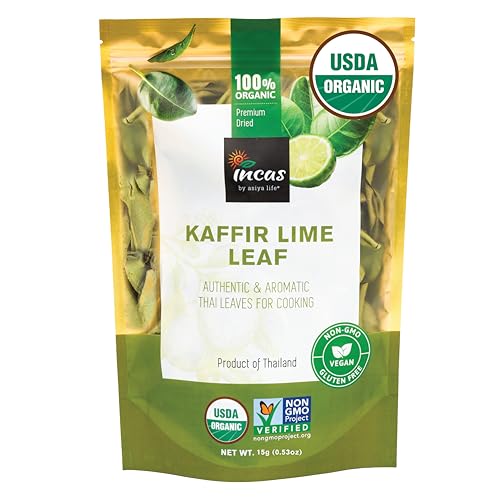
- Kaffir lime is a tropical fruit, native to Southeast Asia. Similar to lemongrass, it enhances stews, soups, and curries with a lemony aroma. However, the taste is a bit sharper than lemongrass. You can purchase kaffir lime leaves online (affiliate link). There isn't really a good substitute if they are not available.
- Thai spur chilies are the traditional way to add a fiery heat to this dish. Since they are harder to find in grocery stores in the West, my recipe below uses Guajillo chilies, which are my recommended substitute. They are quite mild compared to Thai chilis, but still hot. You can often find guajillo chilies with other dried chilies in your grocery store. You can also purchase guajillo chilies online (affiliate link).
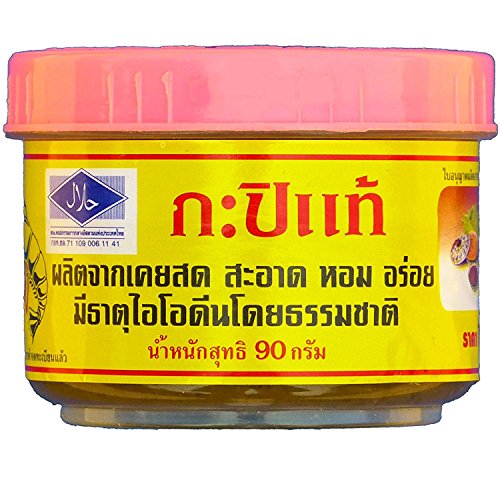
- Shrimp paste simply consists of ground shrimp, fermented with salt. It has a funky aroma and taste, and it is very salty. It is often used in Southern Thai cooking. You can find shrimp paste at an Asian grocer or in the Asian section of your general grocery store. Or you can purchase shrimp paste online (affiliate link). It is possible to substitute shrimp paste with salt, you will simply use a bit less than the amount written in the recipe (1 tablespoon instead of 1.5 Tbsp, for instance).
What spices are in Massaman curry?
The dry spices in the Massaman curry powder are aromatic spices like cinnamon, cloves, cardamom, anise, coriander, and cumin.
These spices are often found in Indian curries, like Madras beef curry. Any many of these dry spices are ones you will use if you make your own Indian curry powder.
There was a major South Indian influence on the South of Thailand (and neighbouring Malaysia) during the course of history. This dish is a great example of that.
How to make Thai Massaman curry
Even though Massaman curry has a long list of ingredients, most of the cooking time is hands off.
A large number of the ingredients go into making either the dry curry powder or the wet curry paste.
In the curry itself, you combine the dry curry powder and the wet curry paste with your proteins and vegetables, coconut milk, and a few extra flavorings like tamarind, palm sugar, and fish sauce.
- Tamarind is a tree native to Africa and Asia. Its beans provide a sweet and sour flavour profile to the dish. You can often find its concentrated liquid in many non-Asian grocery stores. And you can purchase tamarind concentrate online (affiliate link). The concentrate is what I use in this recipe. It can be substituted with lemon juice, about the same amount, if needed.
- Palm sugar, as the name suggests, is produced from the sap of palm trees. It is a bit less sweet than white sugar and more complex in terms of texture and flavour. However, if palm sugar is not available it can be substituted with white sugar.
- Fish sauce is a condiment made from salted fermented fish. Is has a distinct flavor and aroma and is used in many Southeast Asian cuisines. You can often find fish sauce in the Asian section of your grocery store.
What vegetables are in Massaman curry?
In Central Thailand, this curry more commonly includes potatoes. And according to my experience, this version is what's served in most Thai restaurants outside of Thailand.
As we have been talking about here, in Thailand's South, boiled eggs and carrots are the common addition.
The two versions do share some spices in common, such as cardamom and coriander seeds. But generally, in the South they add a greater variety of spices to this dish.
What to serve with Thai Massaman curry?
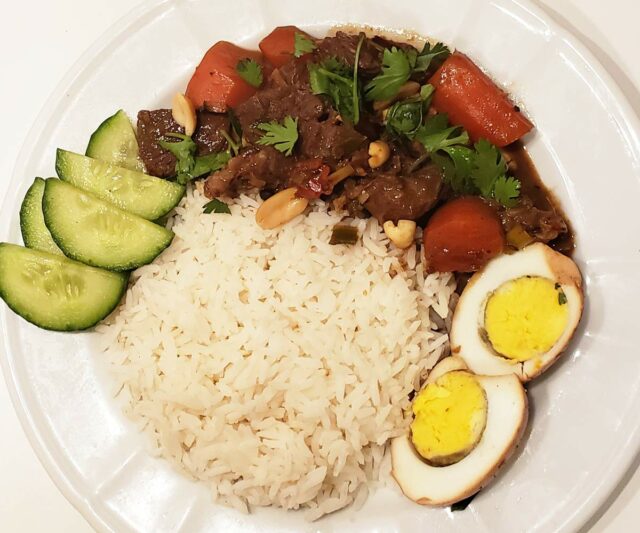
Thai jasmine white rice is traditionally served with this curry.
Fresh herbs and green vegetables are often served on the side.
Thai Massaman Curry
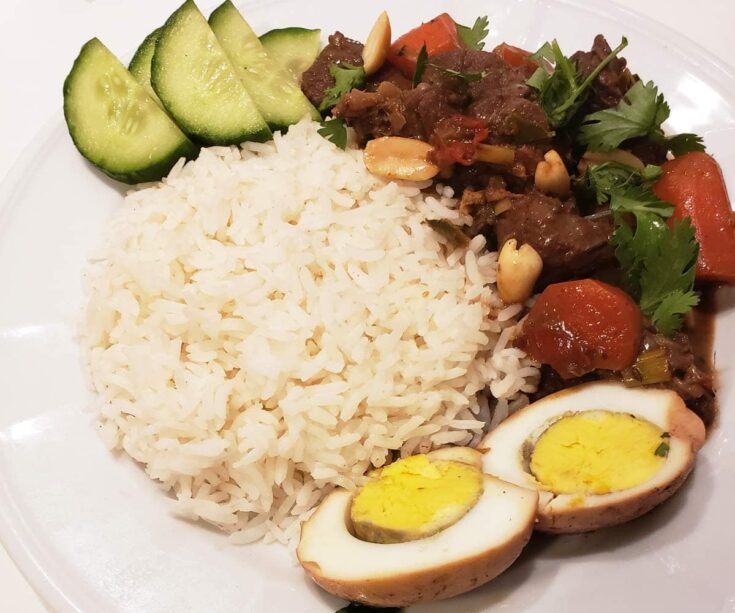
Thai Massaman Curry, has a gentle-yet-rich aroma, rich coconut-and-peanut broth, and must-have chunky potatoes. This curry recipe seems to be one of Thailand's most favored dishes by Westerners.
Ingredients
For the curry powder
- 1 star anise
- 1 ½ tablespoon coriander seeds
- 1 tablespoon cumin seeds
- ½ cinnamon stick
- 2 green cardamom
- 3 whole cloves
- 1 tablespoon peanuts
- 1 teaspoon black peppercorns
- A pinch ground nutmeg
For the curry paste
- 1 lemongrass stalk, finely chopped
- 1 thumb-size peace of galangal, sliced (fresh ginger may be substituted)
- 4 kafir lime leaves, sliced
- 2-3 guajillo chili peppers (depends on your spice preference)
- 1 shallot, diced
- 2 cloves of garlic
- 1 teaspoon shrimp paste
For the curry
- 2 tablespoon vegetable oil
- 1 cup coconut milk, divided
- 400g (¾ - 1 lb) beef, cut into bite size pieces
- Curry paste and curry powder above (or 4 TBS of store bought Massaman curry paste*)
- 3 hard-boiled eggs, peeled**
- 2 medium sized carrots, diced
- 1 ½ litre (6 ⅓ cups) water
- 3 tablespoon tamarind concentrate
- 3 tablespoon palm sugar (or white sugar)
- 2 tablespoon fish sauce
- 1 tablespoon salt
To serve
- Rice
- Chopped cilantro leaves, for garnish (1 tablespoon per serving)
- Crushed or halved peanuts, for garnish (1 tablespoon per serving)
Instructions
For the curry powder
- Blend all ingredients in a food processor until they become a fine powder. You can use a mortar and pestle instead, if desired.
For the curry paste
- Blend all ingredients in a food processor until they become a fine paste. You can use a mortar and pestle instead, if desired.
For the curry
- On low-medium heat, pour 2 tablespoon of vegetable oil into a large pot.
- Add 2 tablespoon of the curry powder and 3 tablespoon of the curry paste and fry together for 1-2 minutes, until their aromas are released and the kitchen smells amazing.*
- Add ¼ cup of coconut milk and 400g (¾ - 1 lb) of beef. Mix all well until the meat is incorporated into the coconut gravy.
- Add the carrots and boiled eggs** and mix well.
Add 1.5 litre (6 ⅓ cups) of water and the rest of the coconut milk to the pot and bring to a boil. - Cover the pot and simmer on low heat for 1.5-2 hours. Add more water if needed.
- Add the tamarind concentrate, palm sugar, fish sauce, and salt to the pot and stir gently.
- Serve along with rice of your choice.
- Garnish with chopped cilantro and peanuts.
Notes
* If using a store-bought Massaman curry paste - skip steps 1-2 and add 4 tablespoon of the curry paste to the pot instead (step 3).
** Boil eggs in boiling water for 8 minutes before pulling them and adding them to the curry.
Recommended Products
As an Amazon Associate and member of other affiliate programs, We earn from qualifying purchases.

Nutrition Information:
Yield:
4Serving Size:
¼ of recipe (just curry)Amount Per Serving: Calories: 474