Son-in-Law Eggs (Thai Fried Hard Boiled Eggs)
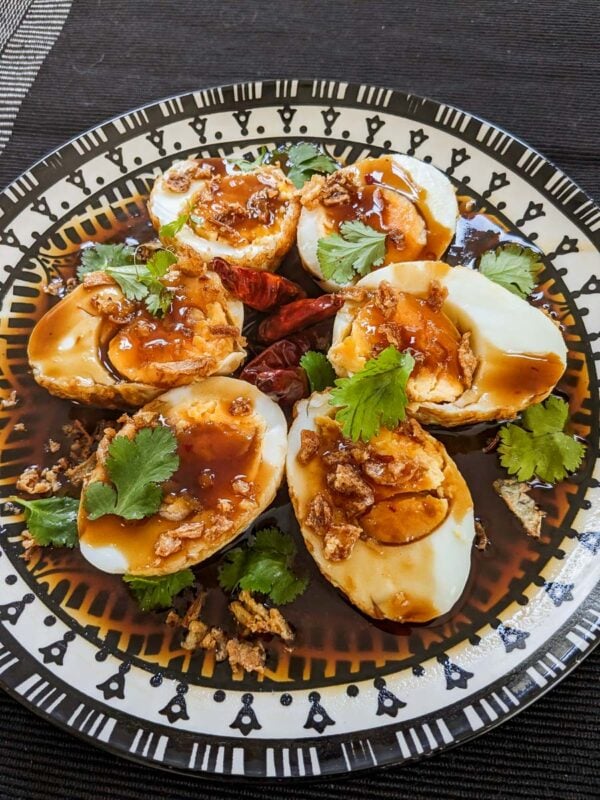
Son-in-Law eggs (Kai Luk Koey) are a special-occasion Thai dish comprised of hard-boiled eggs that are fried and served in a sweet and salty sauce. Let's dive into the story behind this dish!
This article contains affiliate links. These links are provided to help you find some of the more specialty products we mention in the recipe. See our Disclosure Policy for more information.
Local dining in Thailand
Every time anew, I am fascinated to learn how different cultures can perceive cooking ingredients and methods in various ways. It is a good reminder of how social, cultural, and culinary norms of one place would not necessarily be relevant in another.
And, perhaps most importantly - when traveling, such discoveries might turn out to be outstandingly delicious.
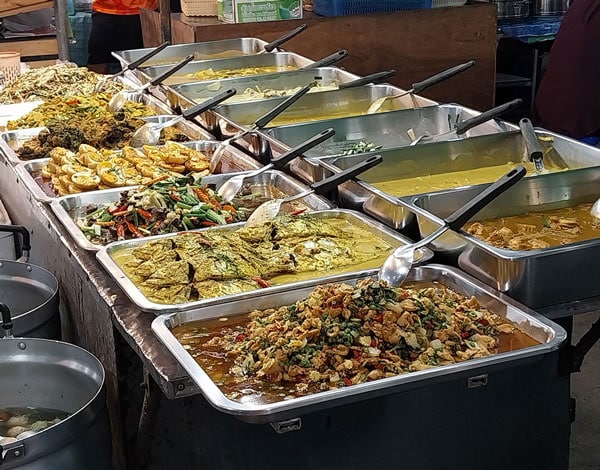
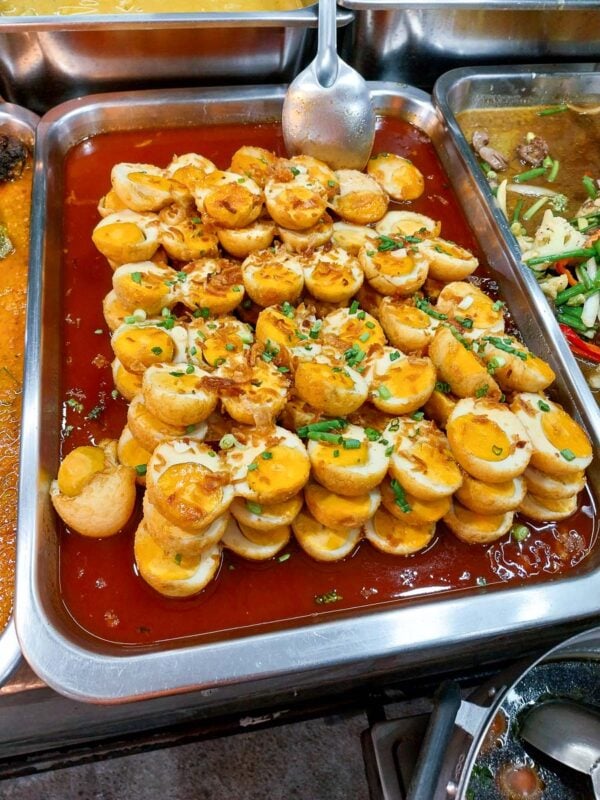
On my first trip to Thailand, I became enchanted with a local dining affair - Khao Gaeng.
While the term "Khao Gaeng" literally means "curry rice", Khao Gaeng restaurants are a lot more than that - as every possible dish that may be eaten with rice may be served.
That means that coconut-based curries, hearty soups, spicy salads, and Thai-Chinese stir fries are only the tip of the iceberg of a Khao Gaeng menu.
Additionally, as I have mentioned, Khao Gaeng is a local affair. That means that while certain dishes (e.g. green curry or Pad Kraprao) have gained popularity all over the country, each Khao Gaeng restaurant often serves local and unique dishes that may not be found elsewhere.
That makes Khao Gaeng, besides being delicious and affordable, a fascinating cultural phenomenon.
Cultural exchange
On my latest trip to Southern Thailand, I was reminded of the richness of local culture and regional cuisines. The area is populated by three main ethnic groups: Buddhist Southern Thais, Buddhist Thai Chinese, and Muslim Thai Malays. While each group owns its own culinary heritage, cultural and culinary exchange between the different communities has always taken place.
The dish I am sharing with you today is a great example of such cultural exchange. I was taught this recipe by Khun Mae, a Khao Gaeng chef in Krabi Town. Besides being personally meaningful to me (read more about it here), this dish is admittedly one of my favorite dishes to make at home.
What are Son-in-Law eggs?
So what are Son-in-Law Eggs? What is the story behind the dish's name? And what makes them so unique?
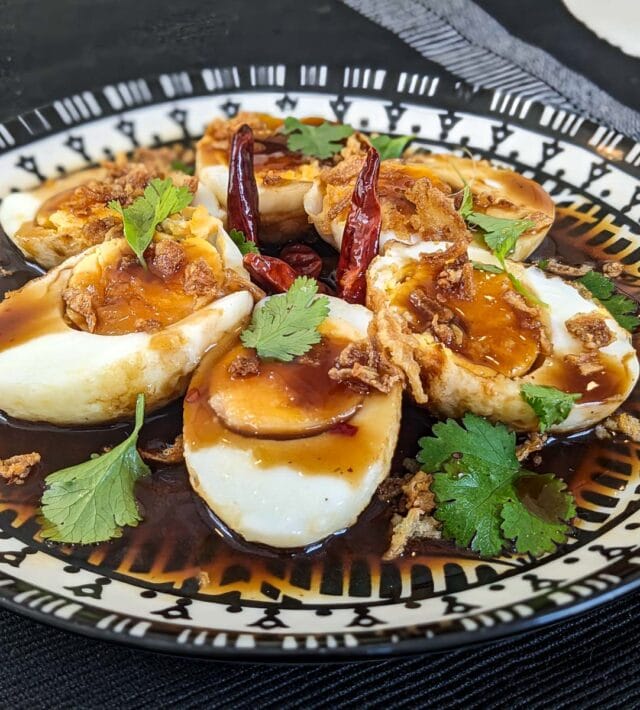
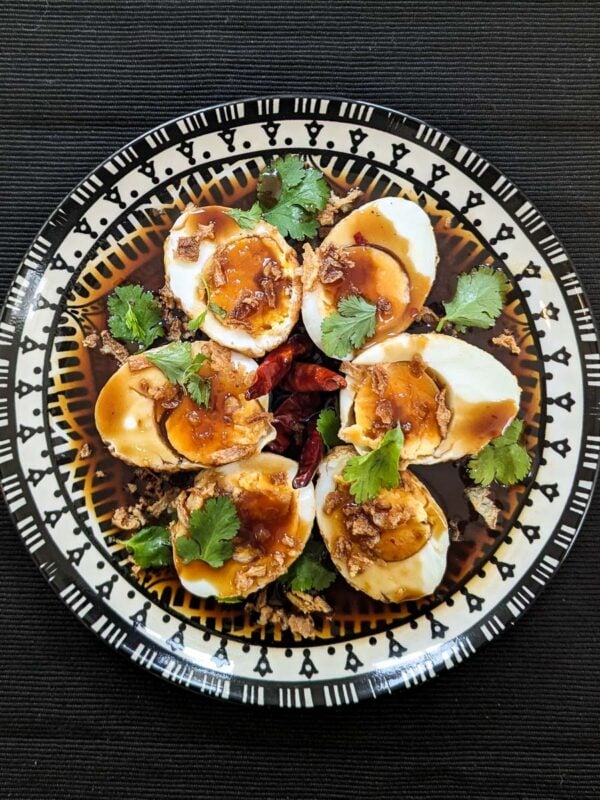
Son In Law Eggs (Kai Luk Koey ไข่ลูกเขย in Thai) is a Thai Chinese dish, where boiled eggs are fried and covered with a sweet, salty and extremely silky sauce, as well as some fried dried chilis and crispy shallots.
According to Thai tradition, this dish is meant to be prepared just before marriage, by the future groom to his future mother-in-law. This dish is meant to prove to the mother that her son-in-law is worthy of her daughter and is able to take care of her.
The dish is classified as Thai Chinese due to its flavor profile. Ingredients like soy sauce, fish sauce, tamarind, cornstarch, and sriracha indicate its Thai Chinese character.
And despite all, never in my life have I stumbled upon a similar Chinese dish. Apart from the sauce, fried boiled eggs are seldom used in Chinese cuisines, especially not as a central part of a dish.
However, fried boiled eggs are not uncommon in Southern Thailand. Thai Malay Muslims add boiled eggs to curries, rice biryanis, and sambals (spicy relishes). As all ethnic communities live side by side in Krabi and the neighboring provinces, cultural and culinary exchange naturally occurs.
One might speculate, for instance, that Son-in-Law Eggs is simply a Thai Chinese adaption of Thai Malay egg curry.
Speculations aside, Son-in-Law Eggs are surprisingly delicious due to the dish's textural and flavor contrasts. Fried boiled eggs, dried chilis, and shallots present three dimensions of crispiness, as the soft and savory egg yolk interplays with the addictive silkiness of the sauce.
Ingredients and substitutions
There are two parts to making Son-in-Law eggs: the eggs (along with other fried accents) and the tamarind sauce.
The ingredients you will be frying are:
- Eggs
- Chilies - Use Thai chilies or whatever chili you have on hand or enjoy.
- Shallot
You can use the same oil for each, just fry them in batches one after the other. This keeps the flavors separate until they combine on your plate.
To create the flavor of the tamarind sauce, you will use:
- Sugar - This creates a sweet and sticky sauce.
- Tamarind paste - Tamarind is a popular sour element in Thai cooking. The paste comes from the pulp of a fruit grown in Southeast Asia. Sometimes you can find the fruit in specialty or Asian grocery stores. However, it is much easier to find the paste ready to use. This you can find at many large grocery chains now, at Asian grocers, or online.
- Siracha/chili sauce - This is optional and can vary depending on your heat preferences.
- Soy sauce and salt - Add the salty element to the sauce.
How to make Son-in-Law eggs
The process of making Son-in-Law eggs is not too difficult. The batch frying of ingredients does take a little attention to be sure each ingredient (particularly the sensitive chiles and shallots) does not over-fry.
First, you have to make sure you have hard-boiled eggs on hand. We recommend having them slightly cool or at room temperature for best frying.
To start making the dish you need to fry the whole, peeled, hard-boiled eggs until lightly crisp and golden. Then, you fry the chilies and shallots in batches as well. Everything gets removed from the oil when done to set aside on its own paper towel-lined plate.
Once your ingredients are crispy and waiting, you can make your sauce.
First, the sugar gets caramelized - watch it carefully so it doesn't scorch. Then you add the remaining sauce ingredients and bring to a light simmer to thicken slightly. Once your sauce is ready, you add the cornstarch and water slurry to finish the thickening process.
To put the dish together, cut the eggs in half and arrange on a plate. Cover with the sauce and top with the garnishes.
Enjoy!
How to serve these fried hard-boiled eggs
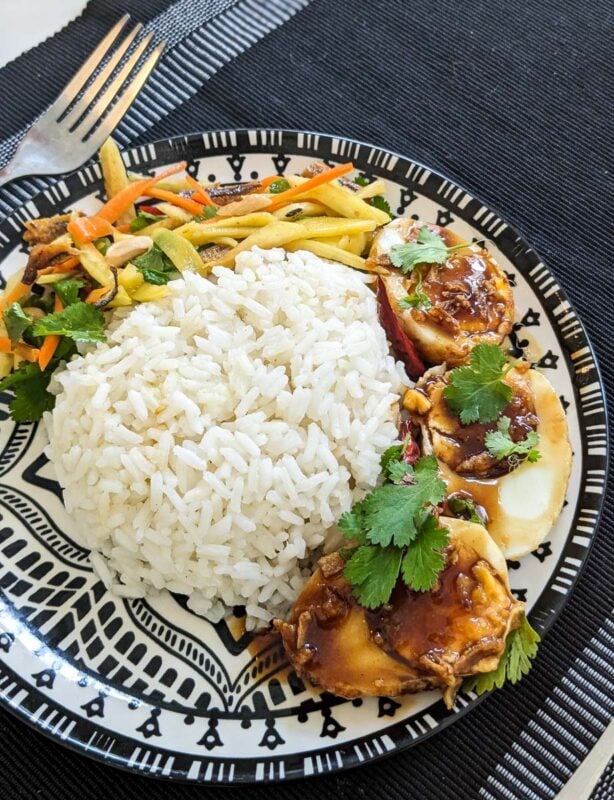
In many Asian cuisines, fried food is very much enjoyed even after coming to room temperature, sitting in a flavorful sauce, and absorbing the juices. In fact, at most Khao gaeng shops, Son-in-Law eggs are often enjoyed at room temperature, and I have to say - it's delicious! (Rice must be served hot though.)
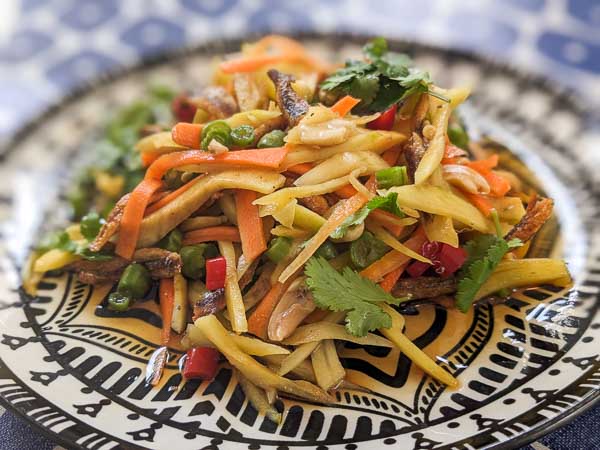
I personally enjoy pairing this dish with white rice, crunchy vegetables, and perhaps another spicier dish, such as Pad Ped Gai or Yum Mamuang, to counter the sauce's sweetness.
Can Son-in-Law eggs be made ahead?
One thing that is nice about this dish is that it's relatively easy to make, and it can be prepared in large butches - perfect for a weekly meal prep!
How to store and reheat Son-in-Law eggs
To store these eggs to enjoy later, place the cooled eggs and sauce in an airtight container in the refrigerator. They should stay good for 3-4 days. If you store the garnishes separately, they will retain their crispness for your next servings.
Since these eggs are often served at room temperature, reheating is not necessary. But if you would prefer them warm, you can microwave them for a few seconds at a time or heat the eggs in a skillet with the sauce for a minute or two, until heated to your liking.
Son-in-Law Eggs (Kai Luk Koey)
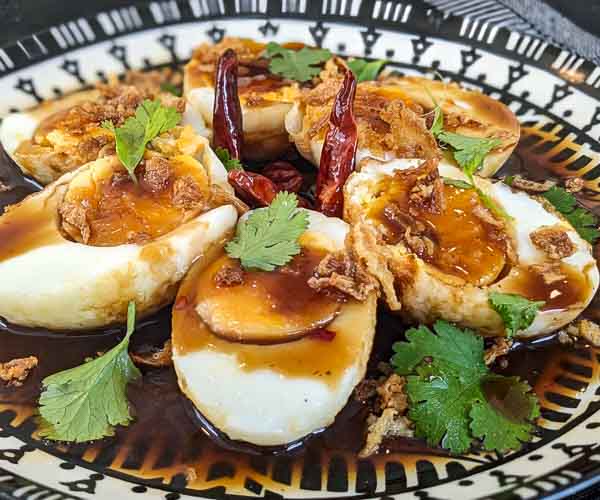
Son-in-Law eggs (Kai Luk Koey) are a special-occasion Thai dish comprised of hard-boiled eggs that are fried and served in a sweet and salty sauce.
Ingredients
For the eggs
- Vegetable oil, for frying
- 6 hard-boiled eggs, peeled*
- 8-10 dried chilies
- 1 shallot, sliced and tossed in corn starch
- Cilantro, to garnish
For the tamarind sauce
- ¼ cup of sugar
- 1-2 tablespoon of tamarind paste**
- 1 tablespoon Sriracha/chili sauce (optional)
- 1 tablespoon salt
- 1 tablespoon soy sauce
- ½ cup water
- 1 tablespoon corn starch, diluted in 2 tablespoon cold water
Instructions
- Add 1 inch of oil to a frying pan. Heat the oil over medium-low heat and shallow-fry the boiled eggs for 2-3 minutes, until golden and slightly crispy on all sides. (Optionally, you can use more oil and deep fry the eggs.) Then, take the eggs out of the oil, place them on a paper-towel-lined plate, and set aside.
- In the same oil you used for the eggs, fry the dried chilies for 30 seconds over low heat, turning them constantly (otherwise they might burn). When slightly brown, remove them from the oil to a paper-towel-lined plate. Set aside.
- Add the shallots to the oil and fry them over low heat until golden and crispy (occasionally stir to avoid burning). Remove them from the oil to a paper-towel-lined plate. Set aside.
For the sauce
- Add ¼ c of sugar to a small saucepan. Heat it over medium heat. Once the sugar starts to caramelize, add 1 tablespoon of the tamarind paste, sriracha/chili sauce, salt, soy sauce, and water. Bring the mixture to a boil and let the sauce simmer for 3-5 minutes, until it has slightly thickened. Let a little sauce cool and taste. If you would like more tamarind flavor, add some in, to your preference, and mix thoroughly.
- Turn off the heat. Add the cornstarch and water mixture and stir well. Remove the saucepan from the heat.
To assemble the dish
- Cut the fried hard-boiled eggs in half and arrange them on a serving plate. Drizzle the sauce over them and garnish with the fried chilies, fried shallots, and cilantro. Enjoy!
Notes
*To hard-boil eggs: Start with room-temperature eggs. Place the eggs in a single layer in a large saucepan. Cover the eggs with 1 inch of water. Bring the water to a boil over medium heat. Once the water comes to a full rolling boil, remove the pot from the heat and cover it. Let the eggs sit in the hot water for 12 minutes. Carefully transfer the eggs to a colander and add cool cold water over them to cool them down. For the easiest peeling, peel right away. (Peeled eggs can be stored in an air-tight container in the refrigerator for 3-5 days.)
**Tamarind paste: The amount of tamarind paste should be adjusted according to taste preference. It is important to note that different brands may have different levels of concentration and hence, sourness. I recommend adding the tamarind gradually while tasting in between.
Recommended Products
As an Amazon Associate and member of other affiliate programs, We earn from qualifying purchases.


Nutrition Information:
Yield:
3Serving Size:
⅓ of recipeAmount Per Serving: Calories: 395