Pumpkin Erissery
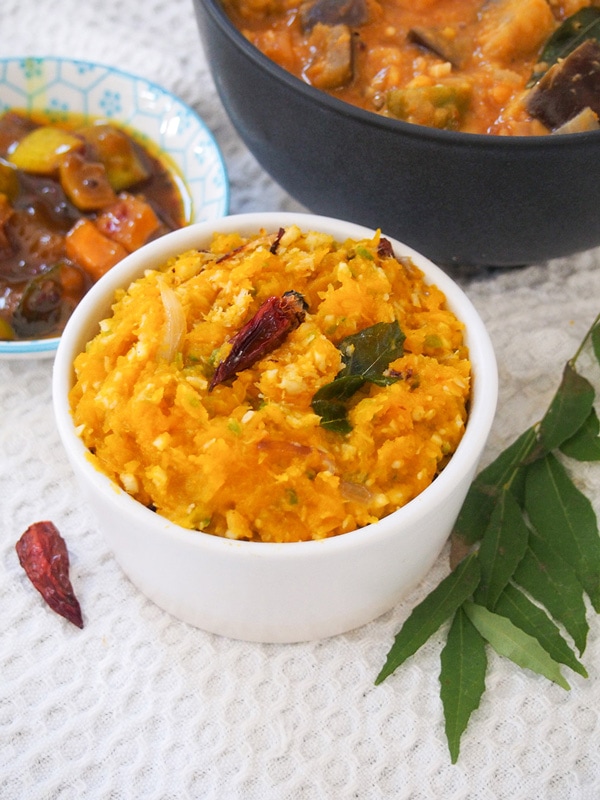
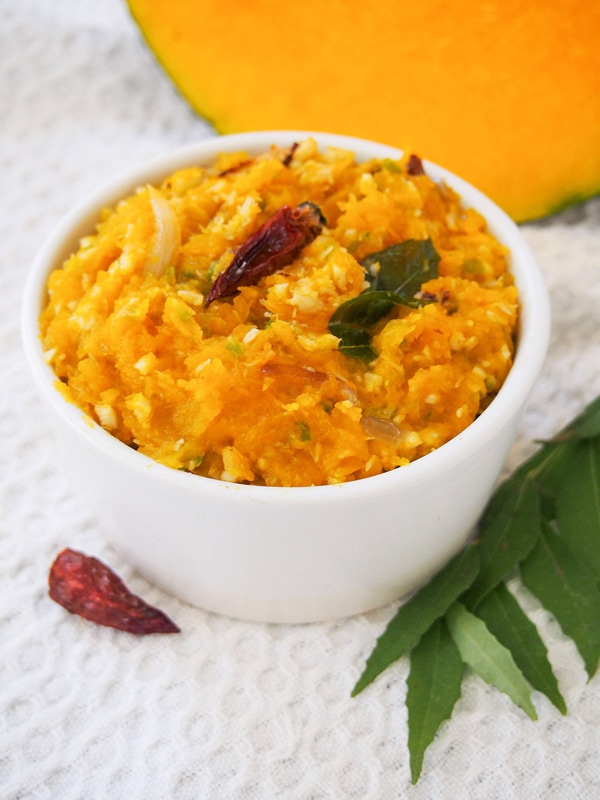
Pumpkin erissery is an easy and comforting Indian side dish. The main flavors are pumpkin and coconut along with simple but classic Indian spicing. It pairs perfectly with a range of other dishes, or enjoy it alone with rice or other sides.
When you visit your local Indian restaurant, you may be drawn to typical meat favorites like chicken korma, lamb rogan josh, lamb biryani or Madras beef curry.
However, Indian cuisine also has many vegetarian dishes, both as sides and mains. Popular dishes worth trying include bainghan bharta (curried eggplant stew), paneer Makhani (paneer cheese in creamy tomato sauce) and vegetable korma.
Some communities are predominantly vegetarian, either due to religious beliefs or more down to availability. One area which really celebrates vegetarian cuisine is Kerala in the south, through a traditional meal called a "sadya".
What is a Sadya?
"Sadya" means "feast" or "banquet" in Malayalam, the language of the Malayali, the major ethnic group in Kerala in the Southern tip of India. The meal is served for special occasions like weddings and a number of festivals, including Onam.
The sadya is served on a banana leaf with often more than 20 different components. The largest serving is rice, with smaller amounts of a range of curries, pickles and other dishes. Traditionally everything is vegetarian, although some in the Northern part of Kerala will include some meat dishes at times.
There is an element of ritual to the meal with items served in a particular order and different components placed in different areas of the banana leaf.
Along with rice, most sadya include parippu (a liquidy dal-like dish) sambar (a lentil and vegetable stew), and various vegetable side dishes like avial, thoran and erissery.
The meal also includes papadam, banana chips and pickles like lime and/or mango. After savory dishes comes the traditional dessert, payasams.
At the end of the meal, the banana leaf is folded in half.
What is Onam?
Onam is an annual Hindu festival celebrating the rice harvest. It is celebrated in other parts of India and beyond, but it is particularly important in Kerala which has public holidays for the festival.
During Onam, most Malayali families will make or join a sadya, even if it's scaled back slightly in the number of dishes.
Other aspects of Onam include boat races, dance events, processions and floral rangoli called pookkalam (pictures on the floor made with flower blossoms).
Flavors in Keralan cuisine
Kerala has long been a major player in the international spice trade and that is reflected in the cuisine. You'll find chilis, turmeric, tamarind, curry leaves, mustard seeds and asafoetida in many dishes.
Coconut is also an important ingredient and used widely, including many dishes in the sadya feast.
Erissery is always a combination of vegetables and coconut and is one of the most typical side dishes included in the sadya.
Pumpkin, or mathanga, erissery is very popular, particularly for Onam when the local yellow pumpkin is in season.
Some versions also include lentils or beans such as black eyed beans, but the version I am sharing today is the much simpler version.
Making pumpkin erissery
While you may not find quite the same kind of pumpkin as in Kerala, you can still enjoy the wonderful flavors of this dish at home. You can use a pie/sugar pumpkin or a similar winter squash like kabocha.
Butternut would also work, though it may not break down as much, which is part of how the dish typically looks (though some leave it in chunks).
There are a few ways to make this, with slightly different seasonings. Some will steam or boil then mash the pumpkin for a smooth texture, others grate it. Either will work, it just depends which texture you prefer.
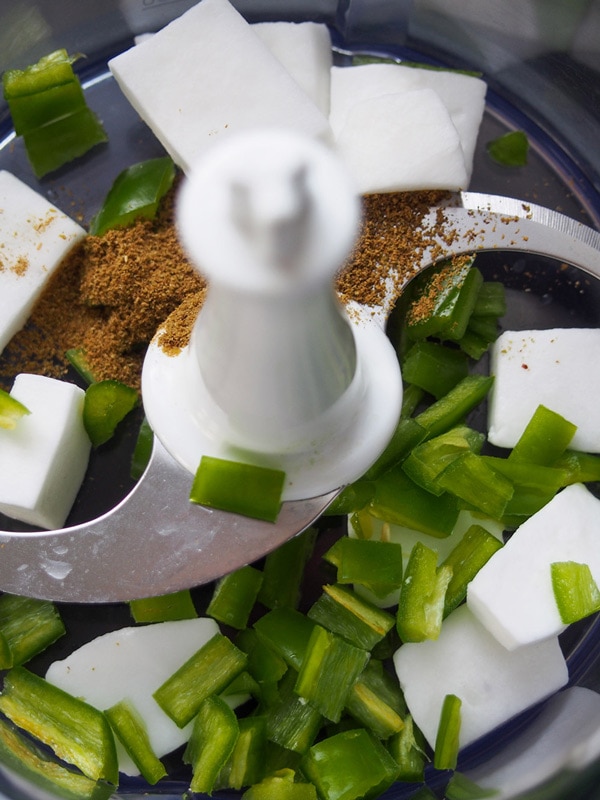
You make a paste of coconut, chili and cumin and mix this with the pumpkin.
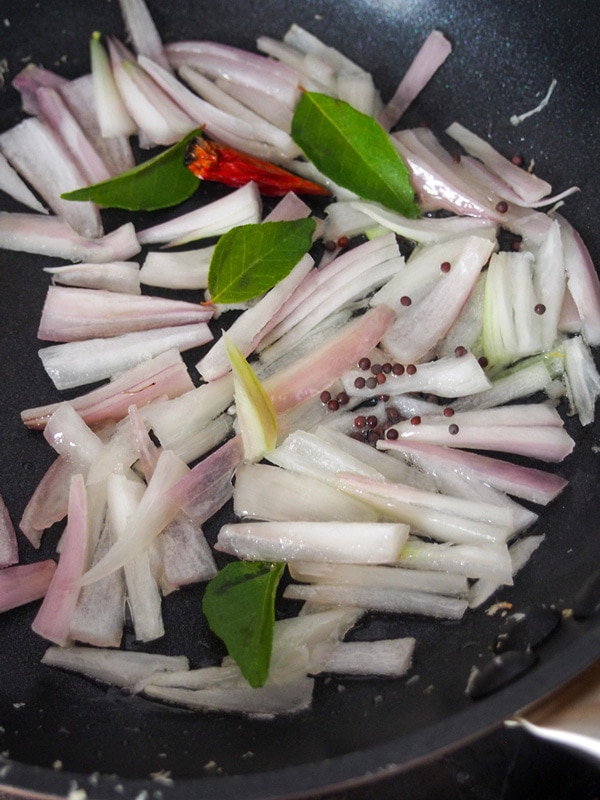
Then you warm some oil and cook mustard seeds, shallots/onion, chili and curry leaves to bring out their flavors. This mixture is called a tempering which is a common part of many Indian dishes to add an extra burst of flavor at the end of cooking.
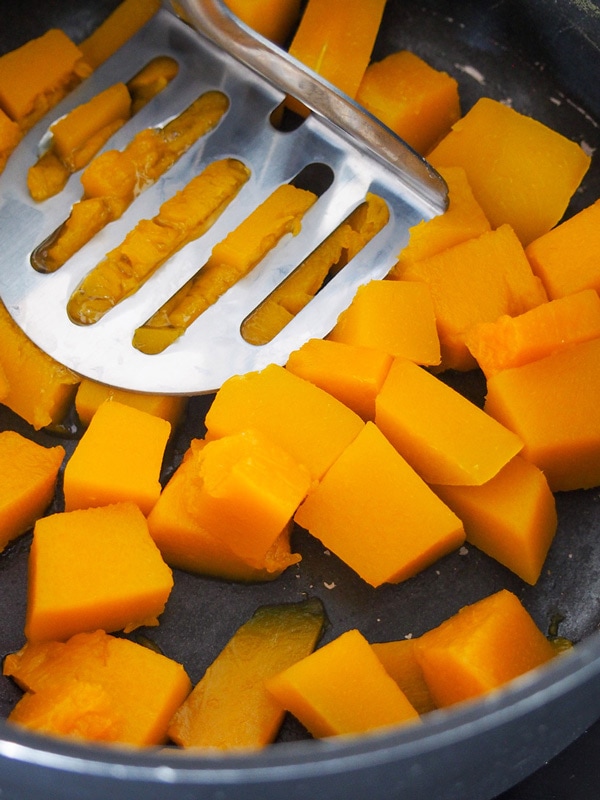
The end result is a relatively simple dish but one that has a wonderful balance of sweet and spice.
It's comforting and works great as a side to many Indian dishes.
Pumpkin Erissery
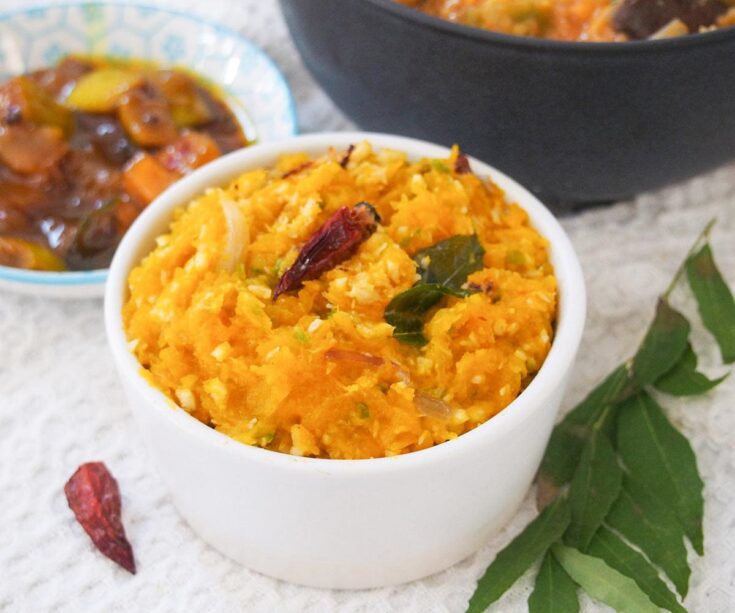
Pumpkin erissery is an easy and comforting Indian side dish of pumpkin and coconut along with simple but classic Indian spicing.
Ingredients
- 2 cups cubed pumpkin (approx 240g)
- ⅛ teaspoon turmeric
- ¼ cup fresh or frozen coconut - small chunks or grated
- 1 fresh green chili (or 2 if you prefer)
- ½ teaspoon cumin (seeds or ground)
- 2 tablespoon coconut (fresh grated or desiccated, as you have) (for topping)
- 1 teaspoon coconut oil (or vegetable oil)
- 2 small shallots (or 1 large or ½ small onion), sliced
- ⅛ teaspoon black mustard seeds
- 4 curry leaves, approx
- 1 dry red chili
Instructions
- Place the pumpkin cubes in a pot with the turmeric and cover with water (around 1 cup). Cover and bring to a boil, reduce to a simmer and let cook until the pumpkin is tender, around 5-7 minutes depending on the size of the pieces.
- Meanwhile, put the ¼ c of coconut, chili and cumin in a small food processor and pulse them together to a rough paste. (Alternatively, grate the coconut, finely chop the chili and grind them with the cumin with a pestle and mortar.)
- Once the pumpkin has cooked, drain it and mash. Add the coconut-chili paste and mix through. Leave over a low heat to cook slightly.
- Meanwhile, dry toast the 2 tablespoon coconut in a skillet to gently browned and set aside (this is to top at the end).
- Add the oil to the skillet and add the shallot/onion slices and mustard seeds. Cook for a couple minutes to start softening, then add the curry leaves and chili. Cook for a few more minutes - the onion should be at least very soft if not gently browned.
- Add the onion and spices to the pumpkin, stir through and cook another minute or two. Remove the curry leaves and chili. Then serve, topped with the toasted coconut (or mix it in).
Recommended Products
As an Amazon Associate and member of other affiliate programs, We earn from qualifying purchases.


Nutrition Information:
Yield:
2Serving Size:
½ of recipeAmount Per Serving: Calories: 138

Caroline lived and traveled various places before settling in Cambridge, MA. She still fits in some travel with her family, but often settles for traveling through food instead. She shares her recipes at CarolinesCooking.com, where there's plenty of international inspiration using seasonal ingredients, as well as creative recipes for all to enjoy. Caroline is originally from Scotland, where she grew up hiking and skiing, both things she still loves to do when her two young boys give her a chance. You can follow along with her cooking adventures on Facebook, Instagram, Twitter, and Pinterest.