
Souvlaki (Grilled Greek Pork Skewers)
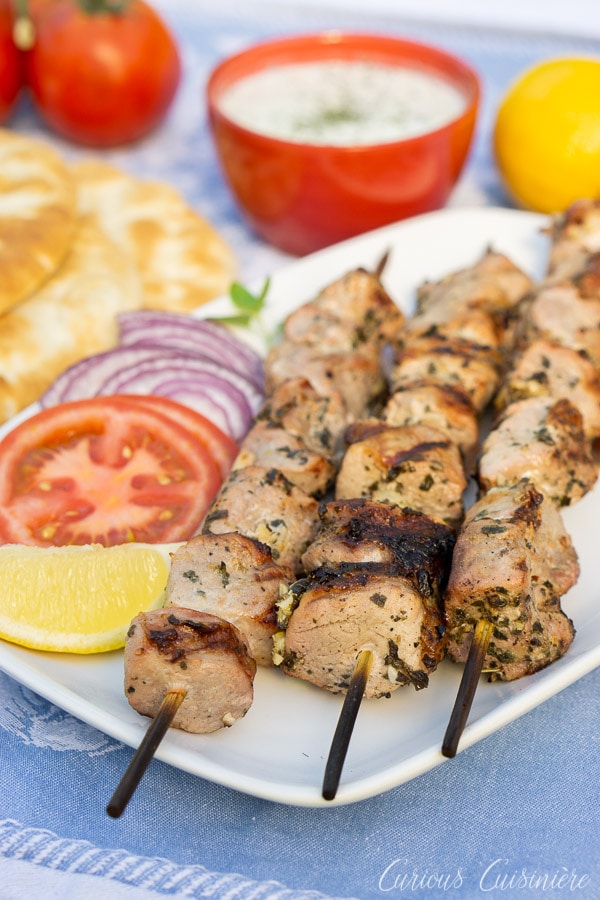
This Greek Pork Souvlaki recipe brings tender, grilled meat together with fresh and bright Greek flavors of lemon and herbs. Serve this grilled pork in a pita with sauce and fresh vegetables, or eat it as a plated meal. Either way, add some fun Greek flair to your next cookout with these pork skewers!
DISCLOSURE: This post was sponsored by the Wisconsin Pork Producers Association. As always, we only share quality products that we love with our readers. All opinions are our own.
What is traditional Greek souvlaki?
Souvlaki (soo-VLA-kee), meaning "little skewer," is a classic Greek dish of cubed, marinated meat that is skewered and grilled over charcoal.
You will find these skewers throughout Greece, but depending on the region, they might be topped differently.
While the people of most of Greece prefer to serve their souvlaki with tzatziki, in northern Greece you won't find them topped with the creamy, cucumber yogurt sauce. Instead, they like to serve their souvlaki with mustard, which sounds like a pretty tasty version too!
What meat is used for souvlaki?
While pork is most traditional, you can also find souvlaki recipes made with chicken or lamb.
We love the flavor of these skewers made with pork and we also love that pork is such a good source of lean protein.
We also are glad to know that when we buy pork, we are supporting family farms, both large and small in our state of Wisconsin and across the US.
While farming practices have changed over the last 50 years, what has stayed the same is the farming families' commitment to good farming practices and producing high-quality pork.
You can learn more about pig farming practices at PorkCares.com.
What is the flavor of this souvlaki recipe?
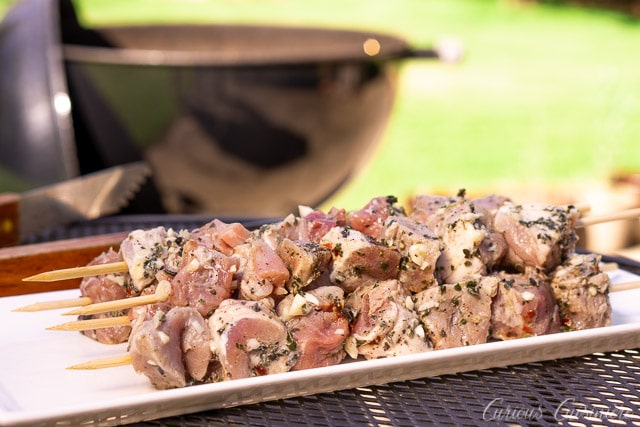
To make souvlaki, the chunks of meat are left to marinate overnight in a mixture of lemon juice, olive oil, and oregano.
The long marinating time with the acidic lemon juice works to tenderize the meat and thoroughly infuse it with the bright flavor of the seasonings.
Once grilled, the meat is so flavorful, that you might just want to eat it straight off of the skewer! (And, that's ok by us.)
How to know when pork skewers are cooked?
The safe internal cooking temperature for pork is 145F. (At this temperature there may be a light blush of pink inside, and that is just fine.)
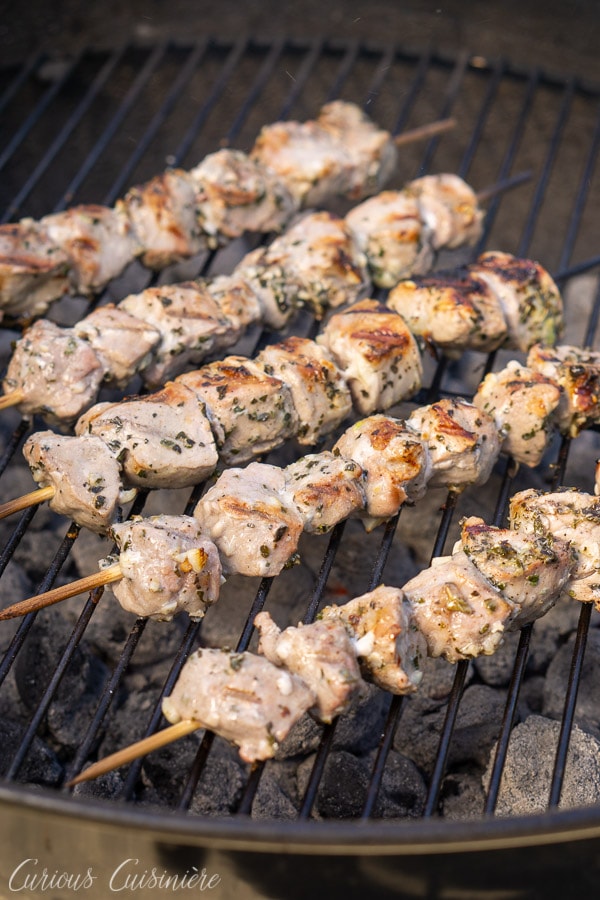
When cooking skewers, it can be tricky to make sure they are cooked and not over-done. For these small chunks, 4-6 minutes a side should be sufficient.
You want the pork cubes to feel firm when you lightly squeeze them with tongs. But since these are smaller chunks of meat, once the meat is cooked through and no longer opaque, with a nice crust on the outside, go ahead and remove them from the grill to let them rest before serving.

How do you eat souvlaki?
The meat can be eaten alone, straight off of the skewer. However, it is often eaten as a plated dinner with potatoes and a creamy tzatziki sauce (or mustard, if you're in the North).
As street food, you will find souvlaki meat piled into soft pita bread and wrapped with crisp veggies and creamy sauce.
Go ahead and make up a big batch of these skewers. Have a plated dinner with potatoes and a Greek salad one night, then use the leftovers for another night to make some pita and veggie wraps!
What is the difference between souvlaki and a gyro?
If you're going to eat a Greek meat-filled pita, be sure you're calling it the right thing!
The gyro (yE-ro, similar to hero) has gained incredible popularity in the States and around the world.
While gyro meat can be served similar to souvlaki, wrapped in a pita and topped with tzatziki and veggies, that's about as far as the similarity goes.
For gyros, minced lamb or beef is seasoned and pressed into a large cone shape, and grilled on a vertical rotisserie. Think of it like a delicious, rotisserie-cooked, Greek meatloaf.
(Sorry if that makes it a bit less appetizing, but it's true.)
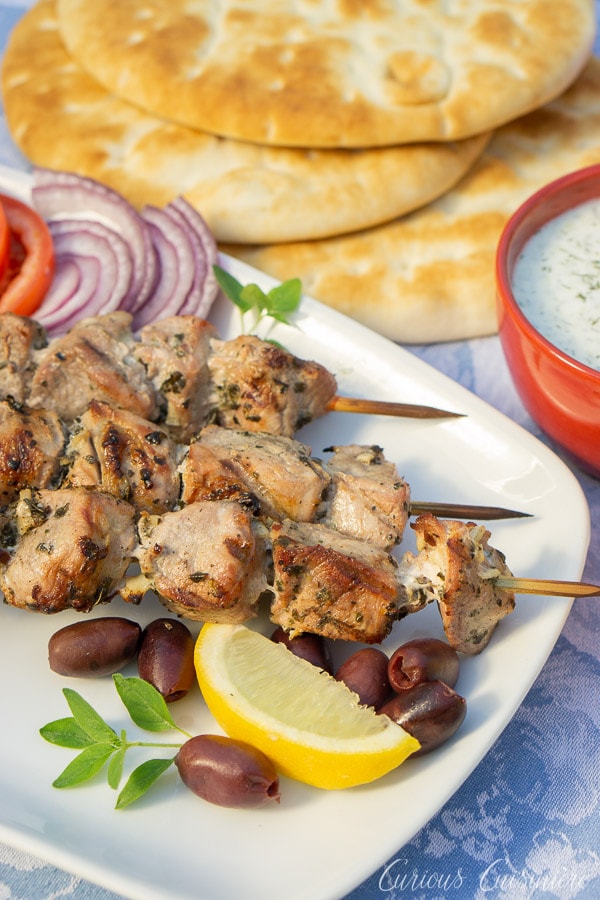
Souvlaki, as we've been discussing, is chunks of pork (or chicken and even less common, lamb) that have been marinated and then grilled over a charcoal fire.
Two completely different meat preparations, both equally as delicious with a soft, chewy pita and creamy tzatziki!
More recipes for pork skewers
We love doing skewers on the grill and pork is one of our favorite meats to use. It takes a marinade so well and is so versatile when it comes to different flavors.
From bright and lemony in this recipe, to sweet and tangy Thai pork skewers, or spicy Spanish pork skewers the flavor palate is endless!
Grilled Pork Souvlaki
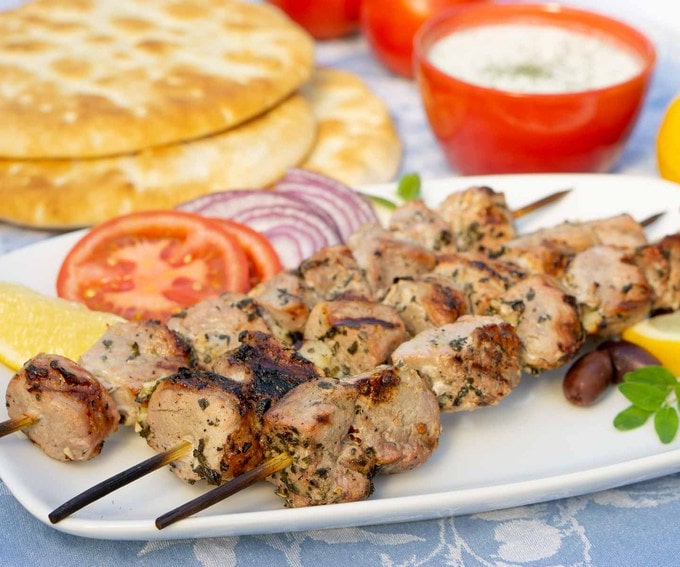
This Greek Pork Souvlaki recipe brings tender, grilled meat together with fresh Greek flavors of lemon and herbs.
For best flavor, marinade the meat overnight before grilling.
Ingredients
- 1 lemon, juiced (roughly ¼ c juice)
- 2 tablespoon olive oil
- 4 garlic cloves, minced
- 1 ½ tablespoon oregano
- ½ teaspoon salt
- ½ teaspoon pepper
- ¼ teaspoon red pepper flakes
- 1 ½ lbs pork tenderloin or shoulder, cubed 1-1 ½”
- 4-5 wooden skewers (soaked in water for 1-2 minutes)
To serve
- 4 pita bread rounds
- 1 c tzatziki sauce
- Fresh vegetables (tomatoes, red onion, cucumber)
- Greek olives (such as Kalamata)
Instructions
- In a small bowl whisk together lemon juice, olive oil, minced garlic, oregano, salt, pepper, and red pepper flakes. Place the pork cubes in a flat baking dish or Ziploc bag and pour the marinade over the cubes. Refrigerate 24 hours or more to marinade.*
- Preheat your grill to medium-low heat (300-350F). (You should be able to hold your hand over the grilling grates for 7-8 seconds.)
- While the grill is preheating, place the meat cubes on wooden skewers that have been soaked in water for 1-2 minutes.
- Grill the pork skewers for 4-6 minutes. Flip and grill for an additional 4-6 minutes on the second side. The meat is done when it has a nice sear and feels firm.
- Remove the skewers from the grill and serve with pita, fresh vegetables, and tzatziki sauce.
Notes
*The meat can also be frozen in the marinade for later use. Simply thaw in the refrigerator overnight before grilling.
Nutrition Information:
Yield:
4Serving Size:
¼ of recipeAmount Per Serving: Calories: 434

Sarah founded Curious in 2010 as a way to save her recipe creations and share culinary experiences. Her love for cultural cuisines was instilled early by her French Canadian Grandmother. Her experience in the kitchen and in recipe development comes from over 10 years working in professional kitchens. She has traveled extensively and enjoys bringing the flavors of her travels back to create easy-to-make recipes.
That looks delicious!
Thanks Lisa!