Kolokithokeftedes (Greek Zucchini Fritters)
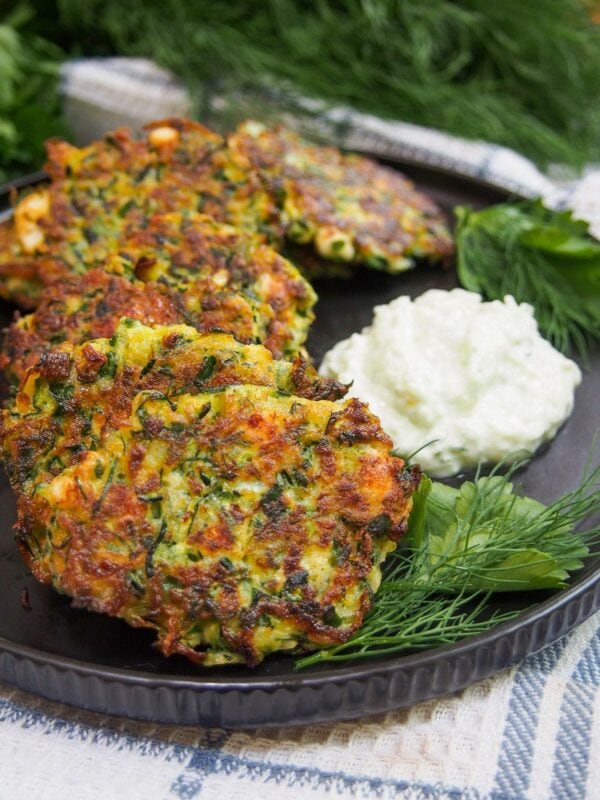
Kolokithokeftedes, zucchini fritters, are a popular meze dish in Greece that are easy and delicious. They're a great way to use up a crop of zucchini with fresh flavors from herbs and feta.
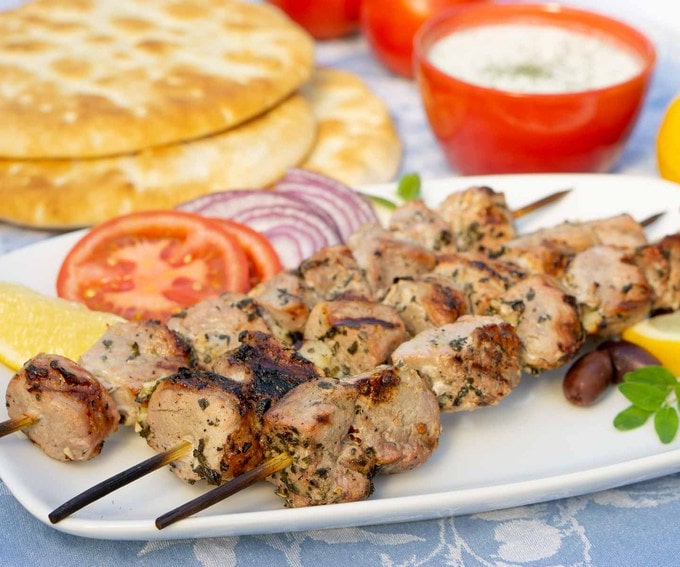
Many Greek dishes that are better known globally are meat-heavy (like souvlaki, grilled meats, moussaka and youvetsi) but you'll also find many vegetable and seafood dishes in the Greek diet.
The mix is also common in other countries within the region, as are many of the common ingredients like olive oil, tomatoes and lemon.
Classic Greek flavors
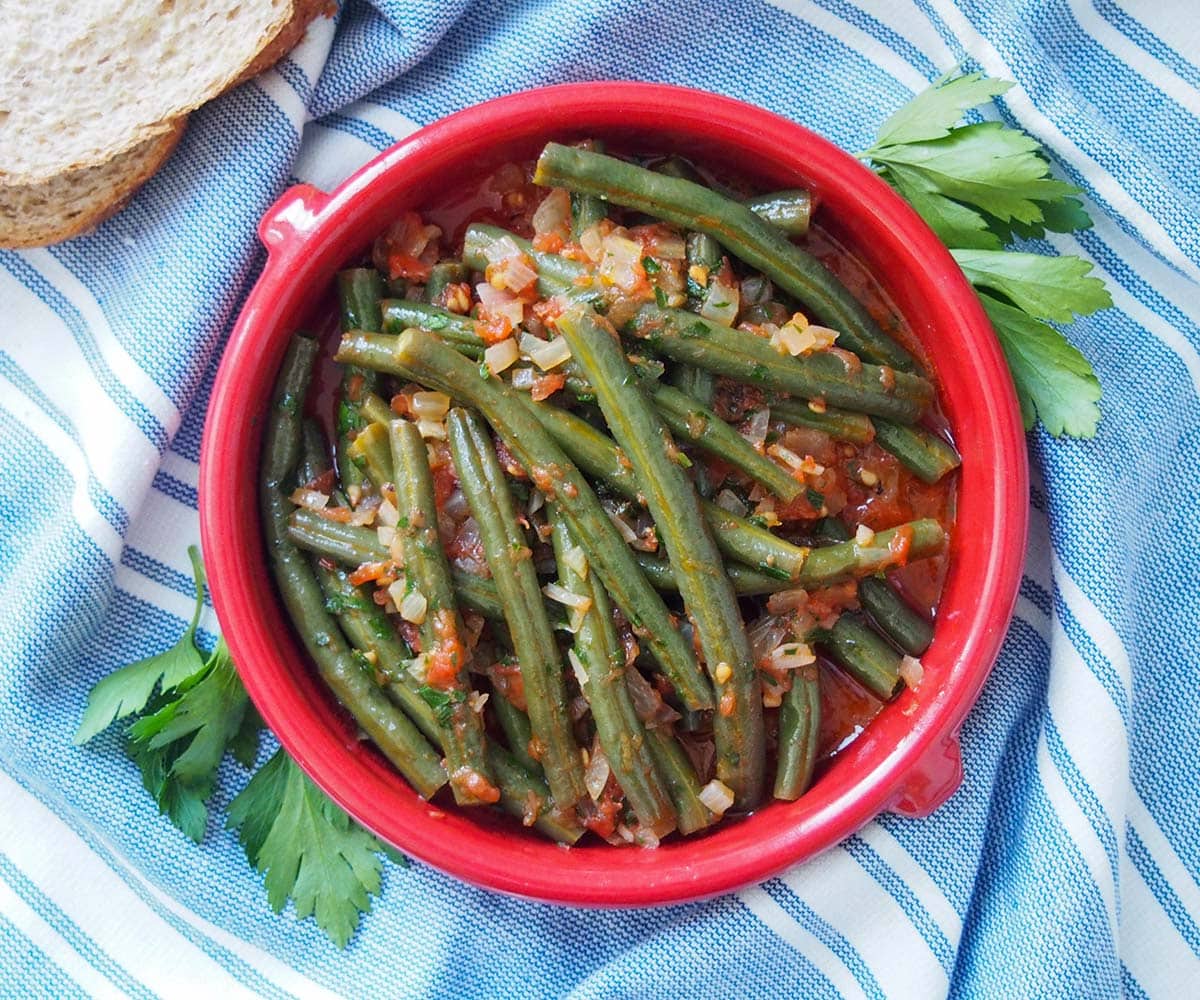
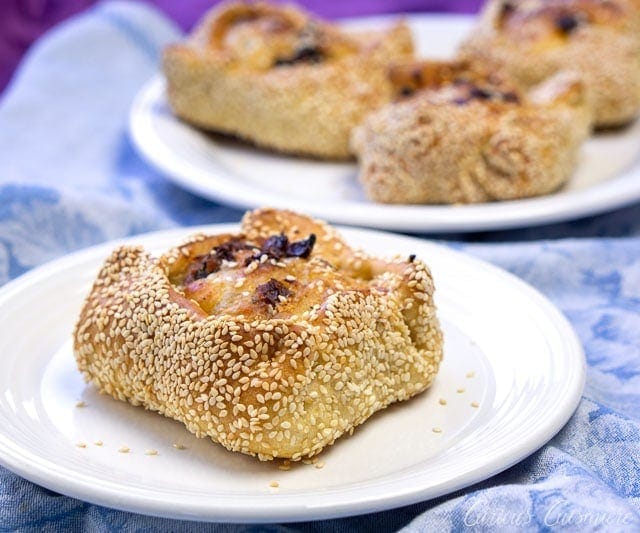
Greek cooking makes use of the abundance of vegetables that grow well in the local climate. As well as tomatoes and olives, this includes green beans (in dishes like fasolakia), eggplant, potatoes, greens (like spinach, used in many pies and pastries like spanakopita) and zucchini.
One thing that is particular to Greece is using a broad range of herbs like oregano, dill and mint to flavor dishes. This applies to both meat and vegetable dishes and helps add fresh, aromatic flavors.
Traditionally, many herbs grow wild and are foraged, though these days it's more typical to grow your own or buy in the market.
Alongside herbs, another key Greek flavor is feta. While you'll find other cheese in Greece, feta is very much THE cheese that is both widely made and used. And, it has achieved EU protected status (PDO, protected designation of origin).
Zucchini in Greek cooking
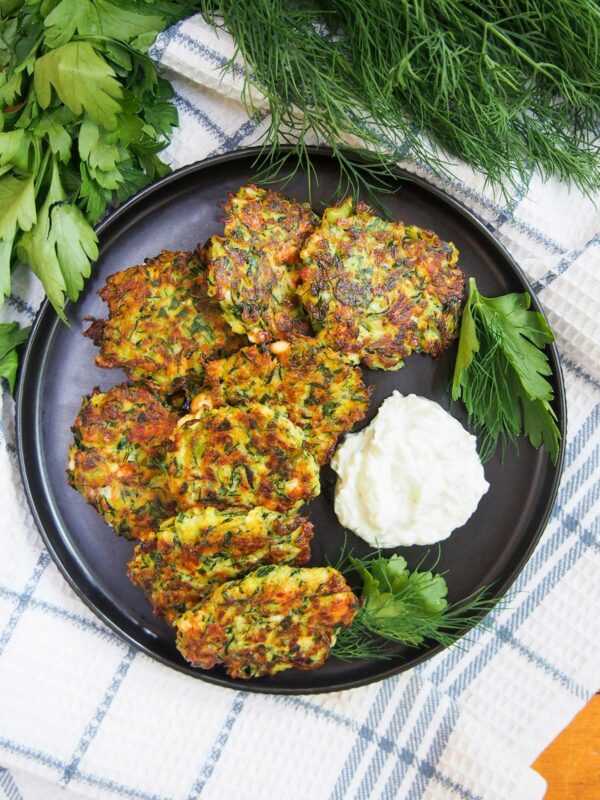
These tasty little bites are a classic way to combine both herb and feta flavors with one of summer's popular crops.
The name kolokithokeftedes comes from "kolokitho" meaning squash more generally, including summer squash like zucchini, and "keftedes" meaning meatballs.
Meat keftedes are another tasty bite worth trying, also flavored with herbs, but these zucchini bites are entirely vegetarian.
With zucchini being easy to grow and a popular crop, it's no surprise it is used in a number of Greek dishes. Some people add it to moussaka, and it is one of many vegetables you'll find stuffed with rice and sometimes ground meat and baked (others include peppers and tomatoes) in the dish gemista.
But you'll also find a number of dishes that highlight zucchini more in itself. These fritters are one of the most popular ways, as are fried zucchini chips. Briám is a dish similar to a baked ratatouille (or a tian) which is made with zucchini, potatoes and olive oil as well as often tomato, eggplant and herbs.
Greeks have a love of pies, so it's probably no surprise you can also find a zucchini pie, kolokythopita, made with filo pastry.
What is kolokithokeftedes made of?
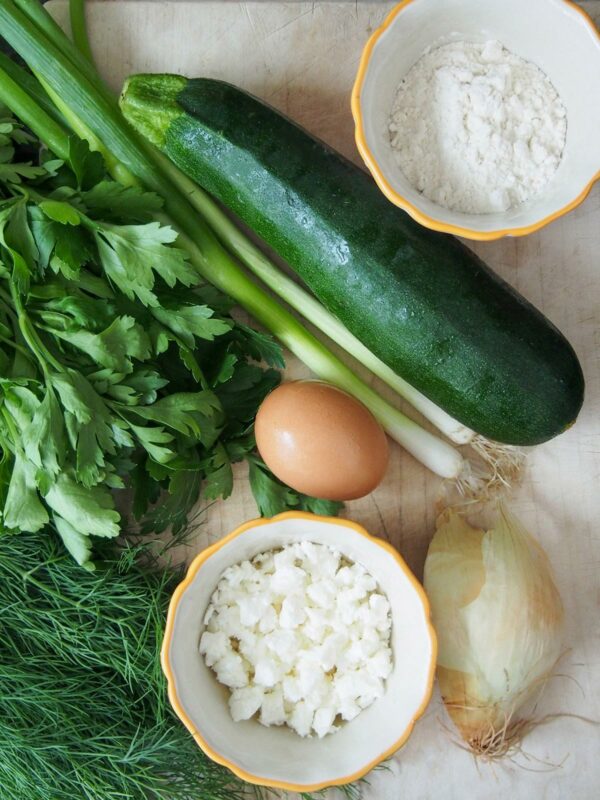
The basic ingredients for these zucchini fritters are pretty simple and consistent - a base of zucchini with egg to bind, feta and herbs to flavor and flour/breadcrumbs to help with the texture and to absorb excess moisture. Most recipes will add some onion, especially scallions/spring onions as well.
You'll find two main herb flavorings used in these: dill or mint. Some of this is down to tradition or taste. It's also not uncommon to use multiple herbs, and you can adapt based on what you have or prefer. The main ones used are dill, parsley, mint, oregano, and sometimes basil.
Occasionally the feta is skipped, but it adds a lot of flavor and is worth including. These are relatively light on the feta so you can increase the amount as you prefer. It's worth buying a block of feta and crumbling yourself as the flavor will be better and it's less likely to be dry than when buying pre-crumbled.
Some versions add some additional hard cheese for a little more cheesy flavor - kefalotyri (a salty, hard goat's cheese) is the most traditional type of cheese to add, but you can substitute Oarmesan or Romano.
Making these vegetable fritters
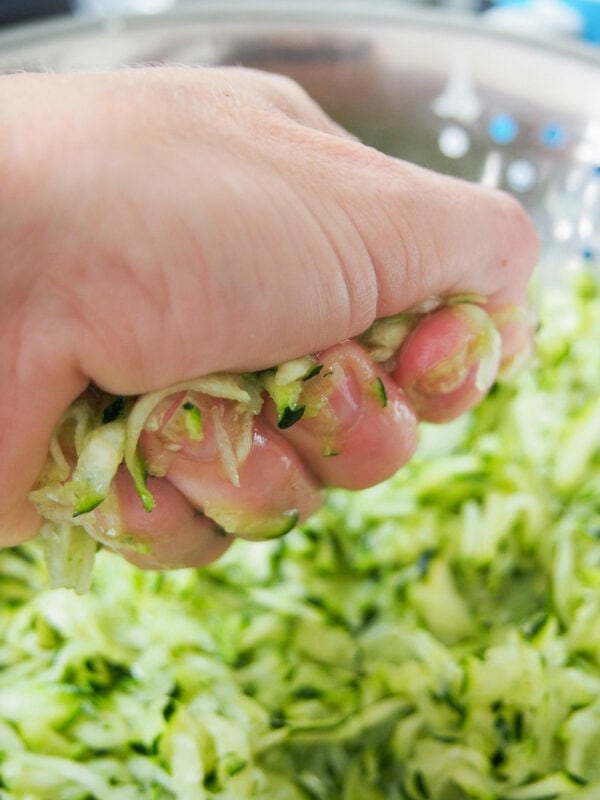
In Greece, these fritters are more typically made with the lighter skin zucchini, as they generally have a lower level of water in them than the darker skin version you more commonly find in the States. You can use either the pale skin or regular zucchini, but whichever you use, it's important to squeeze out as much of the liquid as possible.
To help things along, sprinkle a little salt over the grated zucchini to help draw out the liquid. Using regular zucchini, I found the weight reduced by almost half once I salted and squeezed them out.
If you have excess liquid left in the zucchini, it makes the mixture too wet and you will need a lot more flour to hold them together. This then dulls the flavors and makes the fritters heavier, so it's worth the preparation step.
Some people choose to bake these to be a little healthier, but the traditional way is to fry them in olive oil. Baking doesn't get them crisp on the outside, and the olive oil adds some flavor, so it's worth making them the traditional way.
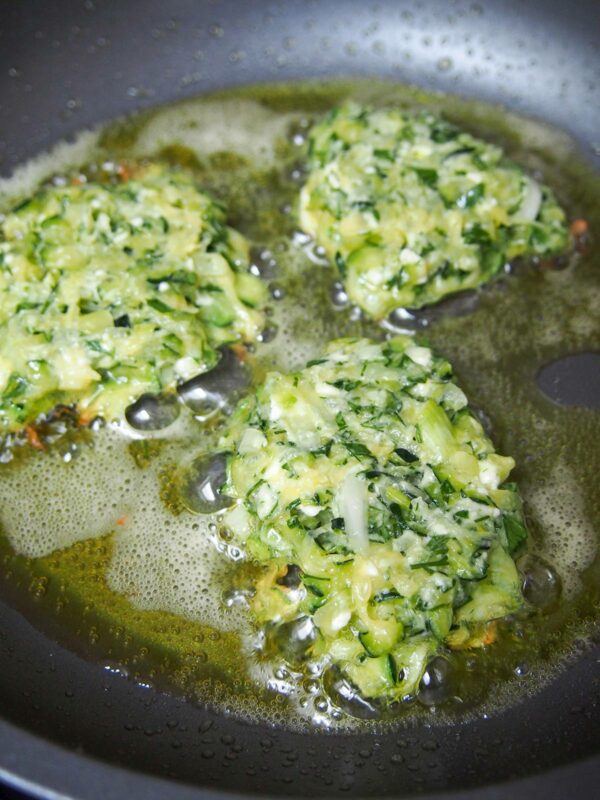
If you shallow rather than deep fry, you don't need that much oil to cook them in. Also, cook them on a relatively high heat so they crisp up on the outside but stay soft inside, without absorbing too much oil.
Don't be tempted to cook too many at once, as you can easily burn some if you don't turn them all quickly. It is much easier to cook just a few at a time in a smaller skillet, and cook in batches. Drain them on paper towel to drain off excess oil.
How to serve these zucchini fritters
These are typically served as a meze dish to snack on either before a meal or alongside drinks, particularly ouzo. The most popular way to serve them is with some tzatziki to dip them in on the side, but you could also use baba ghanoush or other sauces/dips.
They are great served warm but also work at room temperature. If you prefer them warm, you can prepare them ahead and reheat gently in a skillet before serving.
You could add them to an appetizer platter with other meze or finger foods. And, while they are probably best to snack on, you could also serve them as a side.
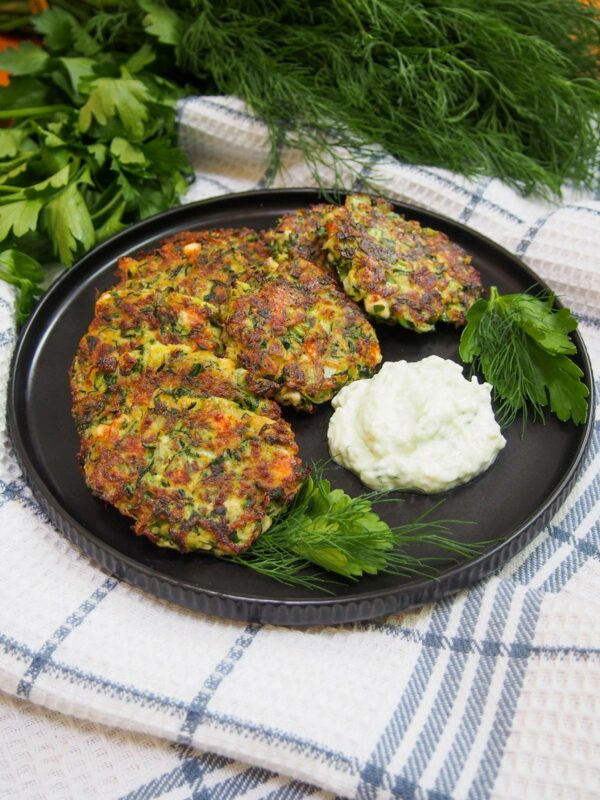
Kolokithokeftedes are such tasty little bites that are a great way to use up a crop of zucchini in a delicious way. With tasty flavors from fresh herbs and slightly salty feta, they're a great combination of flavors and textures. Especially dipped in tzatziki, they are a great meze dish to snack on.
Kolokithokeftedes (Greek Zucchini Fritters)

Kolokithokeftedes, zucchini fritters, are a popular meze dish in Greece that are easy and delicious with fresh flavors from herbs and feta.
Ingredients
- 1 lb zucchini
- ¼ onion
- ½ teaspoon salt
- 2 scallions/spring onions
- 2 tablespoon chopped dill
- 2 tablespoon chopped parsley
- ⅓ cup crumbled feta (approx 1 ½oz - can use more, to taste)
- 1 egg
- ¼ cup flour (approx, or a little more, if needed)
- 1 pinch pepper (or more to taste, optional)
- 2 tablespoon olive oil, for frying (approx)
Instructions
- Cut the smooth end off of the zucchini, leaving the stem end attached to hold while grating. Peel the onion, leaving the stem on for the same reason. Coarsely grate the zucchini and onion and place grated vegetables in a colander over a bowl. Sprinkle the salt over it, toss gently and set aside for around 10 - 20 minutes.
- Meanwhile, slice the white and light green parts of the scallions, finely chop the dill and parsley and crumble the feta. You can lightly beat the egg to make it easier to incorporate but it's not completely necessary.
- Take handfuls of the zucchini and squeeze out the liquid with your hands. Turn the zucchini in your hands and squeeze again to get as much liquid out as possible. Place the squeezed-out zucchini in a bowl. Repeat with the rest of the zucchini-onion mixture. You may want to re-squeeze some after you are done to get a little more liquid out. Discard the accumulated juices.
- Add the scallions, dill, parsley, feta, egg and flour to the drained zucchini and mix well to combine. You can add a little pepper, as you prefer. The mixture should be relatively stiff - if it seems very runny, add a little more flour.
- Warm the olive oil in a small-medium skillet over a medium-high heat. Once it is hot, take tablespoonfuls of the zucchini mixture and place them in the oil. (It can be helpful to smooth off the spoonful before adding so it is a little compacted, then press a little with the back of a spoon to flatten.) Cook roughly three or four fritters at a time to avoid overcrowding the skillet and having too many to keep an eye on at once.
- Let the fritters cook for around 3- 4 minutes, until lightly browned, then turn and cook on the other side for around the same time. Once cooked, remove from the skillet, letting excess oil drip back into the skillet. Then drain on a paper towel lined plate to remove any additional oil.
- Repeat cooking the remaining fritters and serve, either warm or room temperature, suggested with tzatziki on the side for dipping.
Nutrition Information:
Yield:
4Serving Size:
3 frittersAmount Per Serving: Calories: 163

Caroline lived and traveled various places before settling in Cambridge, MA. She still fits in some travel with her family, but often settles for traveling through food instead. She shares her recipes at CarolinesCooking.com, where there's plenty of international inspiration using seasonal ingredients, as well as creative recipes for all to enjoy. Caroline is originally from Scotland, where she grew up hiking and skiing, both things she still loves to do when her two young boys give her a chance. You can follow along with her cooking adventures on Facebook, Instagram, Twitter, and Pinterest.