The town of Sakon Nakhon in Thailand’s Northern region of Isan is not one regularly visited by tourists, but it offers a unique glimpse into Thailand’s past. It may be the town where the Vietnam War never ended.
Join along with our writer Oz as he shares about his time in this widely unknown city.
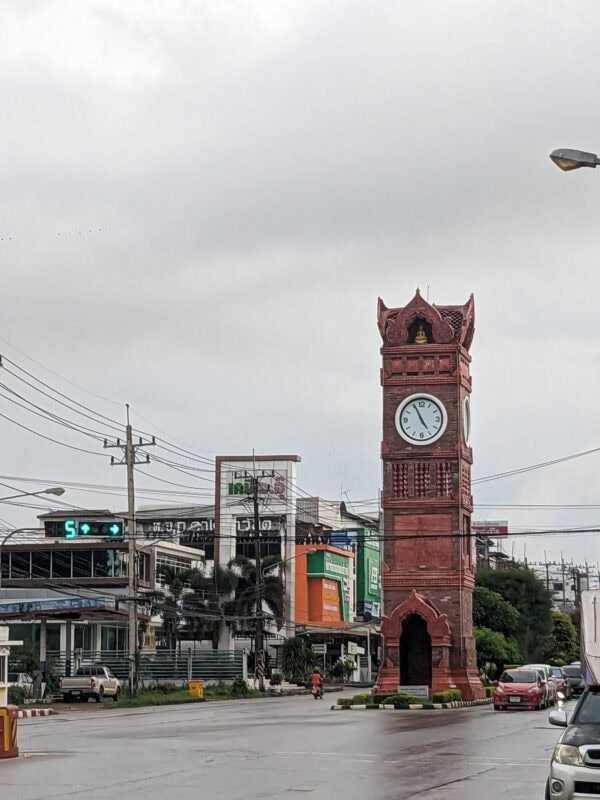
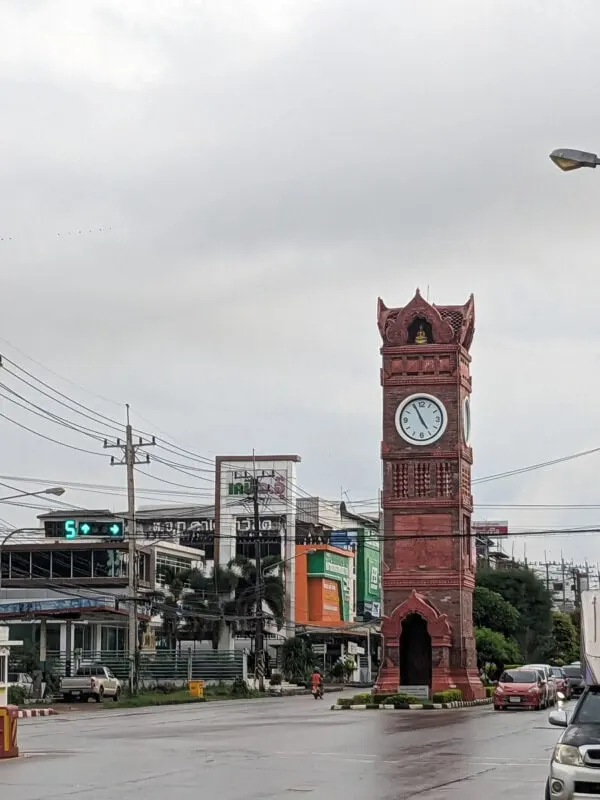
Traveling back in time in Thailand
Who hasn’t dreamt of traveling back in time?
Reliving history, or bringing back nostalgic memories – time travel seems to have always fascinated mankind, sweeping away our imagination.
When we grow up, or just come back to our senses, we realize that it’s merely a fantasy.
Or is it?
Food, essentially, gives us the opportunity to travel back in time – experiencing almost-forgotten history, culture, and nostalgia through the palate.
When traveling around the world, if we keep our minds and hearts open, we might be lucky enough to enter those dodgy time wormholes, with our dining plates as a portal.
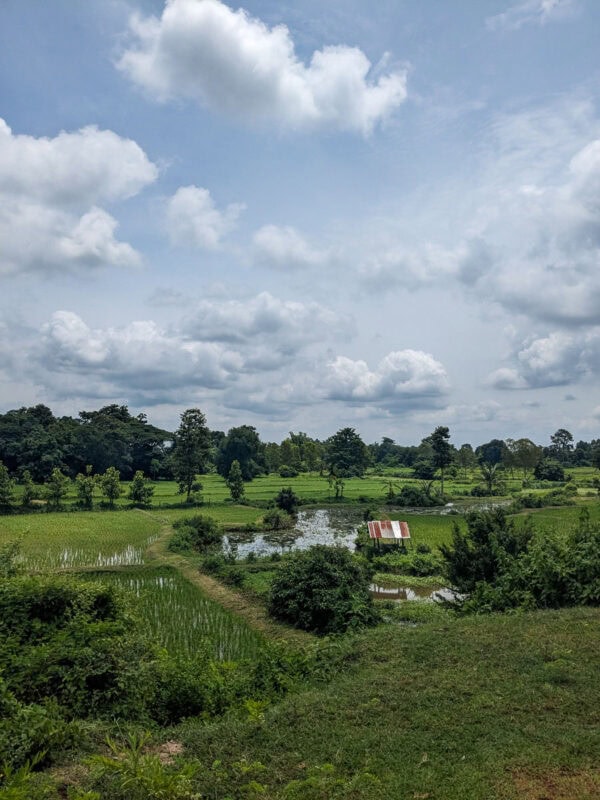
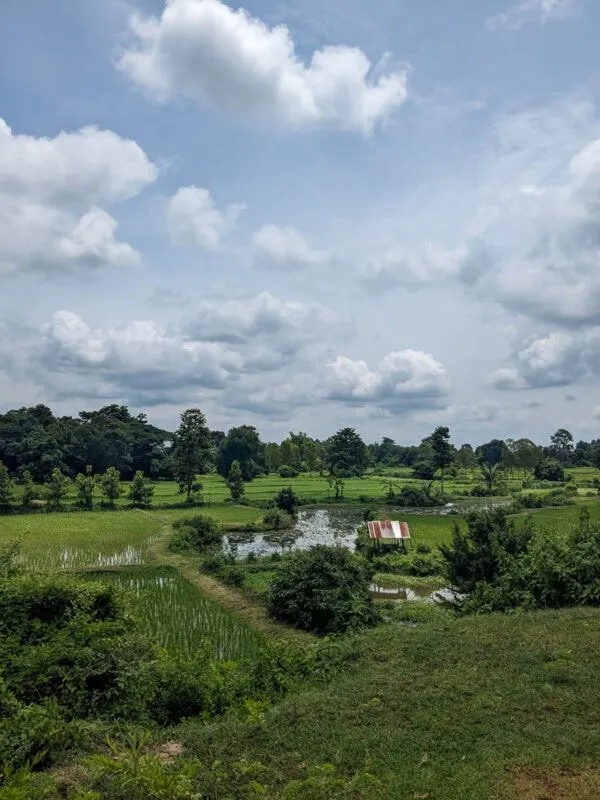
Isan – Thailand’s undiscovered Northeast
A few months ago, I set foot in Isan – the Northeastern region of Thailand.
Isan is rarely explored by foreign tourists. It is relatively poor, and its infrastructure is underdeveloped.
Even so, this area has great significance to the Thai kingdom, as it is the country’s largest region in size and population.
In the past, Isan also had a strategic geopolitical importance, separating Thailand from the Socialist and Communist regimes that ruled present-day Laos, Cambodia, and Vietnam (more on that later).
Most of Isan’s population consists of Tai-speaking groups, with the majority being ethnically Lao.
Their cuisine is unique and very different from Central Thai cuisine.
For example, sticky rice is traditionally preferred over Thai jasmine rice. It is used to scoop all kinds of spicy salads and grilled meats, as well as to soak up the flavors of chili relishes and meaty broths.
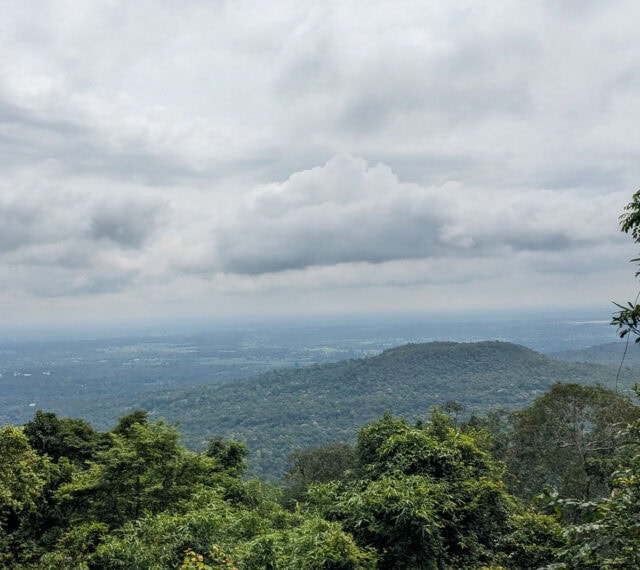
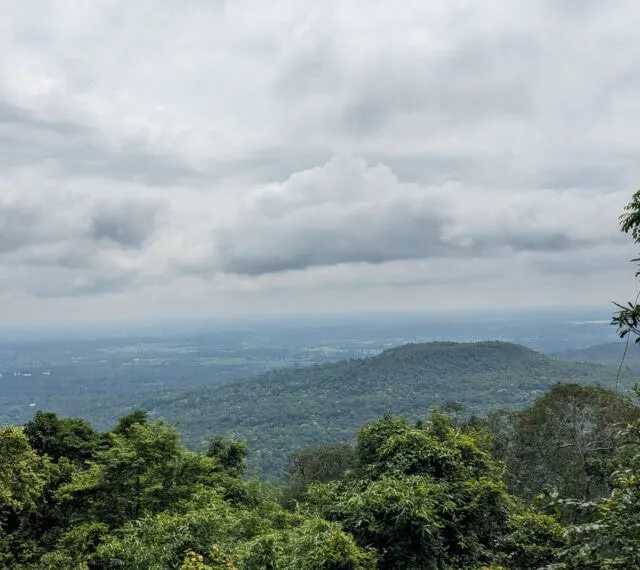
I arrived in the district of Sakon Nakhon, located in central Isan, and hoped to learn more about the region’s history, archeology, and nature. Among ancient Khmer temples, green mountains, and the scenic Nong Han Lake, I discovered something beyond that. Something delicious.
Eating in Sakon Nakhon
As I strolled by the Franco-Siamese buildings of Sakon Nakhon’s old quarter, the aromas of morning immediately got my attention.
What do I mean by that?
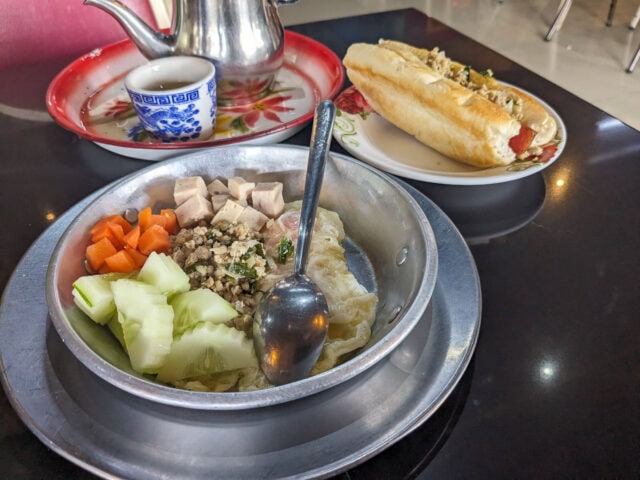
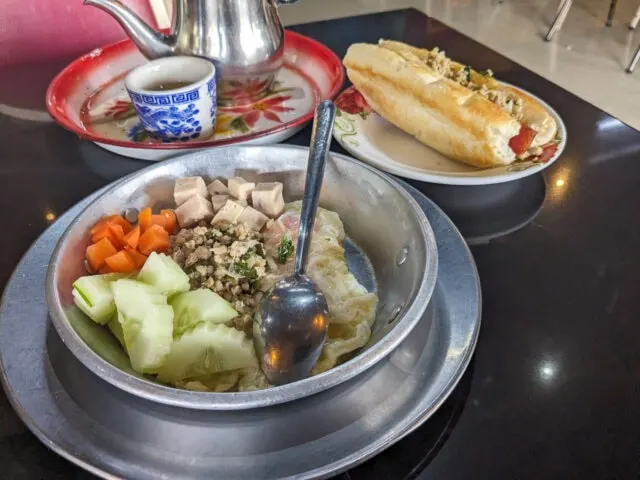
Well, it was not long before I’d seen local breakfast shops. And even quicker, I sat down in one of them.
I was first served some hot tea. A minute later, came a sizzling pan containing a fried egg, Vietnamese sausage, and vegetables.
And of course, all accompanied by a fresh baguette.
And what about lunch, you ask?
Well, lunch was a true pleasure. Following my nose once again, I was caught by the smell of a comforting stew, surfacing memories from my grandma’s home.
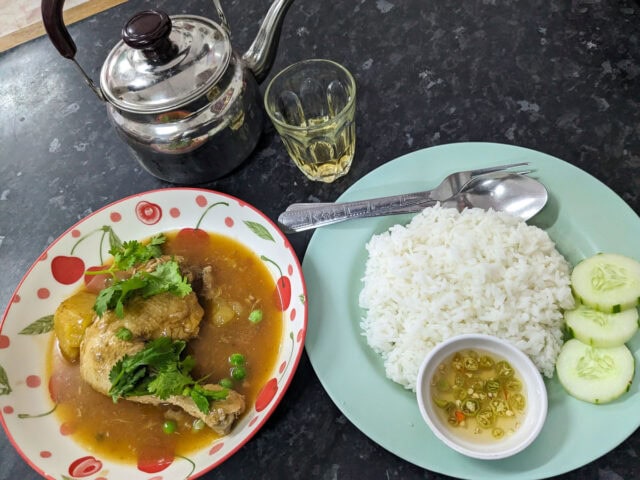
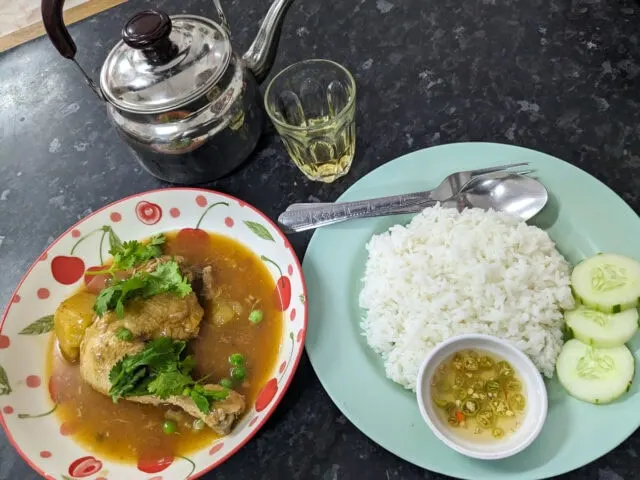
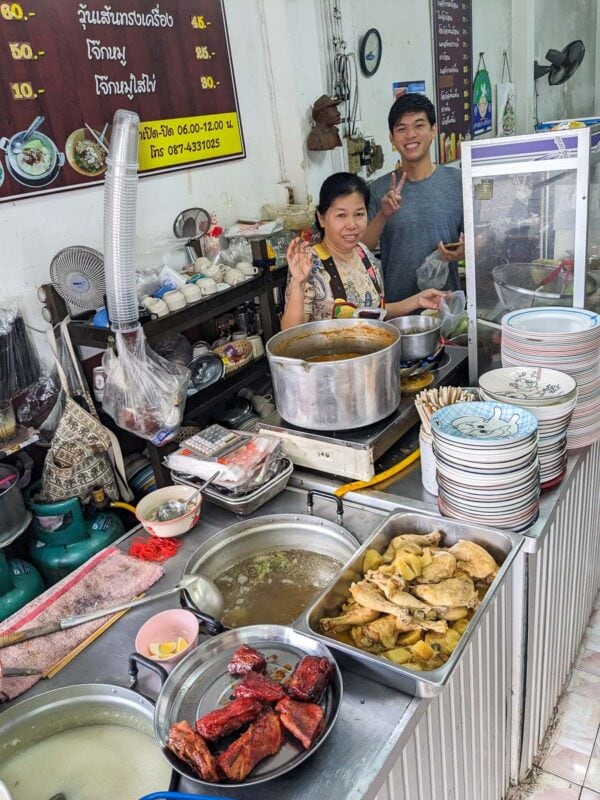
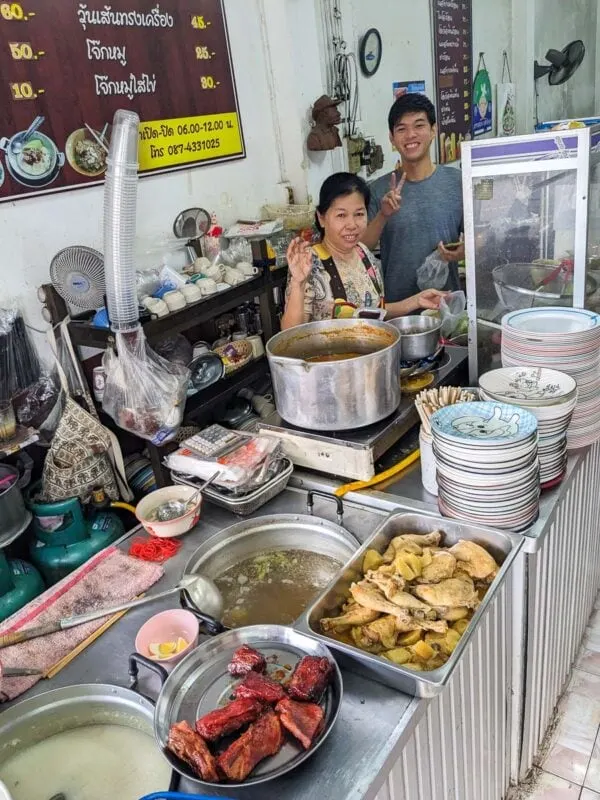
It was a small restaurant, run by a local family, with only one dish on the menu – Chicken Stew.
To me, the most interesting thing about the dish was its name – as the English word “stew” was kept in the Thai name (“Satu Gai”), implying of possible European origins.
And indeed, a chicken stew with green peas, potatoes, and tomatoes was served, not very different from the one I would have had at home. Yet, it was clear that I was still in Thailand – as it was served alongside white rice and Prik Nam Pla – a Thai relish of fish sauce, lime, and chili.
A Vietnamese time capsule
So what’s going on?
Where did the spicy Lao-Isan food go?
What’s with that European flare?
As it turns out, Sakon Nakhon is home to a small, yet significant, Vietnamese community. The community arrived in immigration waves.
In the 18th century, dozens of Catholic Christian families arrived in Thailand from Central and Southern Vietnam, seeking refuge from the Buddhist Vietnamese and Chinese dynasties that were persecuting them.
The second, and larger, immigration wave arrived almost 200 years later, as Southeast Asia was torn apart by decades of power struggles between Communist, Socialist, and Capitalist ideologists (e.g. The Vietnam War, The Khmer Rouge…)
These more newly-arrived families found themselves far from their homes, culture, and most beloved dishes. Naturally, they did their best to preserve the flavors of their beloved Vietnam, passing recipes from one generation to another.
Meanwhile, in Vietnam, gastronomy kept evolving and reinventing itself. French and Chinese colonial influences found themselves replaced by new Vietnamese culinary inventions.
However, the cuisine of the Vietnamese community of Sakon Nakhon remained almost precisely as it had been decades and even centuries ago, with the French influence definitely more prevalent in terms of flavor and cooking techniques.
Thai influences, such as the accompaniment of chili relishes to dishes, can also be seen.
In a way, Sakon Nakhon has turned into a culinary time capsule, where one can travel back in time to experience centuries-old Vietnamese cuisine.
A meal that I’ll never forget
On my last day in Sakon Nakhon, I entered a local Vietnamese Thai restaurant and had a life-changing meal, one that completely caught me off guard.
In the entrance to the restaurant, there was a lady steaming fresh rice paper. Since summer rolls (rolled rice papers, filled with veggies and a choice of protein) are one of my favorite things, I stepped inside.
The moment I saw the menu, I knew this place was nothing like I had expected. It was full of different dishes based on rice paper, of which I could recognize none!
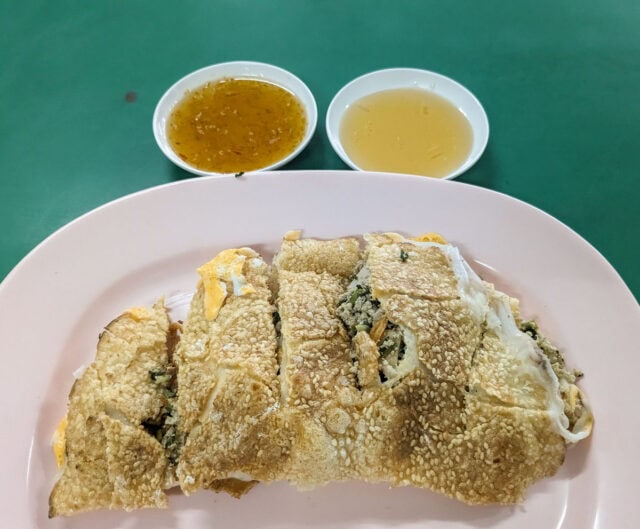
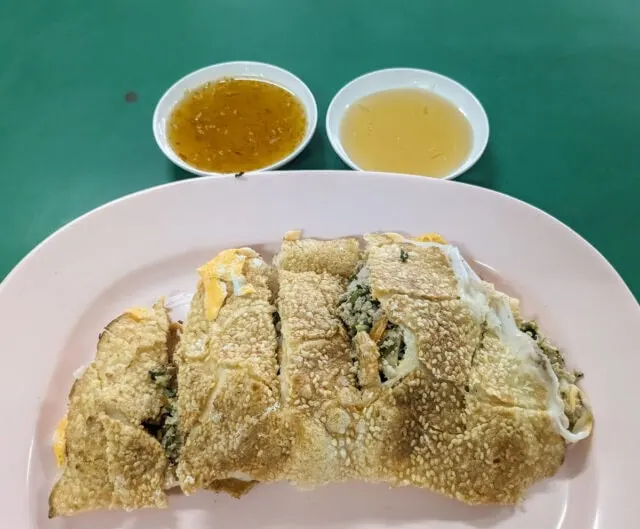
I ordered their signature dish – Pak Mo Krob (literally “crispy rice paper”) and was in for a treat.
From the outside, it indeed seemed to be a crispy, grilled rice paper, in the shape of a folded crepe. Yet, as I took a bite, it was clear that this was a dish of many layers. Inside, there was a filling of ground meat and Vietnamese sausage, followed by a layer of omelet, then a freshly steamed rice paper, and it finished off with the aforementioned crispy layer.
What can I say – it was delightful.
In all of my journeys through Thailand and Vietnam, I haven’t seen anything like it. It was proof of how isolated communities, even when trying their best to keep their sense of home by preserving the past, are destined to evolve, adjust, and develop incredibly delicious culinary innovations.
Time travel: where are we going?
After that last meal, I’ve been reviewing my thoughts on culinary time capsules – dishes frozen in time, in isolated communities. It has brought me to one question:
Have I traveled back to the past, or stepped forward into the future?
If you liked this recipe, here are some similar dishes you may enjoy!