Alfajores Marplatenses (Argentinian Chocolate Alfajores)
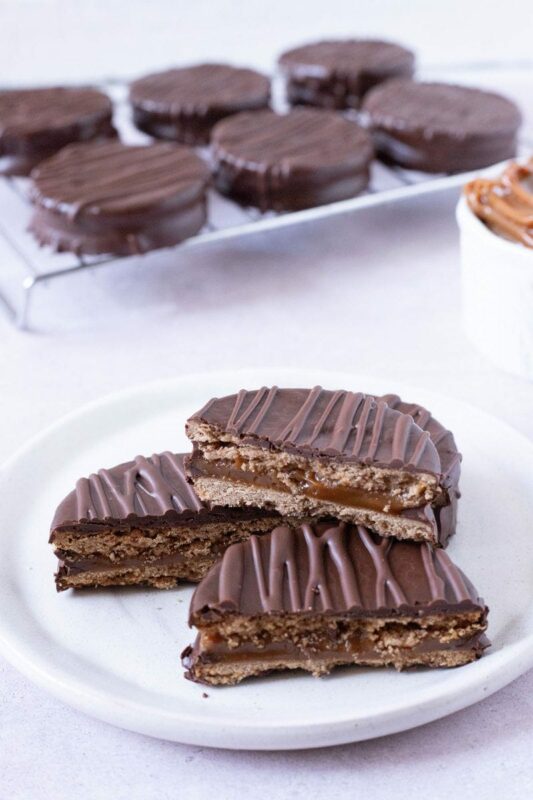
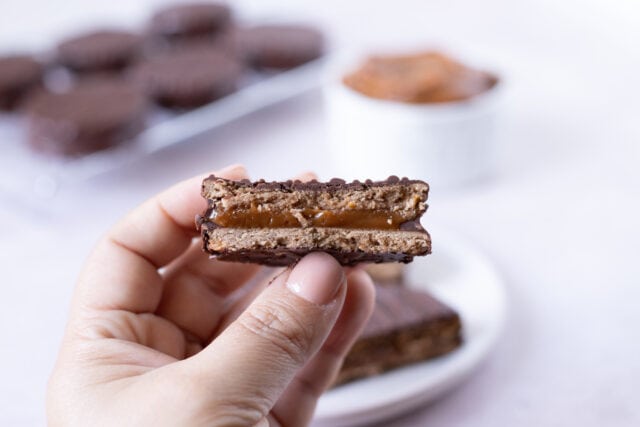
Alfajores Marplatenses are chocolate alfajores cookies that have made it all over the world. These chocolate sandwich cookies are filled with rum-infused dulce de leche and then covered in a thin chocolate coating.
History of alfajores
The concept for alfajores cookies was brought to Argentina with the arrival of European immigrants. Although, at this time, the shape and filling were very different.
Augusto Chamás, a French chemist who came in 1840 gave alfajores their round shape (1869). And around this time dulce de leche was added and the dessert was made into a sandwich.
These sandwich cookies are popular all over Latin America. But Argentines are well known for their delicious alfajores. Different provinces have their own recipe for the cookies and an array of fillings.
But the ones from Mar del Plata have traveled all over the world captivating our palates.
Alfajores from Mar del Plata or Havanna type
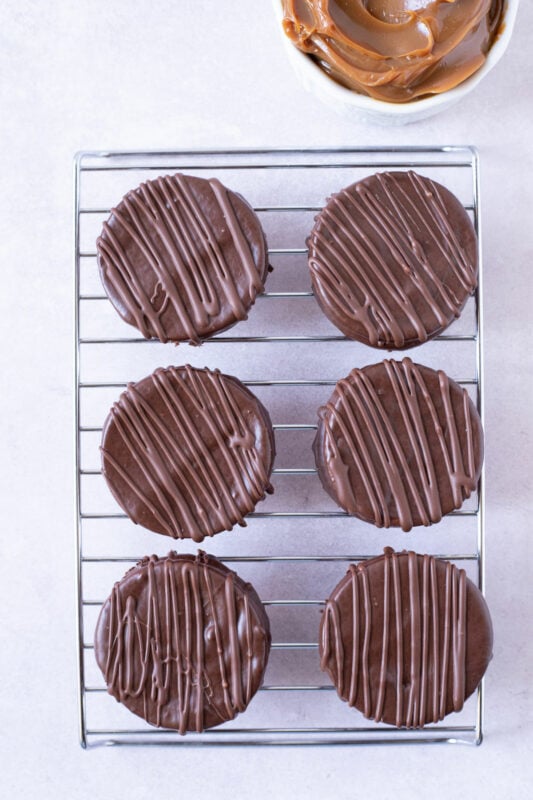
The base for the Mar del Plata version of alfajores is two chocolate cookies. The cookies are sandwiched with dulce de leche and covered with a light chocolate coating.
These alfajores became world famous thanks to the Havanna brand.
In 1947, the Greek Demetrio Elíades, the Santa Fe native Benjamín Sisterna, and the Italian Luis Sbaragalia who had experience in the world of alfajores in Buenos Aires, after innumerable tests, together with the pastry chef Toribio González, came up with the formula for the mythical Havanna alfajor. Two chocolate cookies filled with a thick layer of dulce de leche and covered with the purest semisweet chocolate (or Italian meringue in the case of white alfajores). This marked a turning point in the world of alfajores.
It is the obligatory purchase of every tourist who sets foot in Mar del Plata, and it continues to be a favorite souvenir for the ones traveling. These alfajores are also available all over Argentina, the United States, Spain, Brazil, Uruguay, and Chile, among other countries.
Alfajores Marplatenses (chocolate alfajores)
There are several differences between alfajores Marplatenses and alfajores de maicena (cornstarch alfajores).
The process for alfajores Marplanteses cookies starts with creaming butter and sugar. It uses whole eggs. And adds cocoa powder to the dry ingredients. Another addition is the use of honey and malt extract.
For the filling, dulce de leche repostero or pastry dulce de leche is used. This dulce de leche is thick in consistency and great for filling pastries and different desserts.
This dulce de leche is then mixed with a splash of rum. If you prefer, you can substitute it with rum extract (½ teaspoon).
Once you have filled all the cookies, coat them with a thin layer of your favorite chocolate.
In the markets, you can find these alfajores covered in white chocolate, dark chocolate, milk chocolate, or a mixture of all of them.
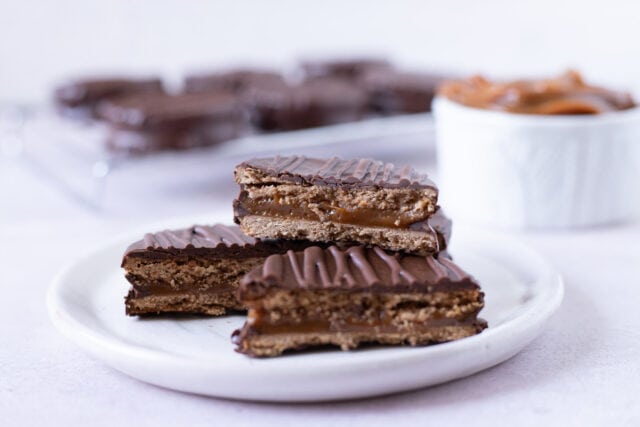
The hardest thing about making these alfajores is the waiting time. The cookies are crisp and the alfajores need to rest for about 48 hours before consuming them.
What happens in that period? the dulce de leche and the rum soaks into the cookies. Even the chocolate layer helps to moisten them, making it a very pleasurable experience to bite into.
Can I skip the waiting time when making chocolate alfajores?
I don't have time to wait that long!
If you can't wait 48 hours, make them smaller, more like a bite-size sandwich. But you still need to wait at least 12 hours.
If the cookies are large and you didn't wait at least 12 hours, at the first bite it will crumble and it will be messy. After 48 hours, the cookies, dulce de leche and chocolate become one, making it one of the most delicious Argentine treats.
Once the alfajores are assembled, they can be kept in an air-tight container for 7 to 10 days at room temperature.
Alfajores Marplatenses (Argentinian Chocolate Alfajores)
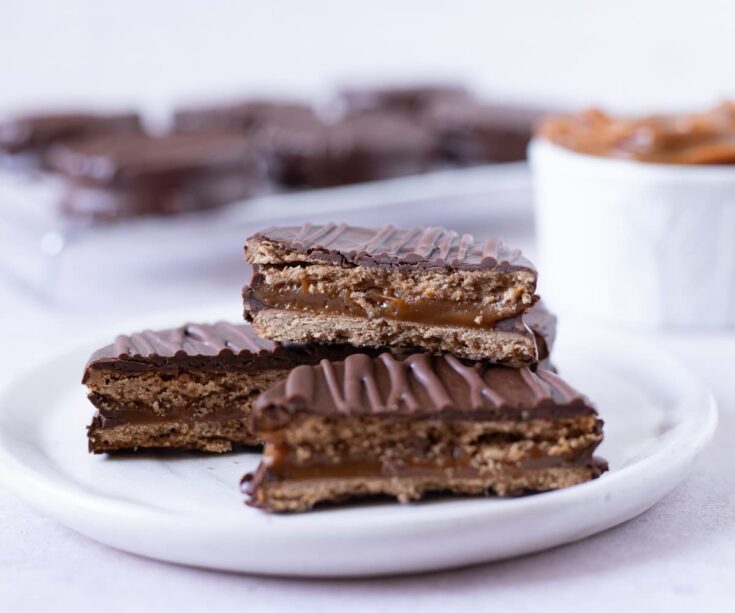
Alfajores Marplatenses are well-known chocolate alfajores cookies. Chocolate sandwich cookies, filled with rum-infused dulce de leche, covered in chocolate.
Ingredients
For the cookies
- ⅔ cup butter, room temperature
- ¼ cup sugar
- 1 ½ tablespoon honey
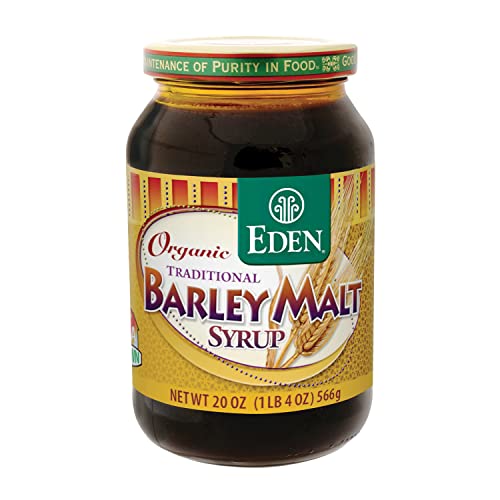
- 1 tablespoon malt extract (also called malt syrup)*
- Zest from one orange**
- 1 egg
- 1 teaspoon vanilla extract
- 2 cups all-purpose flour
- 6 tablespoons cornstarch
- 2 tablespoons cocoa powder
- ½ teaspoon baking powder
- ¼ teaspoon baking soda
For the filling
- 2 cups dulce de leche repostero***
- 1 tablespoon dark rum (or ½ teaspoon rum extract)
For the coating
- 18 ounces semi-sweet chocolate chips****
- 2 teaspoons coconut oil****
Instructions
For the cookies
- In a medium bowl cream butter and sugar. Add egg, honey, malt extract, orange zest, and vanilla. Mix until well combined.
- In a medium bowl, combine all dry ingredients.
- Add the dry ingredients to the wet ingredients, and mix only until the dough comes together. Divide the dough into 2 portions. Shape the dough into a ball and wrap it in plastic wrap. Chill for at least 30 minutes.
- Preheat the oven to 350F and grease 2 baking sheets.
- On a floured surface, place one piece of cookie dough and roll to ⅛ inch thick. Use a 2-½-inch round cookie cutter to cut the cookies. Place them on the cookie sheet and bake for 10 to 12 minutes. The cookies should be firm and crispy.
- Repeat with the rest of the dough.
- Let the cookies cool to room temperature.
To assemble
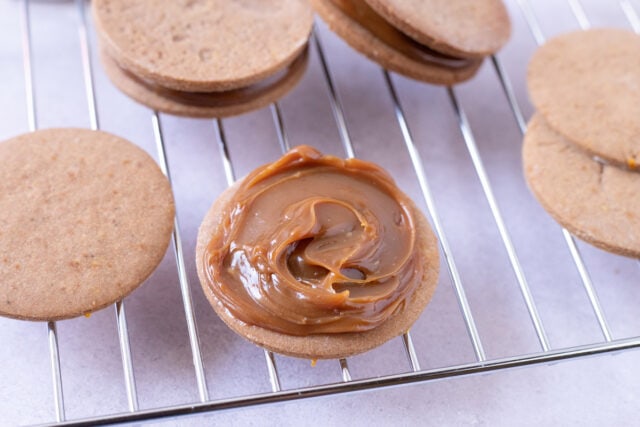
- Mix dulce de leche and rum (or extract). Place about 1 heaping tablespoon of dulce de leche in the middle of the cookie. Place a second cookie on top and press them together to make a sandwich.
- In a microwave-safe bowl, add chocolate chips and coconut oil (or chocolate candy coating). Microwave for 30 seconds. Stir. Continue microwaving only a few seconds at a time, stirring between each time, until the chocolate is melted.
- Dip each alfajor sandwich into the chocolate, making sure every surface is coated. With the help of two forks, remove alfajores and place them on a cooling rack.
- Let them harden completely before placing them in an airtight container.
- Let the alfajores rest for at least 12 hours, better yet, 48 hours before serving them.
Notes
*If you don’t have malt extract, use honey.
**In the States, you may prefer to use organic oranges when using the zest, to avoid consuming pesticides and colorants sprayed on conventional oranges.
***If desired, you can make your own dulce de leche from a can of sweetened condensed milk.
****Or use 18 ounces of chocolate candy coating
Recommended Products
As an Amazon Associate and member of other affiliate programs, We earn from qualifying purchases.


Nutrition Information:
Yield:
30Serving Size:
1 sandwich cookieAmount Per Serving: Calories: 240

Lizet is Bolivian and lives in Paraguay. Through friends and travel she has developed her love of food. From Africa to Asia, Europe to the Americas, there is always something new to try when you come to dinner. You can find more of Lizet's tasty creations on her website ChipaByTheDozen.com. You can also find her on Instagram and Facebook.