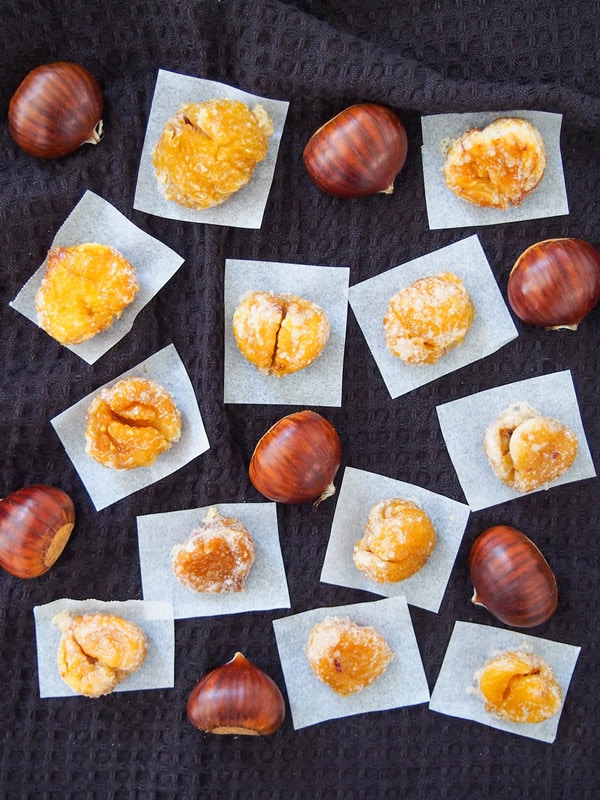
Marrons glacés are candied chestnuts where chestnuts are simmered and soaked in sugar syrup over a few days. They take a bit of patience, but really not that much effort. And the wait is most definitely worth it.

Chestnuts around the world
While chestnuts are not particularly common in America, they are a core part of autumn and winter in much of Europe.
In many cities, from Lisbon to Paris to Vienna, you’ll find stalls roasting chestnuts and selling small bags of them to passersby. Chestnuts become slightly soft when cooked and have a gentle sweetness that comes through in the aroma as they roast.
And, while European cities may be what you think of when you think of chestnuts, they are actually produced and eaten worldwide. In fact, the main producers are in Asia, and they are a historic and important crop in Japan and China.
The United States has in the past had a history of growing them, but in the early 20th century, a fungus was brought to the country on imported Asian chestnut trees, which wiped out most of the country’s trees. Only a few on the West Coast survived.
While there has been a resurgence in some places, most chestnuts in the US are still imported.
What are marrons glacés?
A marron glacé is a more elaborate way of preparing a chestnut as a sweet snack. These little treats are essentially candied chestnuts with a slight glaze on top.
The first known recipe for them appeared in Lyon in the 16th century.
However, their origin is unclear whether from France or Northern Italy. Both are large producers and consumers of chestnuts. It’s a sign of how much they are consumed that you will see different varieties of chestnuts in this region.
For this dish, you ideally want the larger, better-quality chestnuts – these are what are called “marron” in France as opposed to “châtaigne” which generally refers to the smaller variety.
Since they take a few days to prepare and use high-quality chestnuts, it’s probably not too surprising that this sweet treat is relatively expensive if you were to purchase it already made from a shop.
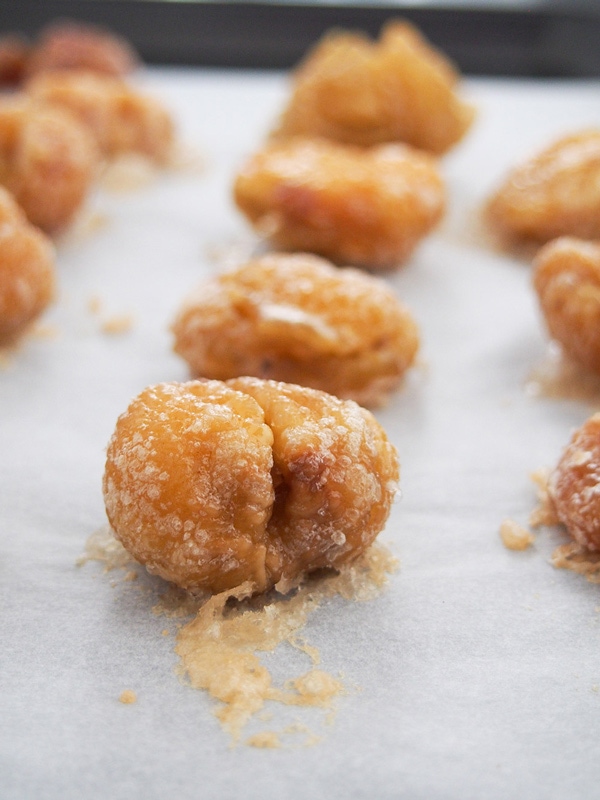
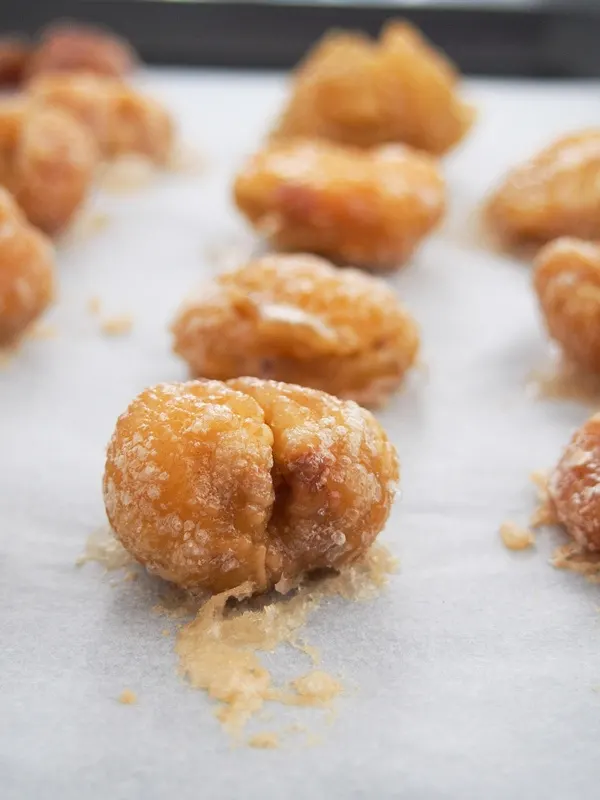
Typically they are sold individually wrapped to help protect the relatively tender, sweet treat inside.
They are best enjoyed just as they are, alongside a cup of tea or coffee.
Despite the fact they take some time, the process is actually not that difficult and so they are worth making yourself at home.
They make a wonderful treat over the festive season and are perfect for gifting.
How to make marrons glacés
There are a few stages involved in making these:
- Preparing the chestnuts – This is probably the most fiddly step since it includes peeling them, but it is not that difficult.
- Soaking the chestnuts in sugar syrup – This stage takes the longest, as you do this over a few days, with a daily re-heating of the syrup and a quick simmer to help encourage the chestnuts to soak up more. Again, it’s not difficult.
- Drying the chestnuts – Once the chestnuts have absorbed all the syrup they can, you dry them in a low oven to finish them off.
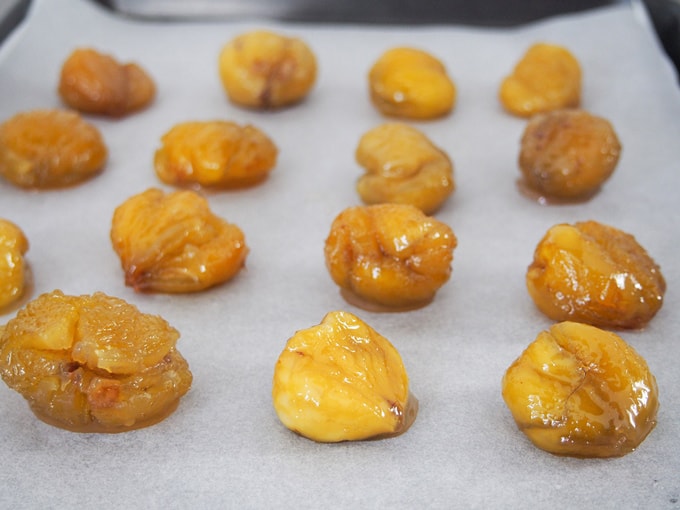
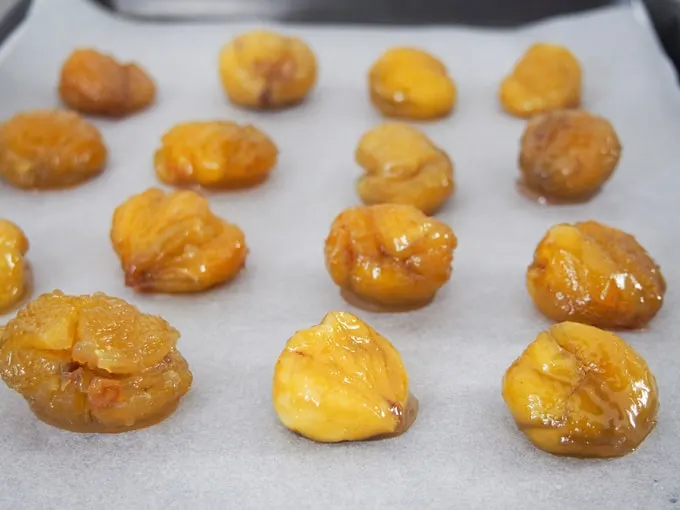
How do I know if my chestnuts are fresh?
Make sure you use fresh chestnuts for this recipe- if they have been sitting out too long they will already start to dry and so won’t cook and absorb as well.
Ways to help you know if they are fresh include where they are in the store – if they are in the chilled produce section, they should be fresh as opposed to out on the shelf, where they are most likely dried (or at least partially so).
The weight also gives some indication of freshness – fresh ones weigh more than dry chestnuts.
If dry, the skin may feel like it is separating from the nut inside (though you can still get that a bit with fresh ones) and the skin may be more dull.
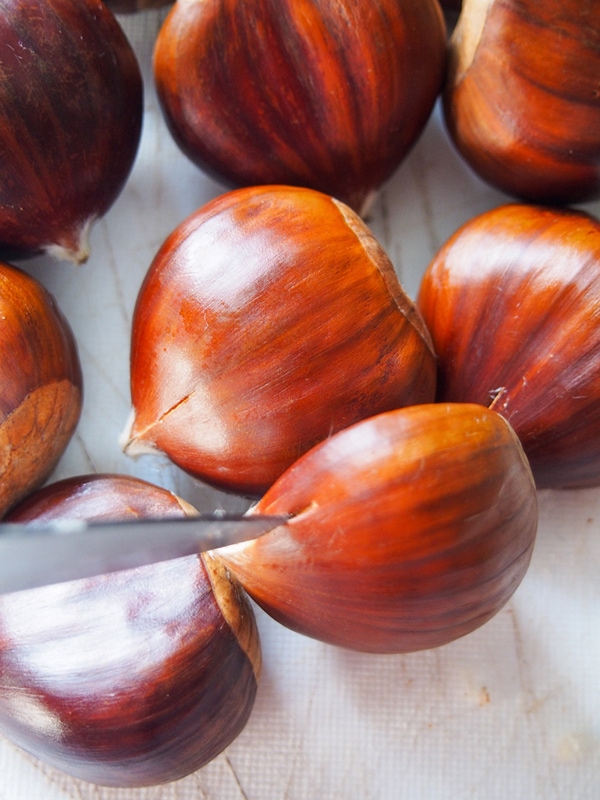
If you are unsure, you can soak the chestnuts in water after scoring them to help them rehydrate a little which may help.
More tips for making candied chestnuts
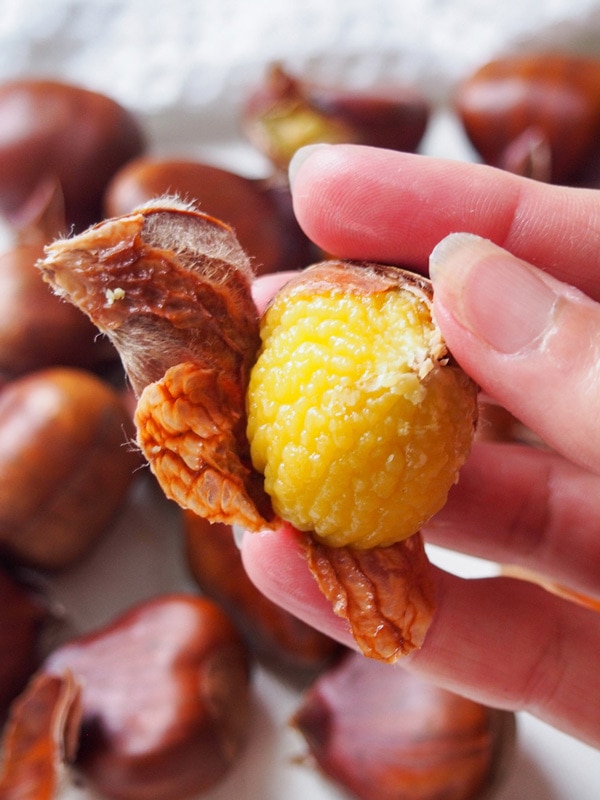
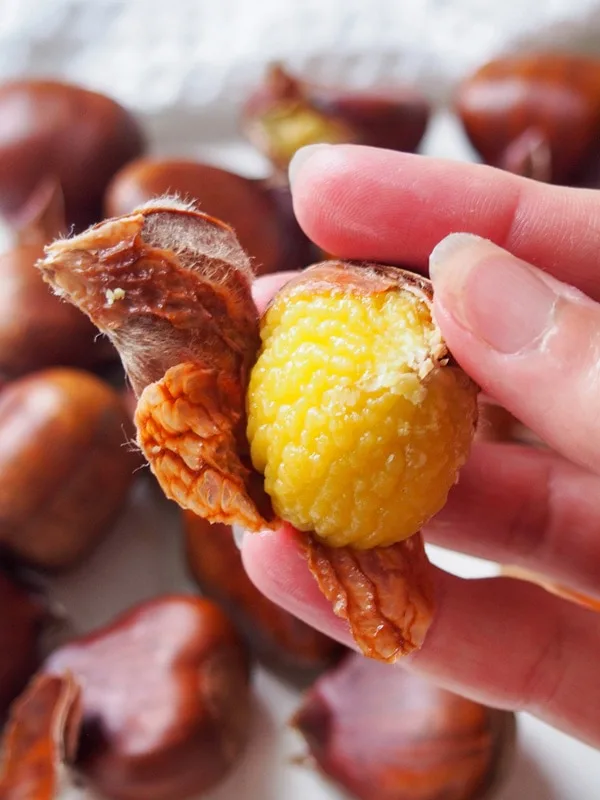
The other main tip to help these be successful is to ensure the chestnuts are cooked, but not too soft, before starting the process of soaking in the sugar syrup.
If they are not sufficiently cooked, they won’t absorb as well and will likely be hard. But if they are too soft (from cooking too much) they may break up while cooking.
It can be a tricky balance, so be prepared to have a couple not quite work out!
Despite all this, however, these marrons glacés are a wonderful treat that are most certainly worth the effort.
They make a tasty little treat, particularly during the festive season, and are great for gifting as well. It’s no wonder they are so prized.
For another great way to use chestnuts during the festive season, take a look at our French chestnut stuffing recipe and this chestnut risotto. And, if you are looking to enjoy some roasted chestnuts as a festive snack, be sure to follow our easy recipe.
Marrons Glacés (Candied Chestnuts)
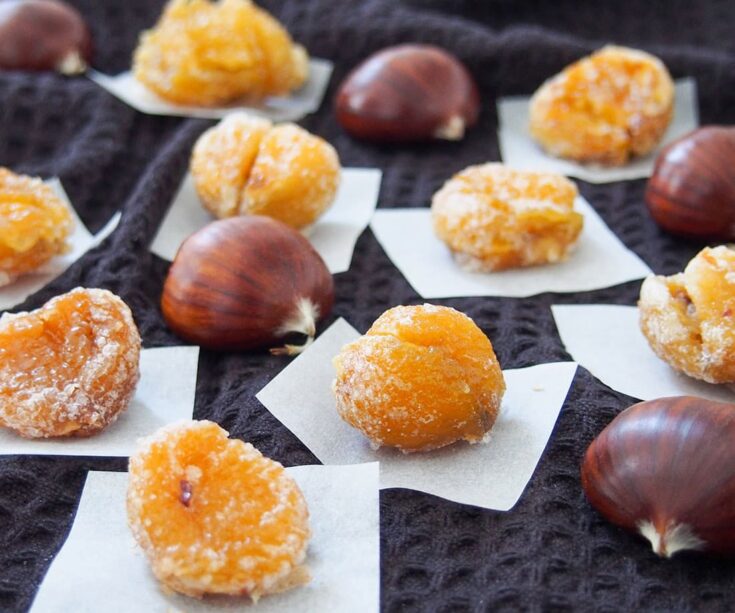
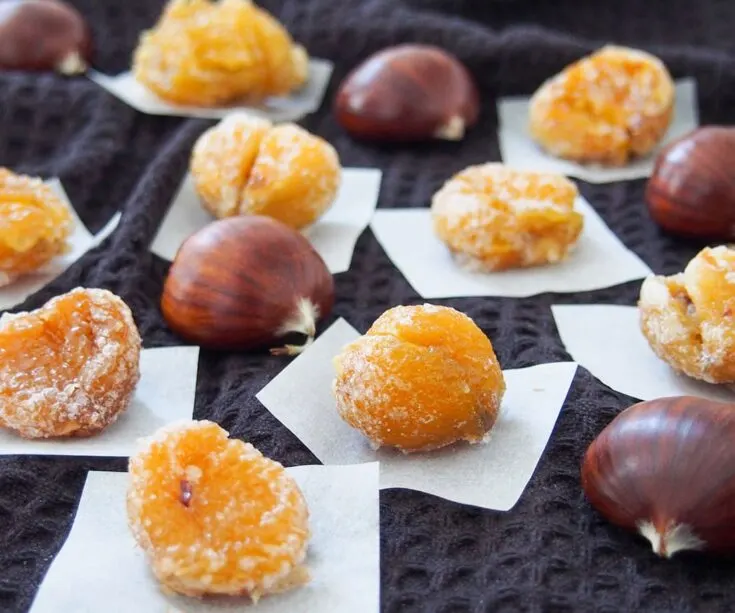
Marrons glacés are candied chestnuts that make an excellent holiday treat or festive gift. They take a bit of patience, but really not that much effort.
Ingredients
- 8 1/2 oz (240g) fresh chestnuts (should give around 7oz/200g when peeled)
- 200g sugar (approx 1 cup, 7 oz)
- 200ml water (1/2 plus 1/3 cup)
Instructions
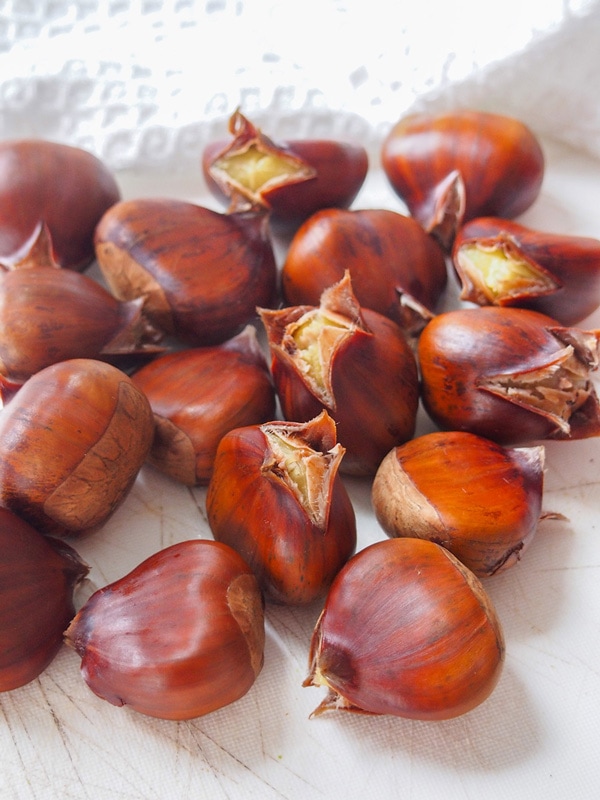
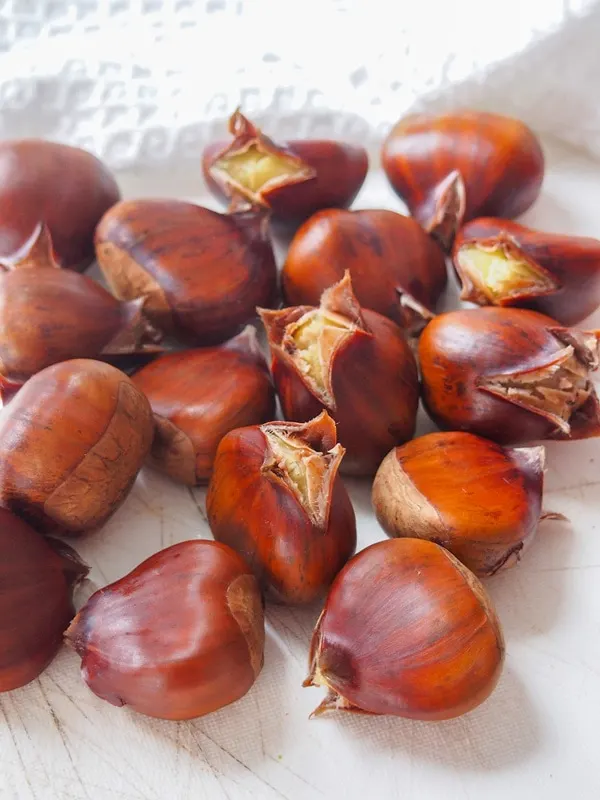
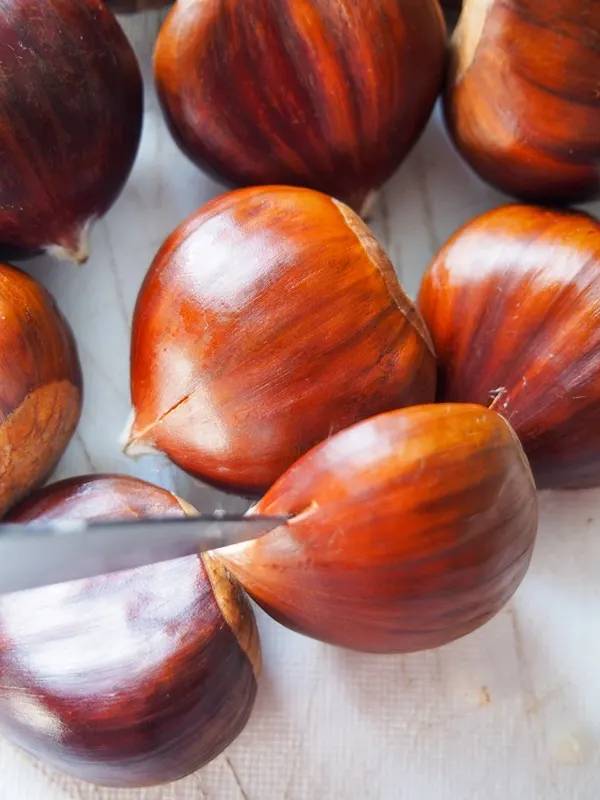
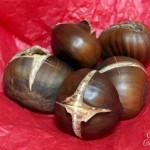
- Holding the chestnut by the thicker base, carefully make slight cuts in the tip of the chestnut skin to form a cross, trying not to cut into the chestnut itself (see picture).
- Place the chestnuts in a pan and cover with water to just a little over the level of the chestnuts. Warm over a medium-high heat to bring to a boil and boil for around 10 minutes. The ends of the chestnuts that you cut should fan open.
- Remove the pan from the heat and take a few chestnuts out of the water at a time and carefully peel them with the help of a cloth, if it helps. It can be tricky as the chestnuts may be hot, but it is easiest when they are still warm and slightly moist (which is why just taking some out of the water at a time is suggested). Take care not to break them, if possible, and use the tip of a knife to get any bits of the skin that may be stuck in the crevasses. Discard the skins and cooking water.
- Place the sugar and water in a clean pan and warm them over a medium heat to dissolve the sugar. Bring to a simmer and cook for a minute or two, then add the peeled, cooked chestnuts. Simmer them for around 10 minutes then remove the pan from the heat. If you like, you can transfer everything to a sealable container, or you can just set the pan aside, covered. Either way, let the chestnuts sit in the syrup at room temperature overnight.
- The next day (around 24hrs later), remove the chestnuts from the syrup with a slotted spoon and set aside temporarily. Bring the syrup to a simmer again and add back the chestnuts. Simmer for 2-3 minutes then remove from heat and allow to cool again, then leave overnight.
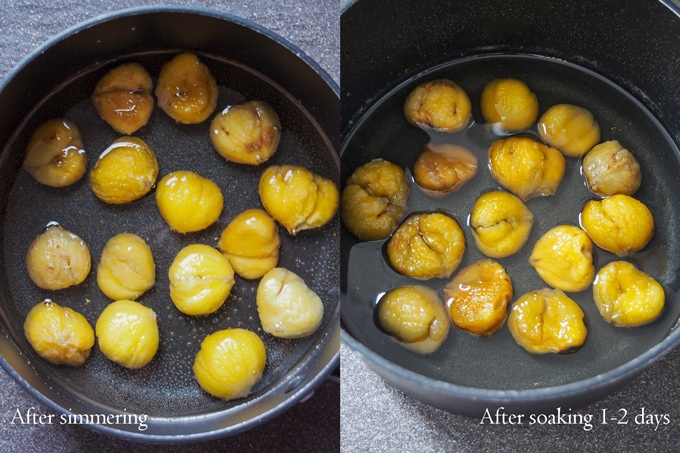
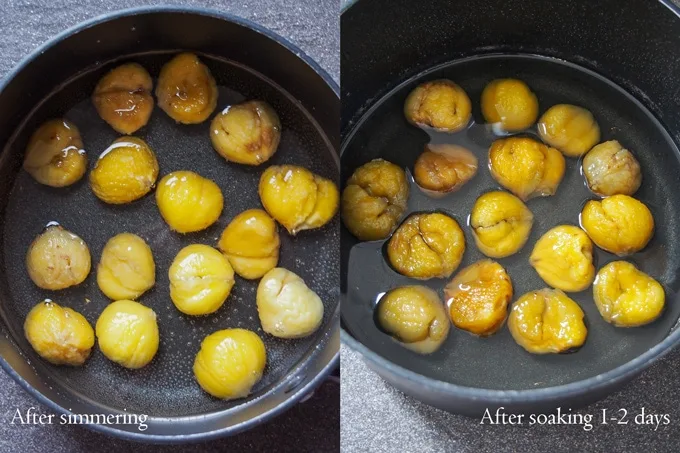
- Repeat this process two more times, ie bringing to a simmer 4 times in total, over 4 days. On the fourth day, after you have simmered and removed from the heat, take the chestnuts out of the syrup and set them on a parchment-lined baking sheet.
- Preheat the oven to 250F/120C and place the chestnuts in the oven for around 1 hour until they are relatively dry to look at and touch. Allow to cool then either serve or wrap - they can be kept at room temperature but are best separated with parchment or in individual paper liners within a sealed container.
Nutrition Information:
Yield:
16Serving Size:
1 chestnutAmount Per Serving: Calories: 59
If you liked this recipe, here are some similar dishes you may enjoy!







Caroline lived and traveled various places before settling in Cambridge, MA. She still fits in some travel with her family, but often settles for traveling through food instead. She shares her recipes at CarolinesCooking.com, where there’s plenty of international inspiration using seasonal ingredients, as well as creative recipes for all to enjoy. Caroline is originally from Scotland, where she grew up hiking and skiing, both things she still loves to do when her two young boys give her a chance. You can follow along with her cooking adventures on Facebook, Instagram, Twitter, and Pinterest.
Odile
Friday 15th of December 2023
Having trouble with this recipe. It says "Place the sugar and water in a clean pan and warm them over a medium heat to dissolve the sugar. Bring to a simmer and cook for a minute or two, then add the peeled, cooked chestnuts. " but i haven’t seen any mention of cooking the chestnuts. It is obviously necessary since what I am getting after 4 days of syrup soak is a bunch of very hard nuts. Not even sweet. I’ll try boiling them in water now and see what happens. And the I’ll do the syrup again. Otherwise I’ll just put them in the blender and make a cake. Any other suggestions?
Sarah - Curious Cuisiniere
Saturday 16th of December 2023
We're sorry you are having trouble with this recipe. You cook the chestnuts by boiling in step 2, and then peel them in step 3.
lisa
Saturday 24th of December 2022
trying this for the first time and while they taste fine mine are not the nice color pictured here. The chestnuts are darker, as if maybe a tiny bit of shell or skin was still lodged in the crevasses and turned the syrup dark. I am using non-bleached sugar so maybe that also added to the color- the chestnuts are like a ruddy medium brown- grayish color. anyone else have this problem with the final product not looking as nice and bright as pictured here? again, everything tastes fine. thanks!
BB
Friday 19th of January 2024
@lisa, hi, I imported peeled and roasted nuts from Italy and I noticed some were dark and some were light colored. Maybe it depends on which tree they’re picked from. The light colored ones were softer and it seems to me they get darker and harder the longer heat is applied. The sweet chestnut syrup this recipe makes if you don’t follow through with simmering it all away is really delicious so I seal the marrons in the syrup in decorative jars to give them as gifts or in one big mason jar all for myself haha so good!
Georgi Spelvanic
Sunday 8th of October 2023
@lisa,
Yeah...if you leave any of the paper-like liner between the shell and the nut meat, the sugar syrup will pick up the tannins.
Not a problem for taste or quality...but will darken the final product.
Holly
Friday 4th of November 2022
Can I start with a jar of previously steamed chestnuts, likes from Trader Joe's?
BB
Friday 19th of January 2024
@Melody, hi, I had some fall to pieces the first time I tried working with the already peeled and cooked kind. It taught me a lesson. I learned to be very gentle with them by using a slotted spoon to remove them from the bubbly syrup to the overnight soaking container the pour the hot syrup over them and vice versa when putting them to heat the following days. I reheat the syrup first then gently spoon the marrons into it. If I just dump them into the saucepan and let them bounce around in the boiling syrup is when they bust up in little pieces. But the pieces were delicious , too, so it a yum-yum situation all around, right
BB
Monday 8th of January 2024
@Tania, yes, you can. I did it using organic chestnuts that came in a thick, foiled bag. The bigger nuts turned out perfect, the smaller ones were very hard but still tasty little suckers (similar to Hawaiian sugar plums )
BB
Monday 8th of January 2024
@lisa, oops, my bad. Vanilla was my add. Italian recipes include vanilla, either from scraping the inside of a vanilla bean or using a couple teaspoons of pure vanilla extract. It really enhances the flavor.
Melody
Friday 27th of October 2023
@Caroline, I bought some from Costco and they were literally falling apart by day 2. Fresh from the trees came out perfect.
Tania
Thursday 2nd of February 2023
@BB, awesome. I want to try them so you used already cooked store bought? We don't get chestnuts in South africa only ones in bottles so don't know if they will work
Harry
Monday 18th of October 2021
How is best to store them? And how long can they last? For example, if I made some now, would there be a way to store them until Christmas?
Georgi Spelvanic
Sunday 8th of October 2023
@Harry,
If you plan to store for a longwhile....can I suggest simply canning them?
When your nuts are done with the sugaring, simply put them in small 'mason' jars with rubber lined caps and rings.
Put as many nuts in as you can fit without crushing them. Then top with BOILING syrup from the process. Immediately put on the caps and rings. Tighten by hand and place the jars in a baking pan (in case they jars crack.).
Leave them alone. Now you have preserved, candied chestnuts with a very flavorful syrup to spoon over ice cream, cheese cake or even fresh fruit.
Caroline
Thursday 21st of October 2021
It's best to store them in a closed container at cool room temperature - I suggest separating them with parchment or have each in a small paper case. They last for a couple weeks, realistically a little longer but they become more dry over time. So I would suggest leaving making them until a week before you would be sharing them, maybe, just to allow a couple days for them to then be eaten. You can also try to make sure they are on the less-dry side when you do the final dry at the end to hopefully help them stay that bit more moist longer.
Cindy Bingham
Tuesday 5th of October 2021
I was given some chestnuts by a friend. I'm going to try this recipe. Would adding cinnamon to the sugar water on the last day be a possibility, or are these always done with sugar only?
Georgi Spelvanic
Sunday 8th of October 2023
@Cindy Bingham,
Cinnamon would over power the flavor of chestnut. This is a celebration of chestnut.
Caroline
Tuesday 12th of October 2021
I don't ever remember seeing cinnamon flavored, only plain, nor have I made them that way. But I imagine adding some cinnamon to the syrup would be the way to do it. I'm just not sure how much would be right amount to get the flavor to come through but not take over. You could always add a little at a time and taste a little of the syrup (letting it cool first) to be sure the flavor is what you're looking for.