
Homemade Clotted Cream
Clotted Cream is deliciously creamy and the essential companion to a batch of British scones. You don't have to go to England to enjoy your tea-time treats though, because it is so easy to make at home!
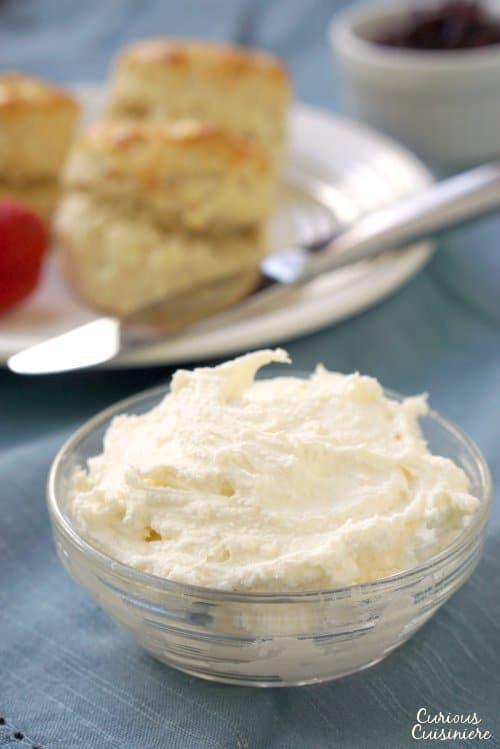
What is clotted cream?
Clotted cream is a staple on British tea-time tables. You'll find it served in a little dish right alongside your scones (or very traditionally, Cornish 'splits', a type of yeast bun).
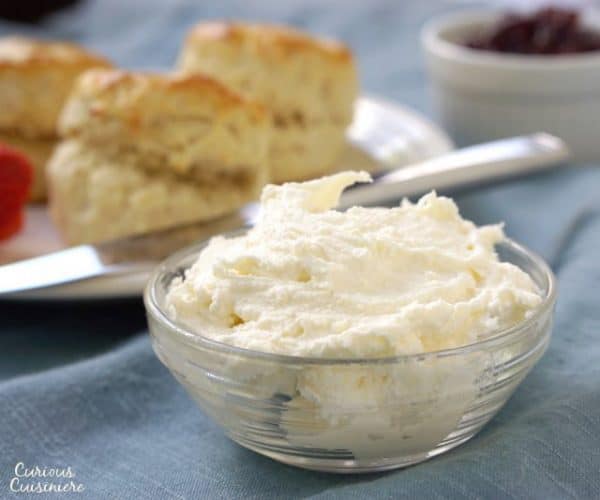
It is a thick, creamy, white spread, with the consistency of softened cream cheese. It is ever so slightly sweet, but mostly just incredibly creamy. Like a good, unsalted butter.
But so much more.
Devonshire cream vs clotted cream
Sometimes you may hear "clotted cream" called "Devonshire cream" or "Cornish cream". It really all depends on the region you are in.
The making of clotted cream started in Devon as a way to separate the fat from milk to make butter. Centuries later in Cornwall, it became popular to use the cream on its own. At that time, clotted cream and butter were the most popular ways to preserve milk.
One of our readers sent us a wonderful insight into clotted cream making, that is worth sharing. Angela spent her childhood during WWII at Callington with her grandparents who were retired farmers on the Devon/Cornwall border. She explained that the real difference between clotted cream in Devon and Cornwall came down to the process.
She stated,
"Devon cream was made by putting the full milk straight from the cow into a large enamel pan. It was then rested overnight to allow the fat to rise to the top. Then the pan was placed on the range over a pan of simmering water until the cream became a crust. (The milk must not boil!) It was then removed and allowed to become cold in the pantry - no fridges then.
When cold, the thick crust was carefully scooped off the top of the milk and put in a cream dish ready for use. The remaining fatless milk was used for cooking and on farms, surplus skim milk was used to feed pigs etc.
This was the method we used as we no longer had the farm. Just 2 bottles of unpasteurized full cream milk produced enough cream for splits, stewed fruit or junket.
Cornish clotted cream was made as follows - The full milk was poured through a separator. This was a rather complicated piece of mechanical equipment used on farms to separate the fat from the milk.
The full cream was then put into the enamel pan and very slowly heated on the stove until it thickened from top to bottom. No skimming needed. When cold, it could all be eaten!
This is what can be bought in supermarkets today."
Many thanks to Angela for sharing her knowledge and family heritage story with us!
Of course, those in Devon and Cornwall each claim that their cream is superior.
I guess we'll have to take a trip to decide for ourselves!
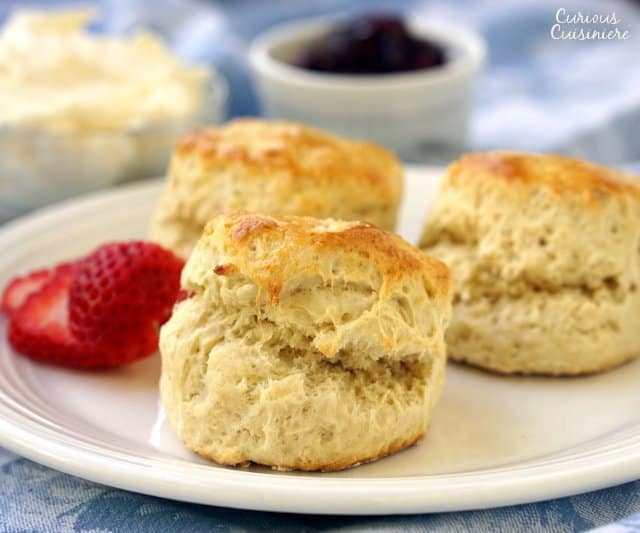
Ingredients
The ingredient list here couldn't be any shorter. You just need to get yourself some heavy cream.
However, the hardest part about making clotted cream might just be finding the cream.
You see, for best results, you need to start with heavy cream that has not been ultra-pasteurized for a longer shelf life.
Simply look for a carton of heavy cream that does not say "ultra-pasteurized", and you're good to go!
Can I use ultra pasteurized cream?
Finding non-ultra-pasteurized cream is becoming more and more difficult in the States, so many of our readers have asked if they can use ultra-pasteurized cream in this recipe.
Luckily, the answer is yes (most of the time). Some of our readers have had luck using ultra-pasteurized cream. However, because of what the ultra-pasteurization process does to the protein and fat molecules in the cream, you will get less clotted cream if you start with ultra-pasteurized cream than if you can find some that isn't.
How to make clotted cream
Clotted describes the look of the cream when it is heated ever-so-gently so that the fat separates to the top and clings together.
After you find your cream, the second hardest part of making clotted cream is the wait.
This is not a quick process.
The cream has to be heated slowly for 12 hours, which we find easiest to do overnight. Then it is cooled for another 8 hours (or over the next night).
Finally, you separate the cream from the liquid, and you have the spread that you have been waiting for.
It might take a long time, but it's mostly hands-off.
And it's SO worth the wait!
Can you make clotted cream in the slow cooker?
This is a question that we get often from our readers, so we did some testing to find out.
The answer is yes you can! Have a look at our recipe and process for making clotted cream in the slow cooker.
There are also some nice tips and tricks about making clotted cream in general over there, so even if you're thinking about making it using this oven method, take a look over there for the tips!
How to store the finished product
You will want to store your clotted cream in an airtight container in your refrigerator. For best storage, store it a place in your fridge that stays a consistent, cool temperature - so not in the door. Closer to the middle is where we like to keep it.
How long does homemade clotted cream last?
Your homemade clotted cream will stay fresh for about 3-4 days if properly stored in the refrigerator. After that, it may start to lose its consistency.
However, if you happen to let your clotted cream get just a bit past its prime and the texture just isn't quite right you can always use it to make fudge or ice cream.
How to use clotted cream
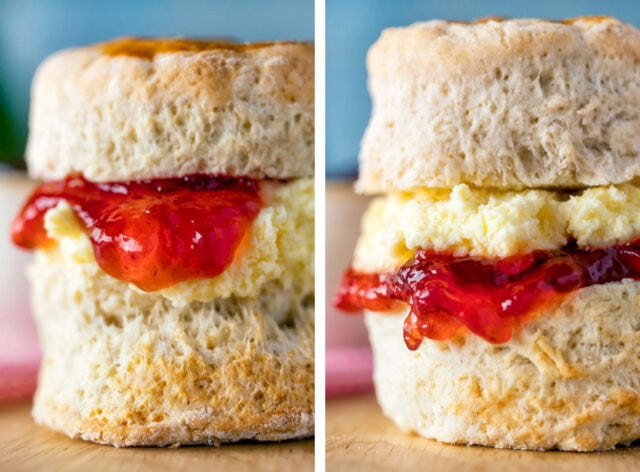
The traditional use for clotted cream is on scones, with jam, served with tea.
However, if you find yourself with an excess of clotted cream and no scones, you can always serve it with Irish soda bread, muffins, apple pie, a fruit tart, or any dessert or sweet bread of your choosing. It also makes a nice fruit topping.
Basically, you can use it any way you would typically use whipped cream or butter.
Savory uses for clotted cream
Clotted cream typically lends itself to sweeter uses: spread on scones (or "splits" as Angela pointed out to us were more common where she was growing up) with some jam.
However, it is rich and creamy and you can use it for savory applications as well.
We think it would be delicious as a veggie dip or spread on a cucumber slice as an appetizer.
You could also add it to mashed potatoes, risotto, or eggs to give them extra creaminess, much like you would butter. Or you could add it to soups or sauces to give them a creamy boost.
What's the difference between clotted cream and whipped cream?
While at first, a bowl of clotted cream might look similar to whipped cream. But once you take a taste, you'll know the difference.
Both start with the same basic ingredient: heavy cream. But, for whipped cream, you whip that cream into light and fluffy pillows. Often you'll add sweetener and possibly a flavoring, like vanilla, to whipped cream as well.
Clotted cream, on the other hand, is heated and separated, as we'll go into more detail below. This process produces a thicker, creamy substance.
Another difference is that clotted cream is typically not sweetened. People love it for the creamy texture it adds, similar to butter, rather than a particular sweetness or flavor.
What's the difference between clotted cream and butter?
So, if it has a thicker consistency and is more savory, how is clotted cream different from butter?
Again, it comes down to the process.
Butter is made by churning (or whipping) cream. So, if you over-whip your whipped cream, you'll end up with nice, whipped butter.
Clotted cream, again, has to do with the separation of the fat in your cream.
Our reader Angela pointed out to us that the making of butter in a churn took additional time and hard work. So making clotted cream was a much easier option.
What to do with the leftover whey from making clotted cream?
When you make clotted cream, you will be left with a thin, milky liquid below the clotted cream.
That liquid is basically skim milk, and while we don't think it has the best flavor for drinking, it is perfectly good for baking.
You can use it in any baking recipe that calls for milk. Our favorite way to use it is to make a batch of British scones.
However, it would also work well to make this Brazilian French toast or this Finnish braided bread.
Can you freeze clotted cream?
Frozen dairy tends to lose its thickness and creamy texture, so we wouldn't recommend freezing homemade clotted cream. (We'd use it in some of the ways suggested above first.)
That being said, we have heard of some people having luck freezing clotted cream in an airtight container, if it is thawed overnight in the refrigerator before you would like to use it.
If you'd like to try this, we'd suggest starting with a small test batch to see how you like the results.
Buying jars of imported clotted cream can get quite pricey. But you don't have to worry about that anymore!
Homemade Clotted Cream
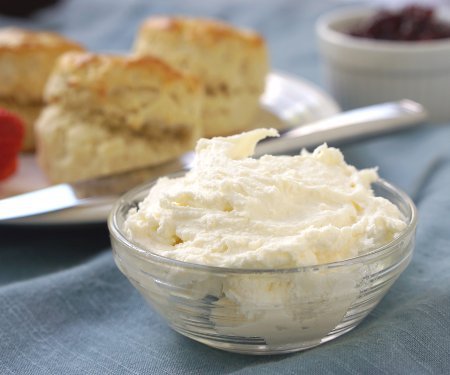
To make clotted cream, you will want to start the process 3 days before you plan to serve your cream. It sounds like a lot of time, but most of the process is done while you sleep!
Ingredients
- 2 c (237 ml) heavy cream, (not ultra-pasteurized)
Instructions
Day 1
- Preheat your oven to 170-180F.
- Pour the cream into a shallow casserole dish or glass baking dish. (The cream should only come up the sides about 1-2 inches. The key here is to have a lot of surface area.)
- Place the cream in the oven for 12 hours, uncovered. (This works great overnight.**)
Day 2
- After heating for 12 hours, the cream will develop a skin. Carefully remove the dish from the oven and let it cool to room temperature. Once cool, cover the dish and refrigerate it for 8 hours (or overnight again).
Day 3
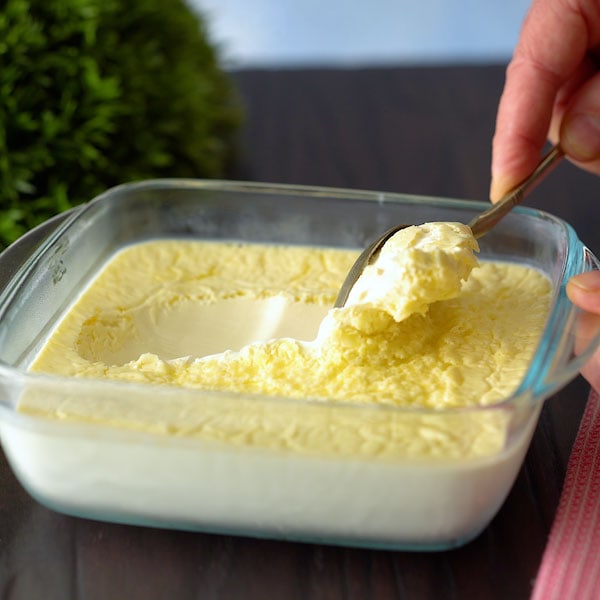
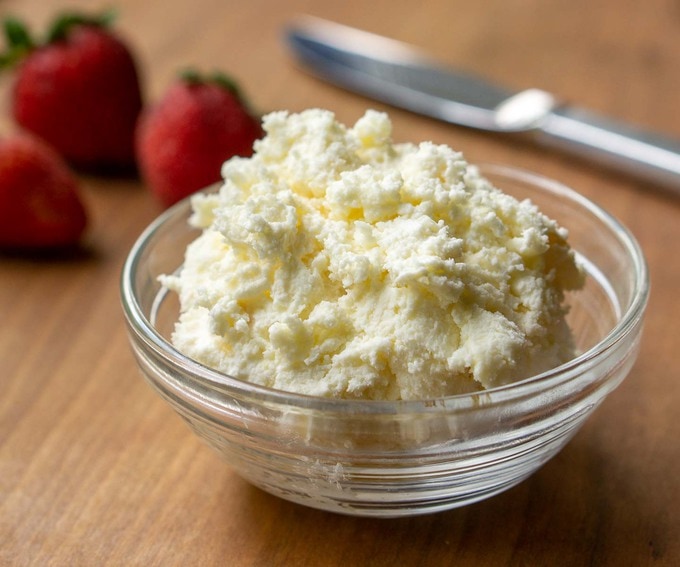
- After chilled, gently skim the thick layer of clotted cream from the surface, leaving the thinner liquid behind. (It will feel like you’re pulling a layer of slightly softened ice cream from the top of a layer of milk*. The skin in fine, it will soften as it is mixed into the cream.)
- Gently stir the skimmed clotted cream to create a smooth texture. (If your cream is too thick for your liking, you can always stir a little bit of the thin liquid back into your cream, until it reaches your desired consistency.)
- Store the clotted cream in a sealed container in the refrigerator for up to two weeks. (Clotted cream can also be frozen and thawed in the refrigerator, if desired.)
Notes
*The leftover liquid can be used like milk. It’s great for baking!
** Oven note #1: Some ovens have a safety feature that shuts them off after extended periods of time. If this is your oven, you may want to do the clotting step during the day, when you can make sure your oven stays on and at a low temperature.
Oven note #2: We have a lot of readers who are discovering as they try this recipe that their oven runs hot. After 12 hours in the oven, their cream has developed a dark brown skin. The skin on your cream should only be a pale tan if it starts to darken. If you think your oven may run hot, check your cream after 8 hours and again after 10 hours to see if the top is darkening. If it is, you may need to cycle your oven between off and on to keep a temperature that is not too hot for the cream. (As a side note, the darkened top on the cream does not mean it is ruined. It simply means your finished cream will have a bit of a deeper flavor, and it will most likely have some flecks of brown and not be a pure creamy white.)
Nutrition Information:
Yield:
16Serving Size:
1 gAmount Per Serving: Calories: 101

Sarah founded Curious in 2010 as a way to save her recipe creations and share culinary experiences. Her love for cultural cuisines was instilled early by her French Canadian Grandmother. Her experience in the kitchen and in recipe development comes from over 10 years working in professional kitchens. She has traveled extensively and enjoys bringing the flavors of her travels back to create easy-to-make recipes.


What is the thickness To be like when the 12 hours are done
Is it still to be liquid and the thickening is done during cooling
I’m in the process now and mine is still liquid has a nice light coloured skin
Is this ready to chill now
Hi Kris. After heating, the mixture will still be liquidy, although you should start to see some separation. After chilling is when the top part will firm up. Enjoy!
What do I use if I cannot find unpasteurized cream. Will it come out ok using ultra-pasteurized cream? Thanks you
Hi Patty. Some readers have had luck using ultra-pasteurized cream. I think your results will vary depending on the brand and your yield will likely be less. If you have a Trader Joe's or Whole Foods (or other health/natural foods store) near you, we typically have luck with those. (And you can use "pasteurized" just not "ultra-pasteurized".) You can always give it a try with the ultra-pasteurized and see.
Hi! Can you half this recipe? It made so much for me! If you do half if, would it need to spend less time in the oven?
Hi J. Yes you can! You just want to change the size of the dish that you use, so that there is still at least an inch depth of cream. Time should be roughly the same, but I would check it near the end, since it may need a bit less. Enjoy!
It’s not a bad substitute, (tbh this is one of the better ones) however to make real clotted cream you need to use unpasteurised cream. Having had ‘clotted cream’ or ‘Devonshire cream’ in the USA it really is noticeable how much different it is to the real deal. For those who have not had it before this is a nice recipe and about as close as you can get, but still not a scratch on the real deal
Thanks for your input Chris. In the States it can be tricky to find unpasteurized cream. I can imagine how delicious this would be made that way though. If we get our hands on some raw milk cream, we will definitely be giving it a try!
I add some durian and the taste...hm..I think it's perfect!
Glad you're enjoying it!
Hi,
Can we freeze clotted cream?
Hi Bethany. Yes, you can! We recommend thawing it overnight in the refrigerator when you are ready to use it, as it keeps its consistency better that way. Enjoy!
Hi! We made clotted cream with some super-heavy double cream from a local farm that makes their own dairy products from Holstein dairy cows. This particular dairy farm is a Certified Raw Milk facility as a result their dairy products are generally not pasteurized. Their double cream is so thick you will need to spoon it a few times out of the tub into the baking dish. At the end we the result for us was even a thicker texture with zero watery layer at the bottom but the golden layer at the top had formed into a light golden crusty skin. The taste is out of this world though. Without the watery bottom layer we could not lighten the texture or is the a way we could? Alternatively is there a way to soften the heavy cream before placing into the oven?
By the way we used a convection oven (at abt 70 degrees) and only half-a litre of double-cream from raw milk.
Ho Mos. How lucky you are! I have never been lucky enough to experience this kind of cream! But a few thoughts for you. Since the clotting process separates the fat from the liquid in the cream, I am guessing that since your cream was so high in fat content, there wasn't much liquid to separate out. If you wanted to lighten the texture in this case, I would try just mixing in some cream or milk. The only way I could think of to soften the cream before putting it into the oven would be to possibly leave it out at room temperature. Glad you enjoyed the flavor!
Ive made clotted cream several times and it comes out great. Thick and Creamy. However after I put it in the fridge, it seems to dry out and get very hard. To use I have let it sit out for 39-40 minutes. What am I doing wrong?
Thsnks
Hi Bob. Clotted cream is a high concentration of fat which will firm up a bit when chilled. Are you storing it covered? That will help it to not dry out. If it is covered and still getting hard in the fridge, I would suggest stirring a bit of the milky liquid into your clotted cream the next time you make it. This should help it to stay softer.
Is the temperature settings supposed to be the same for a twin fan convection oven?thanks
Hi Omar. We haven't tried this with convection. However, typically to convert to convection, you'd want to decrease the temperature by 25 degrees (since the fans circulate the heat more effectively, resulting in a hotter oven). So you'd want to set your oven closer to 145F, if it goes that low. I would definitely use an oven thermometer in this case and check it regularly to make sure that the temperature inside you oven is stayig around 170F. You'll also want to keep an eye on the cream, as the circulating air might make it clot faster. If you give it a dry, definitely stop back by and let us know what you did and how it turned out for you!
Hi there! I just made this with ultra pasteurized cream (only thing available here) and it still seems like it came out okay. Is there anything i can do to thicken it though?
Hi Courtney. Have you refrigerated it, per the instructions? That part is necessary to get the layers to distinctly separate. After refrigerating, you should have a thick layer floating above a very watery layer. The thicker layer is your clotted cream. If your top layer isn't thick, then likely the ultra pasteurized cream didn't clot properly.
We always made it on top of the stove in a double pan, water in the bottom and whole milk on top and skim the cream off in the morning into a dish to put straight into the fridge
We'll have to give this method a try! Thanks for sharing!
Love the recipe..will try it out soon.
Thank you for sharing.
Enjoy!
I am wondering if one could use a sous vide circulator to make this. If it is necessary to use a shallow pan, it seems possible to use a rack to hold the top portion of the container out of the water while the rest of it is submerged at a precise temperature. Of course, the top might not get a skin on it...Has anyone tried it?
I came here to ask this exact question. No answer on that, eh? Darn!
I’ve been making clotted cream using this method for about two years. It is fool proof. My oven is electric and runs a bit below the set temperature, which I set at 170 F. Sometimes it takes a little longer but so far it hasn’t failed. I love having fresh clotted cream, a novelty here in California. I’m looking for more ways to eat it than just on scones since I try to avoid sweetened foods. Any suggestions? Thanks!
Hi Peggy. Thanks for your comment and glad you enjoy the recipe! I will say that our recipe for British style scones is not very sweet, closer to a biscuit. Clotted cream is often used in sweeter applications and desserts, like ice cream and fudge. But, you could use it like you would use butter, on toast, muffins, or cornbread. You could also use it in place of milk or cream in savory dishes, like in mashed potatoes. Enjoy!
Can you use a slow cooker instead of the oven?
Hi Wendy. We haven't tried this in the slow cooker yet. In concept it should work if you put water in your slow cooker and the cream in another glass container in the water. (So you're kind of making a double boiler). You will want to test this method out first though with a thermometer to make sure that internal environment of the cooker is around 170F (and stays there over 12 hours). Slow cookers are programmed to slowly heat to a set temperature over a period of time (high just gets you to that temperature faster than low). So you'll want to make sure your particular slow cooker does keep the internal environment at the propper temperature before adding the cream. Another thing to consider is that you will want to keep the lid slightly cocked, to allow moisture to evaporate. (This will also likely help reduce the intermal temperature.) If you give it a try, let us know how it turns out for you!
Hi!
I left it cooking over night but when I woke up my oven was off. This may have been a safety feature. I’m not sure if it’s totally ruined, or if I can still keep trying? What is it supposed to look like after being cooked? I have no idea how long it would’ve sat in the oven with it off. 🙁
Hi Gina. The cream should have a dry skin on top that is lightly golden. If you oven (or the dish) were still warm when you woke up, then it is likely fine. If it has the skin, it is also likely fine. Always use your best judgement and if is smells off at all, then don’t consume it. But, likely, if there is a skin it should be fine.
I tried making clotted cream today and mine went all dark brown and oil . It was on gas mark 2 . Do you think that's too hot ?
Hi Anum. Yes, I think your oven was too hot. Gas mark 2 is roughly 300F. Even 1/2 gas mark is roughly 250F, so I would suggest cycling your oven on and off to keep it at a lower temperature, and watching the color of the crust. You only want it to be a light golden.