Hummus Msabbaha
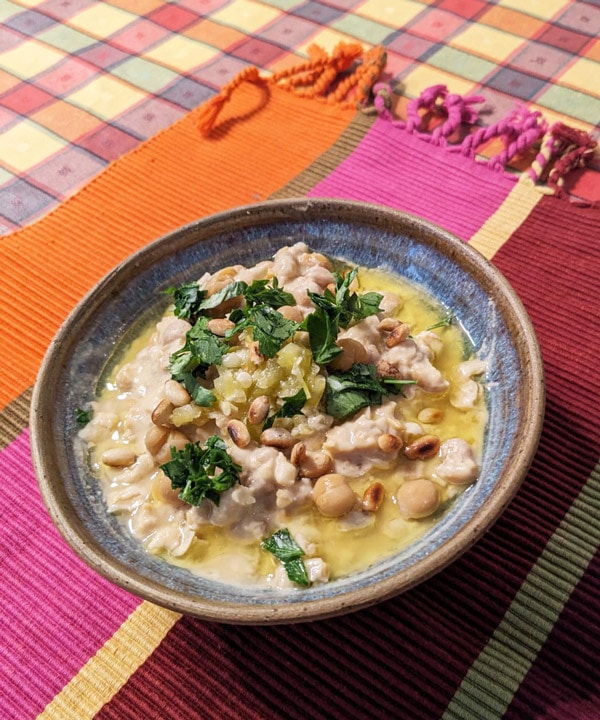
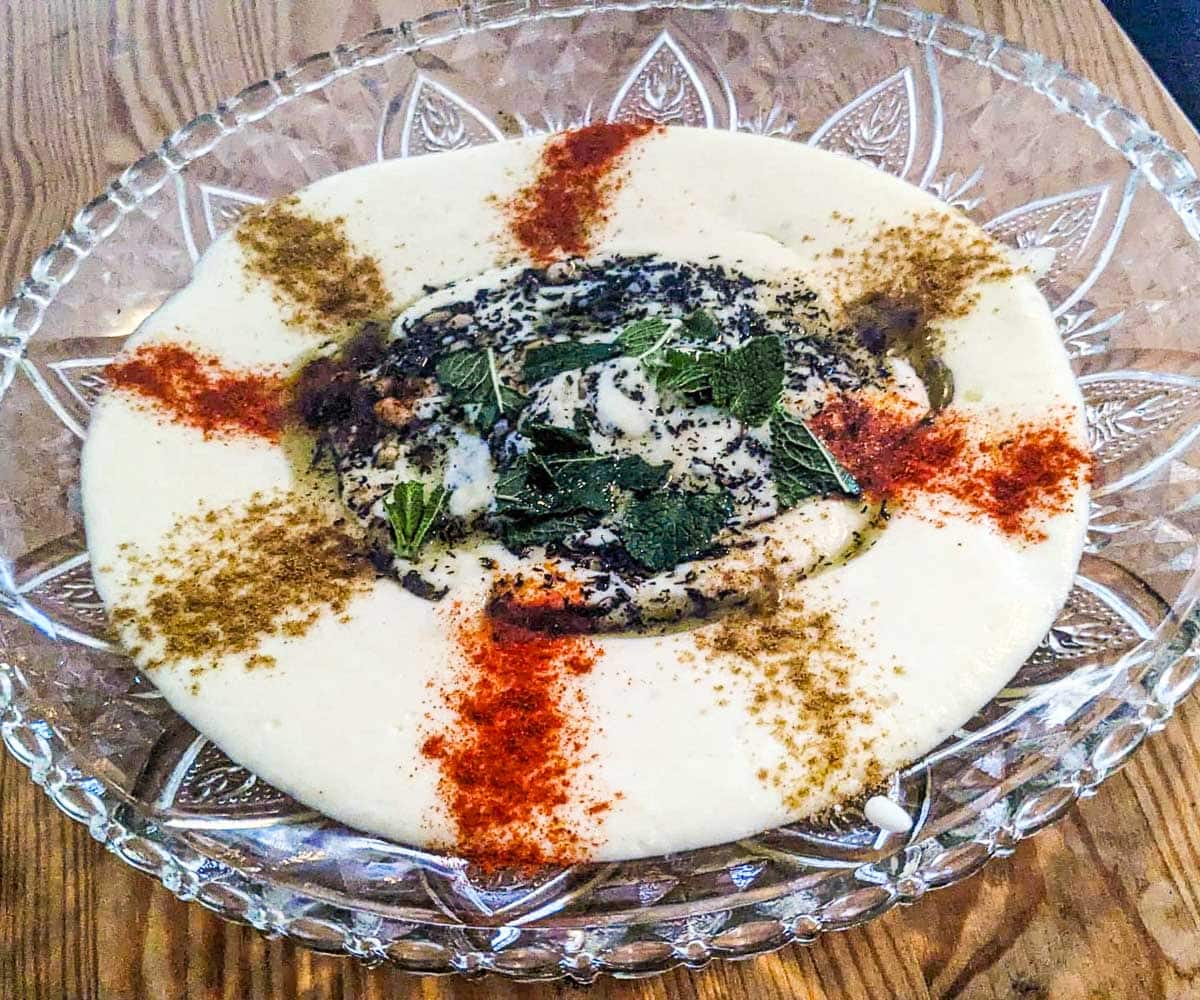
Hummus msabbaha (also spelled 'musabaha', 'msabha', 'msabaha') is a rustic version of hummus made with whole chickpeas and tahini. Often described as warm chickpeas in a tahini sauce, this dish proves that the preparation method can really transform the same ingredients into something very different!
What are the different types of hummus?
- Hummus Tahini
- Hummus Foul
- Hummus Msabbaha
This is the typical menu of almost every hummus place (aka 'Hummusia') in Israel, Jewish and Arab alike. The menus, as you have probably realized, are quite basic.
Hummus bil tahini, often shortened to 'Hummus', is a signature dish of the Levantine cuisine (the cuisine of Lebanon, Syria, Israel, The Palestinian Territories, and Jordan).
The word 'hummus' means 'chickpeas' in Arabic.
Hummus tahini (hummus bil tahini) is the most basic version of the dish, served as it is, topped with whole chickpeas and a drizzle of olive oil
For hummus bil tahini, the chickpeas are mashed to a fine paste. Then they are seasoned and mixed with tahini (raw sesame paste).
Hummus foul is topped with fava beans instead of the whole chickpeas that are used as a garnish in hummus bil tahini (the more classic version).
What is hummus msabbaha?
Hummus msabbaha is a whole other story.
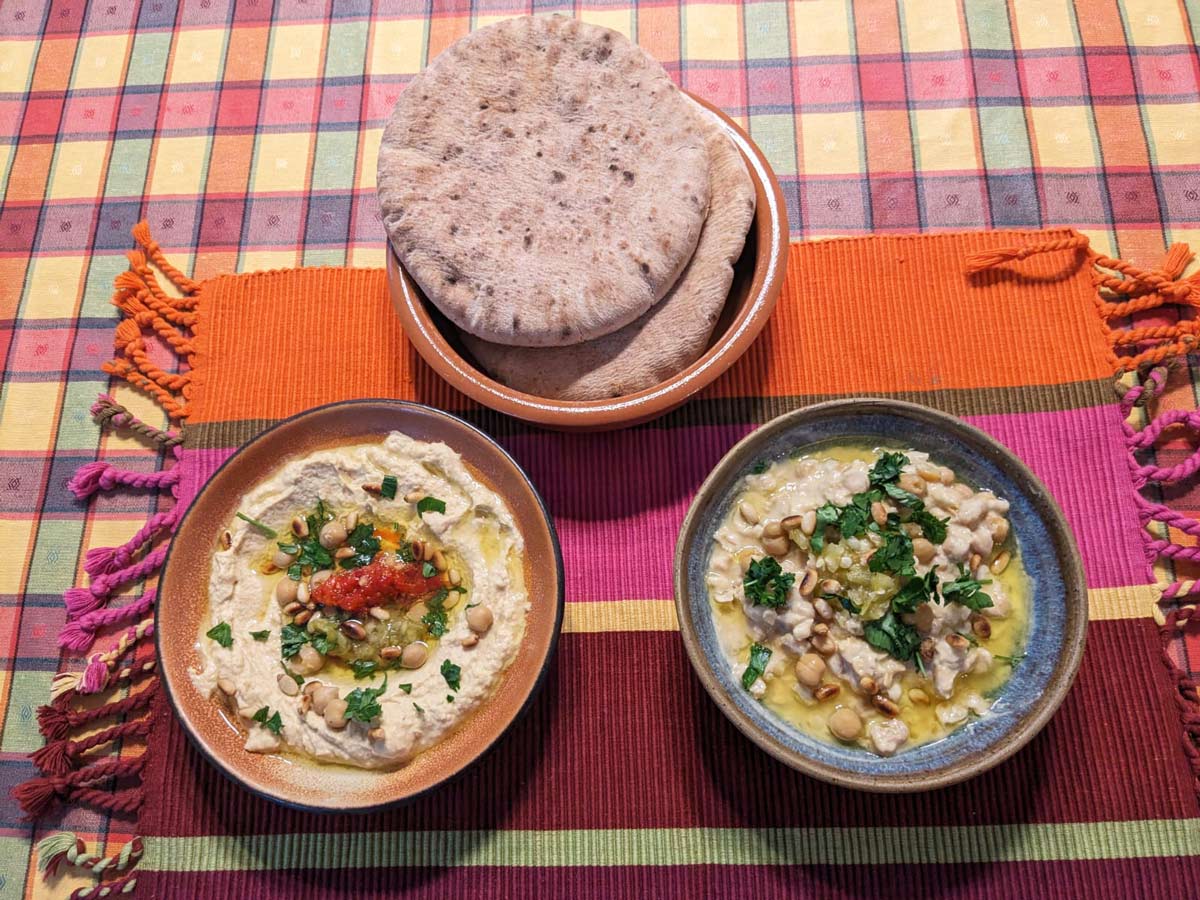
Instead of mashing or blending everything into a fine paste, whole chickpeas are slightly crushed and mixed with raw tahini, lemon juice, and hot pepper.
You can also mix in other additions, such as paprika and cumin.
Hummus msabbaha is always served with a drizzle of high-quality olive oil. This which makes everything creamier and smoother, and adds a special aroma.
You could consider msabbaha to be a "rougher" version of hummus. This is in terms of texture, since it is thicker than the classic hummus and not completely smooth. But it is also in terms of flavor. Msabbaha is spicier and more sour.
Some hummus places are actually known for their msabbaha more than for their 'regular' hummus. For example, Abu Hassan restaurant in Jaffa (a port city located next to Tel Aviv, Israel). Hummus lovers travel from all around Israel just to indulge in Abu Hassan's legendary msabbaha. (Admittedly, I'm one of them.)
Making msabbaha saves the cook time and energy, by not having to grind everything to a fine paste.
Today, however, many hummus lovers actually prefer to have a msabbaha on many occasions. Some describe this dish to be a "whole other experience". So if you love a classic hummus, you will want to give msabbaha a try!
Regional variations of msabbaha
Msabbaha, such as every local staple food in Levantine cuisine, has many regional variations.
In the Northern Levant, for example, they sometimes call the dish 'mushawsha'. It is rougher in texture and has more tahini in it, which makes it creamier and heavier.
Other regional variations include using yogurt instead of tahini or adding clarified butter.
Some Levantine chefs also experiment with using other "bases" for msabbaha. Doing this they create a unique twist to the dish, with new flavors and textures.
One of my favourite variations is a butter bean msabbaha, attributed to Eyal Shani, a notable Israeli chef.
How to make hummus msabbaha
The ingredients for making msabbaha are almost identical to the classic hummus bil tahini. However, due to the different balance of flavors and the unique, semi-crushed texture, it becomes a dish in itself.
The trickiest part of making every hummus dish is definitely cooking the chickpeas. In order to develop a complex and comforting flavor, as well as a silky texture, the chickpeas have to soak properly for at least 24 hours. After soaking, they must cook for hours.
After the chickpeas are ready, one can make msabbaha in less than 5 minutes!
I do recommend preparing the msabbaha as close as possible to the time of eating, as the tahini might harden with time and the msabbaha will lose its silky texture.
In order to shorten the preparation process, you could use canned chickpeas. Nevertheless, if you truly want to take your msabbha game to the next level, I definitely recommend cooking the chickpeas by yourself or buying well-cooked chickpeas from a hummus place.
How to serve hummus for breakfast
People mainly eat hummus for breakfast or as a meze (small dishes served as appetizers or a light meal). You can find hummus sold on every corner around the Levant.
A "Hummusia" usually serves hummus as a whole breakfast set, accompanied by pita bread, olives, vegetables, and falafels.
Vegetables to go along with the hummus might include pickled cucumber and raw onion shells (to scoop the hummus with). Other places might add fresh tomatoes, green chilis, or pickled cauliflower. The options are endless.
Hummus Msabbaha
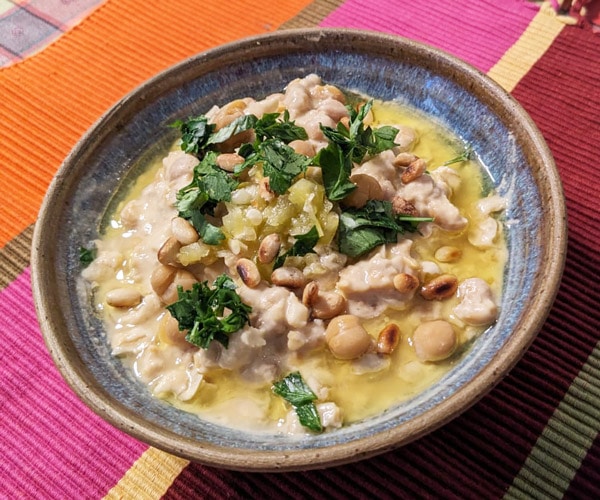
Hummus msabbaha is a rustic hummus of warm whole chickpeas in a tahini sauce.
Properly cooking the chickpeas does take some planning. Remember to start soaking your chickpeas a day (or two) before you plan to have your hummus.
Ingredients
For the chickpeas (5-6 servings of chickpeas)*
- 2 cups dried chickpeas
- Water for soaking and cooking (enough to fill ¾ of the pot every time)
- 1 tablespoon salt
- 1 teaspoon baking soda
- 1 onion, halved
- ½ teaspoon cumin powder
For Hummus Msabbaha (1-2 servings, can be multiplied if needed)
- 1 cup cooked chickpeas (cooked as above or canned and drained)
- 3 tablespoon lemon juice
- ½ green chili, finely chopped
- ⅓ cup warm chickpeas cooking liquid (or lukewarm water)
- 4 tablespoon tahini paste
- Salt, to taste
- Parsley, for garnish
- Whole chickpeas, for garnish
- Olive oil, for garnish.
- Toasted pine nuts, for garnish (optional)
Instructions
For the chickpeas
- Soak the chickpeas in a large pot with water and salt for 24-48 hours.
- Drain the chickpeas and rinse them.
- Return the chickpeas to the pot and fill the pot ¾ of the way with fresh tap water. Bring the chickpeas to a boil, and let boil for 1-2 minutes.
- Drain the chickpeas once more and return them to the pot. Fill the pot again with water. Bring them to a boil, then reduce the heat and simmer for 45 minutes.
- Add the baking soda, cumin powder, and onion, and cook for another 2-6 hours (the more the better).
For Hummus Msabbaha
- Transfer warm chickpeas from the cooking pot into a large bowl and gently crush them with a mortar or a ladle for 10-20 seconds.
- Add the lemon juice, chili, and tahini paste and stir them into the chickpeas.
- Add some of the chickpea cooking liquid, a little at a time, and stir until the tahini dissolves. **
- Add salt to taste, try it, and adjust if needed.
- Transfer the mixture to a serving bowl.
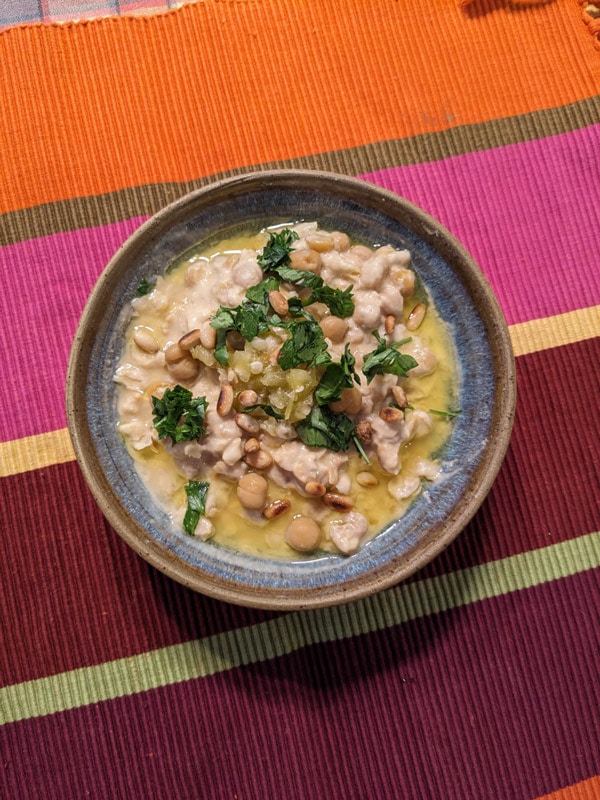
- Garnish with parsley, whole chickpeas, and toasted pine nuts.
- Add a good drizzle of olive oil to the top.
- Your Hummus Msabbaha is ready. Enjoy!
Notes
*Properly preparing the chickpeas does take a little planning. Start the chickpeas a day or two before you want to make your msabbaha. This will result in the best flavor and texture for your hummus. (Prepared chickpeas can be stored in the refrigerator for 2-3 days. Save a little cooking liquid separately, and warm the chickpeas in a pot with some of the liquid before making your Msabbaha.)
**I recommend adding the chickpeas liquid gradually while continuously stirring. Keep an eye on it, as we don't want the Msabbaha to turn into a soup. It should have a silky and creamy texture.
Recommended Products
As an Amazon Associate and member of other affiliate programs, We earn from qualifying purchases.


Nutrition Information:
Yield:
2Serving Size:
½ of msabbaha recipeAmount Per Serving: Calories: 522

I'm half Lebanese (thank you, Mom!) and have eaten hummus all my life. But I never heard of Msabbaha until now. Question: Once the Msabbaha is made, is it customary to dip pieces of flat bread into it, as you would with regular hummus? By the way, getting your recipes in my email is something I always look forward to. Please don't stop.
Thank you Mary. Yes, that is the customary way to eat this hummus as well.