Golabki (Polish Stuffed Cabbage Rolls)
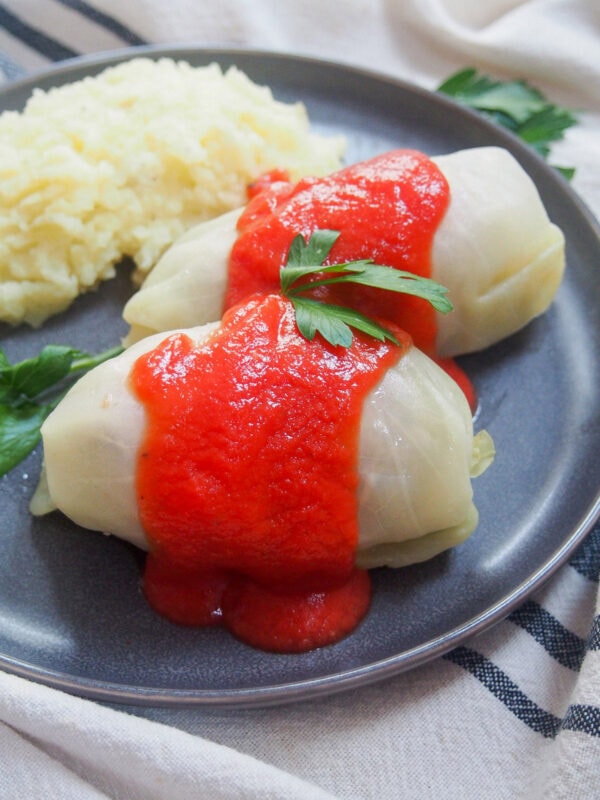
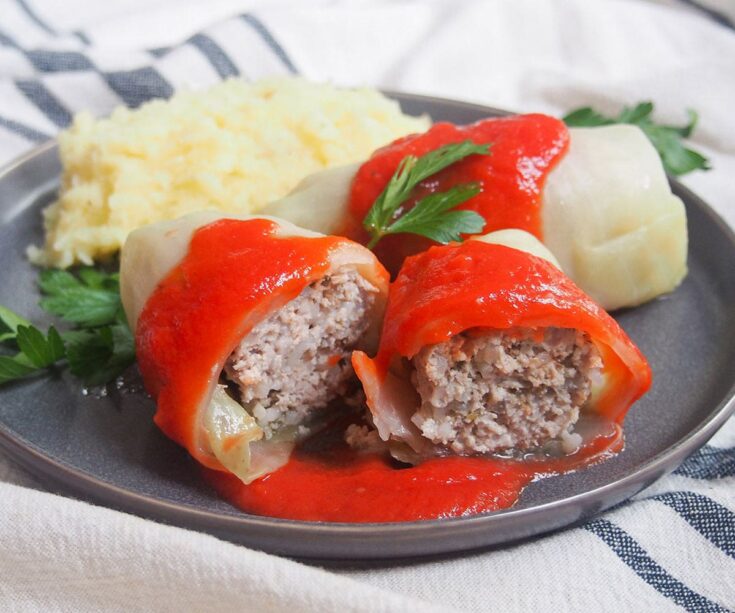
Golabki are Polish cabbage rolls, stuffed with seasoned meat and rice, served with a tomato or mushroom sauce. They are a traditional food and a popular choice at Christmas time but also so comforting to enjoy other times, too.
Many cultures stuff vegetables in some way or another, whether it's filling the natural hollow of peppers (Mexican chiles rellenos), creating a space in a zucchini (French petit farcis), or using leaves as a wrapper.
In the Mediterranean region, one of the best known is the popular stuffed grape leaves, like Turkish dolma and Persian dolmeh.
In Central and Eastern Europe, cabbage is the wrapper of choice. Being larger leaves, they make bigger rolls, and so these tend to form the main dish within a meal.
What are the origins of golabki?
The exact origins of golabki are a little unclear. Some believe they have Jewish heritage, while others say they have Turkish origins (possibly adapted from dolma). Either way, this dish has a long history in Poland, with variations over the years.
Early versions did not include any meat, as it was a luxury. Instead, families made them mainly with grains.
The name "gołąbki" (pronounced "go-wump-kee") means "little pigeons". Just as with the dish's origin, there is some debate about where the name comes from.
One thought is that it's because they look a little like pigeon breasts. While another belief is that the name has come from a similar dish in Ukraine, with the same pigeon name. That name potentially derives from the Serbian word for meatball.
A further possibility is that the name was influenced by French cuisine.
There was a French dish at the time of roasted (and possibly stuffed) pigeon, wrapped in cabbage. Whole birds were a luxury, so thrifty chefs switched out the filling for a less expensive one, but the name stuck.
Which of these is true is hard to say. But in any event, it's a name that has stuck with the dish for a long time.
Golabki ingredients and variations
These days, while you will still find variations, a few things are relatively core.
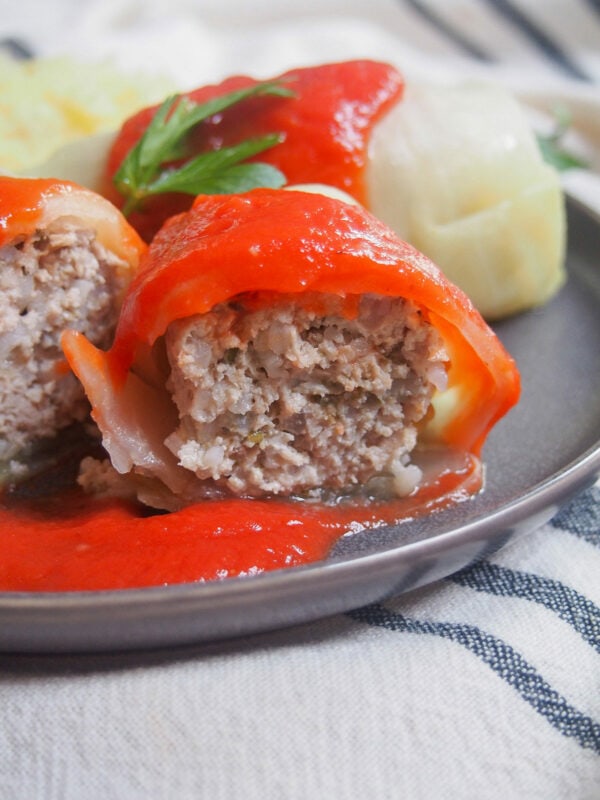
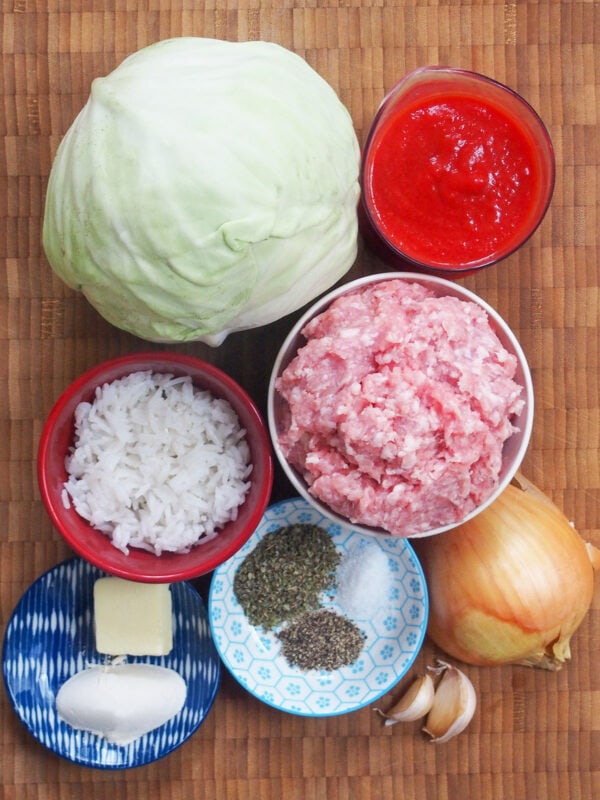
The filling base is ground meat, generally pork but sometimes beef or a mix of the two. To this, you add cooked rice and then a few seasonings and aromatics. Typically softened onion, salt, pepper, and marjoram, are used and sometimes with some other additions.
While white or light green cabbage is the most typical, you can also make these with savoy or red cabbage, if you prefer.
Some Polish families prefer to top their cabbage rolls with a mushroom sauce. But the tomato-based sauce we have used here seems generally more popular.
You can make the tomato sauce in a couple of ways, but starting with a simple roux and adding tomato passata (puree) is one of the more common.
If you like you can garnish your rolls with some herbs (eg dill or parsley) for serving, but it is not essential.
One of the most typical ways to serve the cabbage rolls is with mashed potato.
Other cabbage rolls from the region
As mentioned, you'll find similar dishes in other places around the region. While each can have variations, in general, other dishes differ in these ways:
- Ukrainian holubtsi are relatively similar to Polish golabki, though they can be made with either fresh or pickled cabbage. The filling was originally vegetarian, though these days a mixture of meat and rice is more common. Other ingredients in the filling typically include carrots and onions. The cabbage rolls are cooked in a tomato sauce and served with sour cream.
- Balkan sarma, enjoyed in Croatia, Serbia, and surrounding counties, are typically made with pickled cabbage. The filling includes beef, pork, and rice, and can include smoked pork. Balkan sarma are traditionally cooked in a paprika-based sauce.
- Romanian sarmale also starts with ground meat and pork for the filling. But they also include bacon or smoked sausage. These are seasoned with other spices and/or dill. And they are typically served with polenta.
- Jewish holishkls are similar to Ukrainian and Polish cabbage rolls but served with a sweet and sour sauce.
Can I make cabbage rolls ahead of time?
While you can freeze golabki, they may not hold together quite as well if you do.
However, these cabbage rolls are great for making ahead a day or two and storing them in the fridge. In fact, some argue that they taste better on the second or third day.
You can also prepare the partially-made components up to a day ahead of time and store them in the fridge. Then you can cook the cabbage rolls and warm up the sauce when needed.
Golabki are relatively simple but they are full of comfort. They're easy to make and a great meal for colder days.
Golabki (Polish Cabbage Rolls)
Golabki are Polish cabbage rolls, stuffed with seasoned meat and rice, served with a tomato or mushroom sauce. They are a traditional food and a popular choice at Christmas time but also so comforting to enjoy other times, too.
Ingredients
For the cabbage rolls
- 1 (2lb) cabbage (approx - can be a little larger; traditionally white or green but can use savoy/red)
- ½ large onion (or 1 small), diced
- 2 cloves garlic, diced
- 1 tablespoon cooking oil
- 1 lb ground pork
- ⅓ cup cooked rice
- ½ tablespoon dried marjoram
- ½ teaspoon salt
- ½ teaspoon pepper
- 2 cups vegetable or chicken stock
For the sauce
- 1 tablespoon butter
- 1 tablespoon flour
- ½ cup liquid from cooking cabbage rolls
- 1 cup tomato passata (tomato puree)
Instructions
For the cabbage
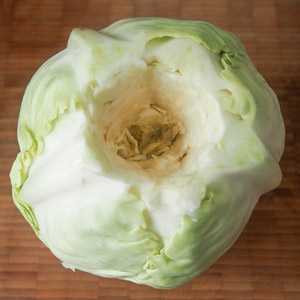
- Trim the end from the cabbage and peel off the outer leaves if they are damaged. Carefully remove the core from the cabbage, leaving the cabbage whole, by making a kind of cone shape into the base (see photo).

- Place the cabbage, base down, in a pot large enough to hold it. Cover it with water.
- Bring the water to a boil then simmer for around 3 - 5 minutes, until the leaves are tender enough to peel off and seem relatively flexible. (If they don't feel tender enough, cook slightly longer.)
- When ready, drain the water, and allow the cabbage to cool slightly. Then carefully peel the leaves apart and let them cool.
- Pick out eight (or nine, so you have an extra) of the best leaves for stuffing. Set aside the others - you will use most of them to help line the pot you cook the cabbage rolls in.
- Carefully use a paring knife to trim back the thick part of the stem on the outside of each of the eight leaves for stuffing so that part is about as thick as the rest of the leaf.
For the stuffing
- After your leaves have been prepared, finely dice the onion and garlic.
- Warm the oil in a skillet over medium heat. Add the onion and cook until softened. After a couple of minutes, add the garlic and soften that as well. Then remove the skillet from heat and allow the mixture to cool.
- Place the ground pork in a bowl. Once cooled, add the onion and garlic mixture to the pork, along with the cooked rice, marjoram, salt, and pepper. Mix everything well to evenly distribute the ingredients.
To stuff the cabbage
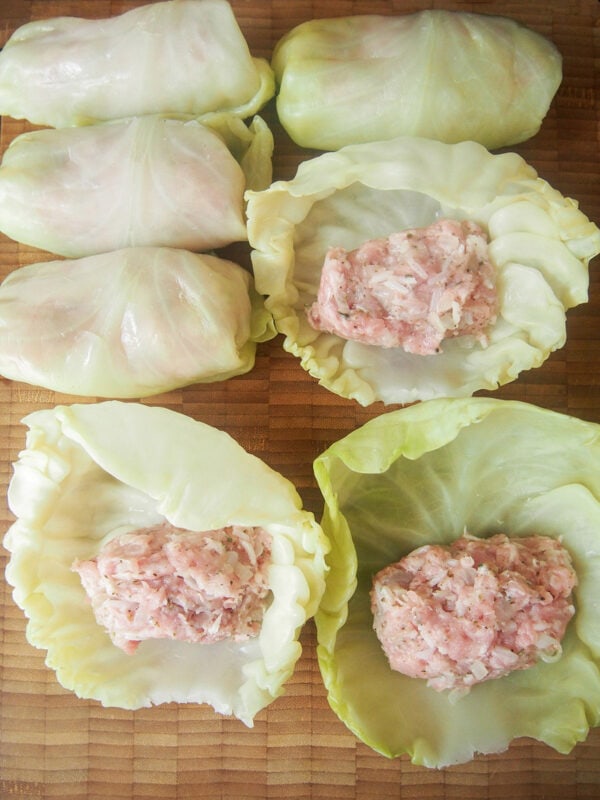
- Take approximately ¼ cup of the mixture and place it on top of one of the cabbage leaves. Fold in both sides, then roll the leaf from the base (core side) to form a thick log. Don't make the rolls too tight, just snug, so that they won’t burst during cooking.
- Repeat with the rest of the leaves and filling mixture.
To cook the cabbage rolls
- Line a pot large enough to hold all of the cabbage rolls with some of the leftover cabbage leaves. (This helps keep the rolls from burning as they cook.)
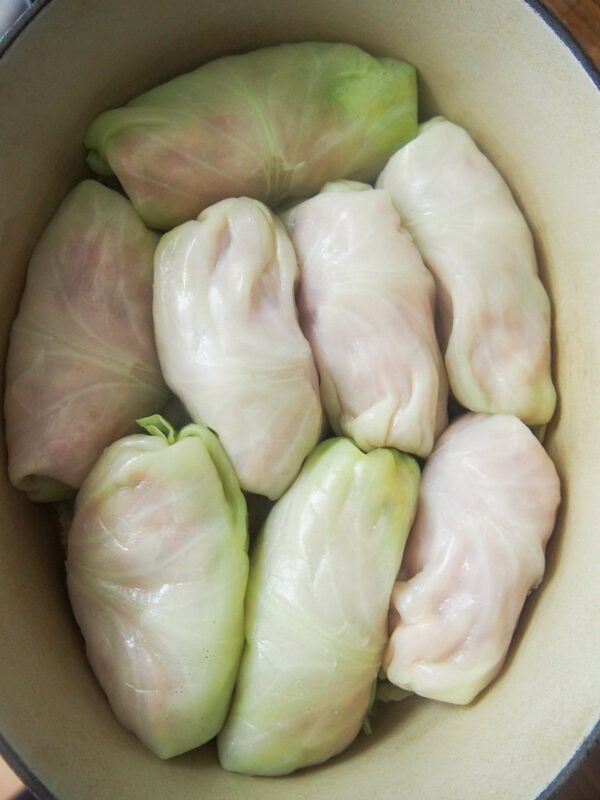
- Lay the rolls on top of the leaves, placing them relatively snugly together. If you need to make a second layer, that's fine, but ideally one is best. If you like, add any additional leaves on top to help keep steam in as the rolls cook.
- Pour the stock over the rolls in the pot - it should just about cover them. Then cover the pot and place it on the stove over medium heat.
- Bring the broth to a simmer, then reduce the heat slightly. Simmer for around 35 - 40 minutes, until the rolls feel slightly firm and the filling is cooked.
- Take the pot off of the heat and set it aside for the rolls to rest as you make the sauce.
For the tomato sauce
- Warm the butter in a skillet or wide pot. Once the butter is gently foaming, add the flour and stir to mix it into a smooth paste.
- Drain off some liquid from cooking the cabbage rolls and add around ½ a cup, a little at a time, to the flour-butter paste to form a smooth sauce. Cook for a minute and then add the tomato passata (puree). Mix and allow to cook for a couple of minutes.
- Gently remove the cabbage rolls from the cooking liquid and serve topped with the tomato sauce.
- Serve with mashed potatoes (as is traditional).
Nutrition Information:
Yield:
4Serving Size:
2 cabbage rollsAmount Per Serving: Calories: 560Sugar: 7g

Caroline lived and traveled various places before settling in Cambridge, MA. She still fits in some travel with her family, but often settles for traveling through food instead. She shares her recipes at CarolinesCooking.com, where there's plenty of international inspiration using seasonal ingredients, as well as creative recipes for all to enjoy. Caroline is originally from Scotland, where she grew up hiking and skiing, both things she still loves to do when her two young boys give her a chance. You can follow along with her cooking adventures on Facebook, Instagram, Twitter, and Pinterest.
OR, the vegetarian potato-kasha version that could have been served at the Christmas Eve Wilia dinner. Great recipe can be found in Michal Korkosz's "Fresh from Poland: New Vegetarian Cooking from the Old Country."
Thanks for sharing!
Try them with veal instead of pork and use a rich mushroom sauce...they were made long before tomatoes came to Europe from the Americas in the 16th century.
Sounds delicious!
And the proverb that goes with that: Pieczone gołąbki nie wlecą same do gąbki: "Roasted stuffed cabbage themselves do not fly into the sponge" (nothing comes without effort and work). I enjoy your website. Nothing like food!
Thanks for sharing!