
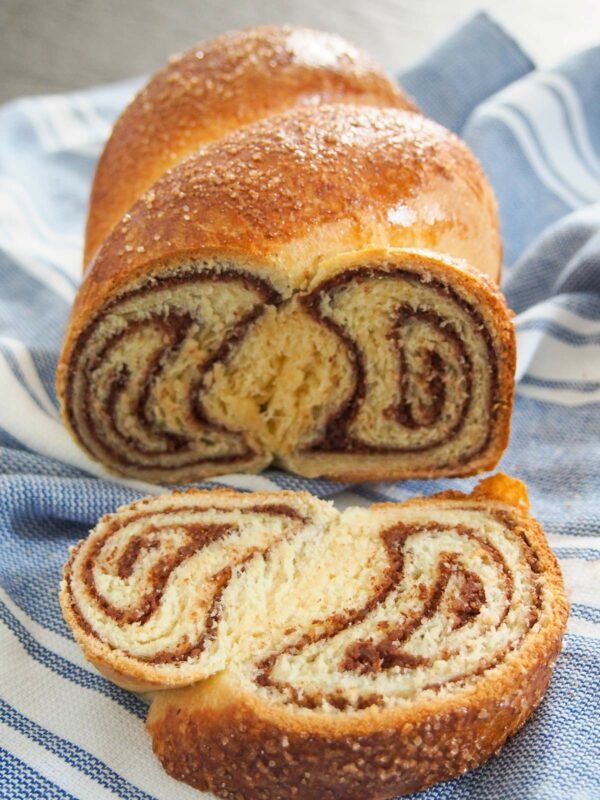
Cozonac is a gently sweet bread, a little like challah or brioche, often with a pretty and tasty swirl of nut filling, like in this walnut roll recipe. It’s traditionally made for holidays (like Christmas and Easter) but would be perfect with coffee any time.
Many countries with sizable Christian populations have traditional foods as part of the Easter celebrations.
Lamb is a common main dish in many countries, while some have particular savory pies, like the Italian torta pascualina and pizza gain.
Many places have special Easter breads, such as British hot cross buns, Italian pane di pascua, Greek tsoureki, and Russian kulich.
The shape and ingredients can vary, but most are a gently sweet yeasted bread, enriched with eggs. Many include dried fruits and/or nuts.
Origins of cozonac
Cozonac is a traditional bread found in Romania, Bulgaria (where it is called kozunak), Moldova and Serbia. Its origins, however, are much older, and likely not from that region.
There is evidence of it being included in cookbooks in the UK in the 1700s, but it’s believed to originate in ancient Egypt, where it was sweetened with honey and filled with seeds.
The Ancient Greeks took on the interest in leavened doughs and introduced it to the Romans. Over time, the Southeast European versions have evolved and become a regional tradition.
Variations in flavors
While most versions of this bread start with the same basic sweetened, butter- and egg-enriched yeasted dough, the flavorings can vary quite a lot.
Most include some lemon zest in the dough but not all. Other flavorings include vanilla, orange zest and rum or sweet wine.
Some add dried fruit, particularly raisins, in with either the dough or as part of a swirled filling.
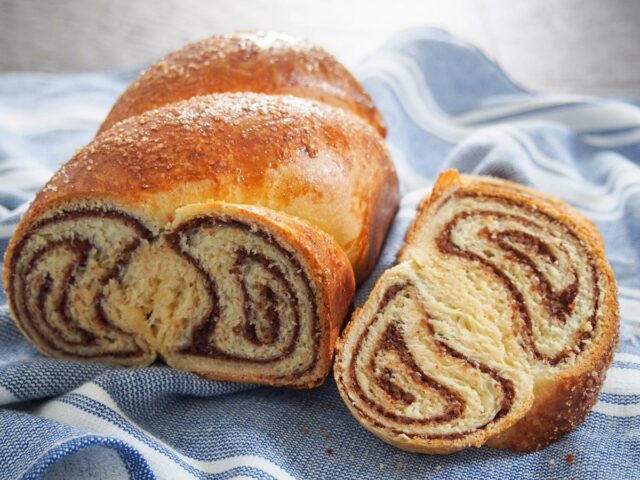
Others used nuts or chocolate, typically made into a paste to add a swirl, as you see here.
The different additions generally vary by region, with the walnut swirl you see here being more popular in the Romanian versions, but you may well still find a mix in any one place.
While in Bulgaria this is typically just made for Easter, in Romania you’ll find it at many holidays, like Christmas and Easter. And some bakeries will have it year round. (A more common Easter dessert bread in Romania is Pasca.)
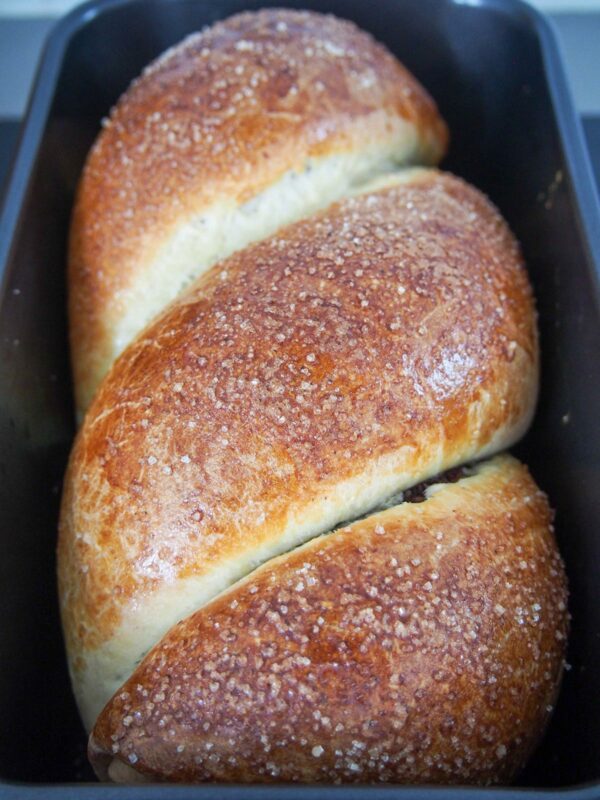
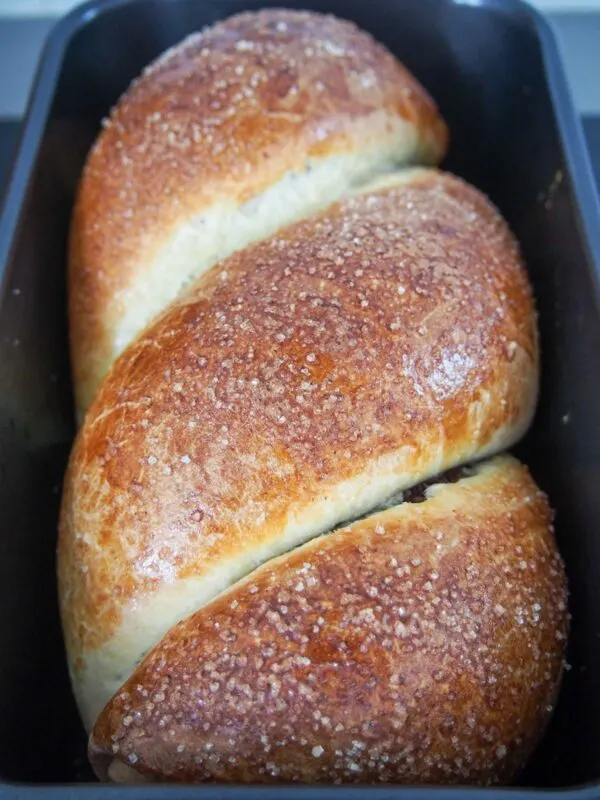
Forming the bread
Just as the ingredients can vary, so does the shape of this bread.
Most bake it in a loaf-shaped tin, but some will simply roll it, while others braid or twist it. In fact, some people change how they make it depending on their mood.
Since this version has the swirl of filling, I’ve chosen to twist two rolls together to show off the swirls without being overly complicated to form.
As with many breads, this one has two rises – one as the basic dough then again once formed.
Before baking, you typically brush the top of the bread with egg wash to help give it a rich golden color. After brushing, it’s common to add some poppy seeds and/or coarser sugar to add some decoration to the top of the loaf.
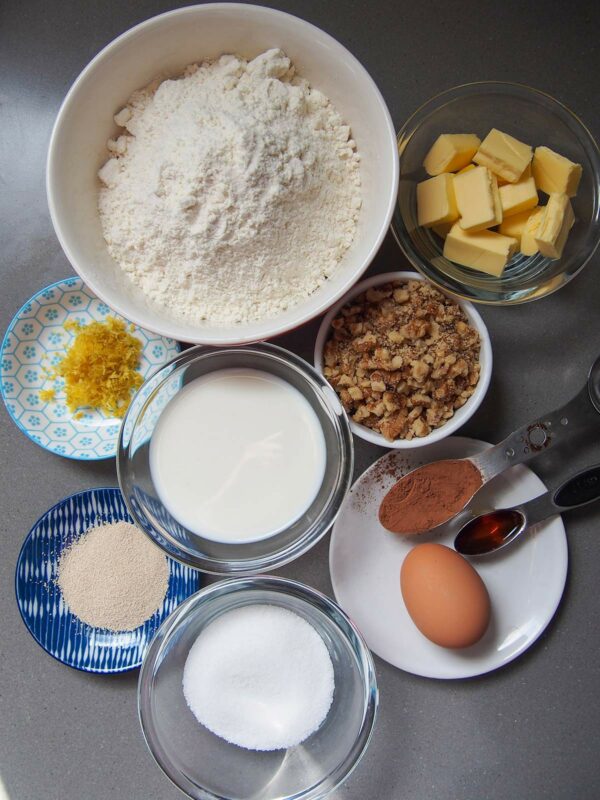
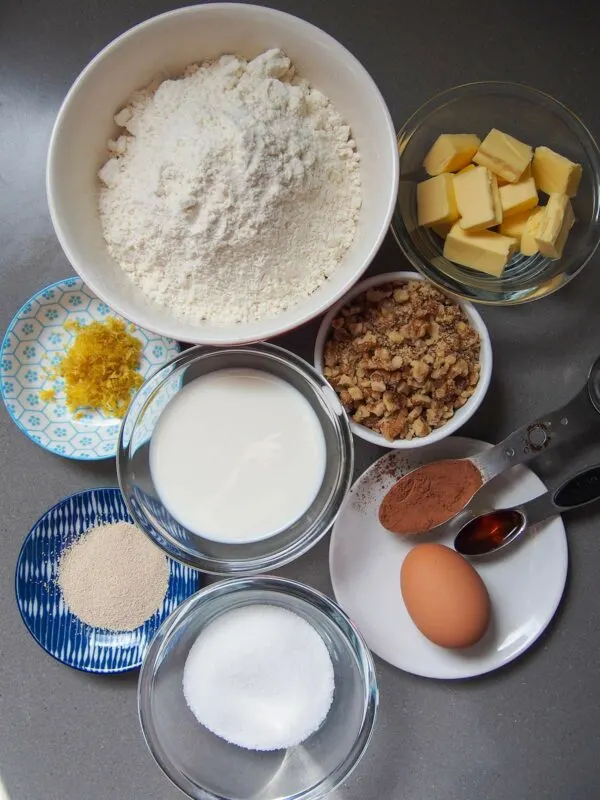
Easter in Romania
The vast majority of Christians in Romania are Orthodox and as a result, they celebrate Easter following the Orthodox (Julian) calendar, which is typically around two weeks later than the Gregorian calendar date.
For many Christians in Romania, Easter the most important holiday of the year.
The main celebration is a midnight vigil church service the evening before Easter Sunday to remember the resurrection of Christ. People light candles in church and also display them at home.
One of the main Easter traditions in Romania is painting eggs, often with colorful and elaborate designs.
In terms of food, lamb is the most popular and every part is used: the meat for main meal, the organs made into pate, and the head for soup.
Along with cozonac, paska, a cheese-filled bread, is a popular dessert.
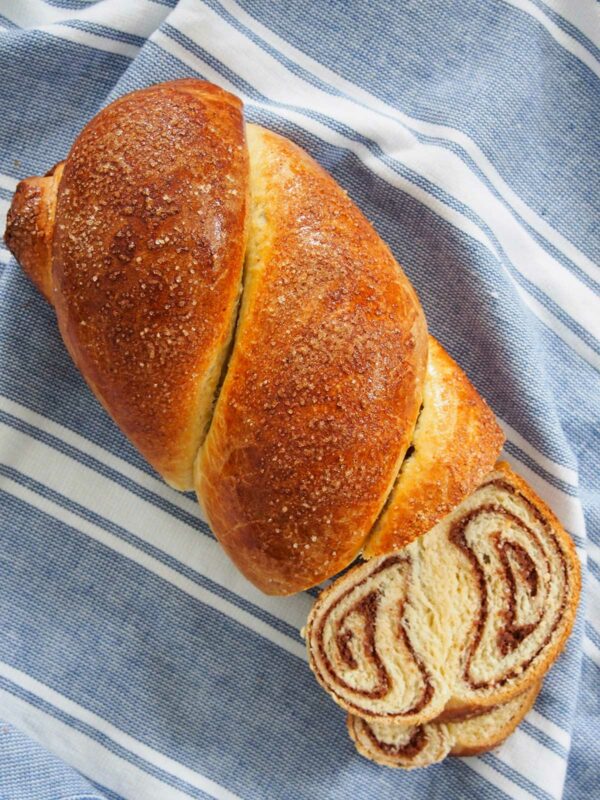
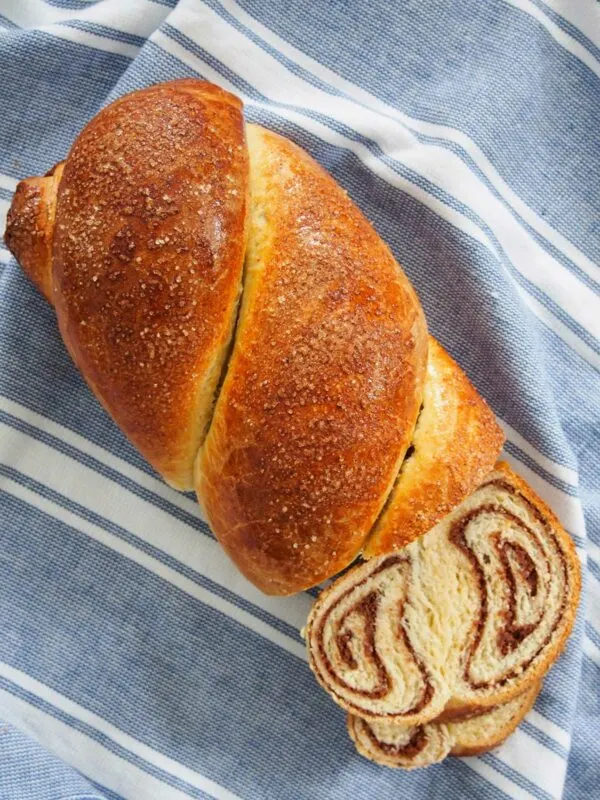
Cozonac is a traditional bread with a long history and many different variations.
This tasty walnut roll version has a gently lemon-scented sweet dough and nutty filling. It is both pretty and flavorful, and a great base to try some other additions, as well as enjoy as it is.
Cozonac Walnut Roll (Romanian Easter Bread)
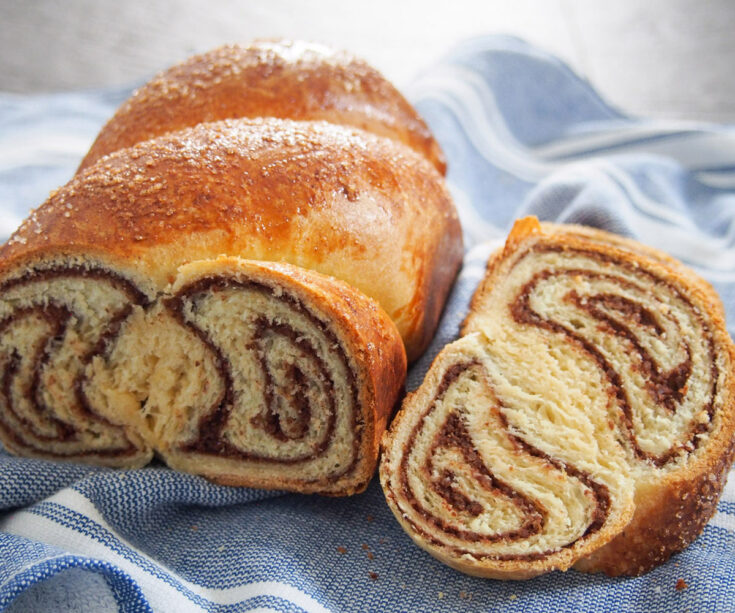
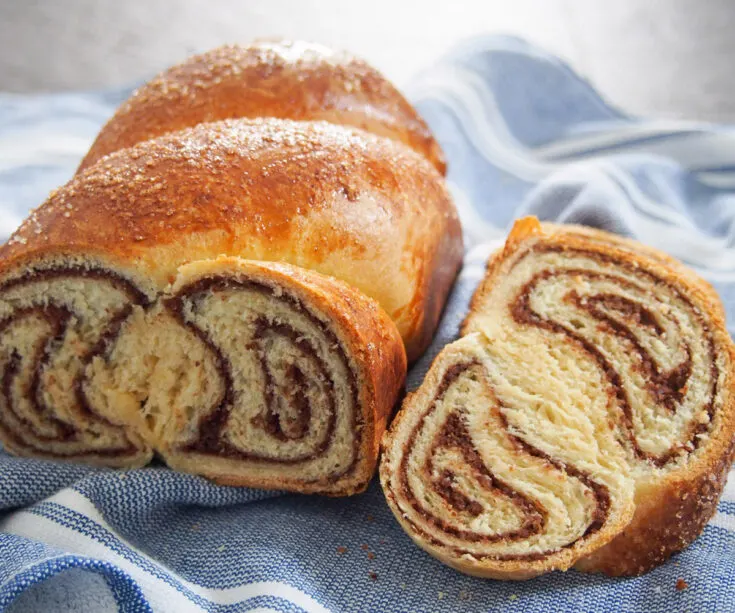
Cozonac is a gently sweet bread, a little like challah or brioche, often with a pretty and tasty swirl of nut filling, like in this walnut roll recipe. It's traditionally made for Easter but would be perfect with coffee any time.
Ingredients
For the dough
- 1/2 cup milk
- 1/3 cup sugar
- 1 Tbsp lemon zest
- 1/3 cup (75g) butter
- 2 1/2 cups (350g) all purpose flour
- 1/2 Tbsp dried instant yeast
- 1/4 tsp salt
- 2 egg yolks
- 1 tsp vanilla extract
For the filling
- 3/4 cup (3oz/85g) walnut pieces
- 1 Tbsp unsweetened cocoa powder
- 1 1/2 Tbsp sugar
- 2 egg whites
For the glaze
- 1 egg (will not use all)
- 1 tsp raw sugar (approx)
Instructions
- Warm the milk, sugar and lemon zest in a small pan over a medium heat until the sugar is dissolved. Remove from the heat and add the butter, in small pieces. Stir to melt the butter in the heat of the liquid. Allow to cool until lukewarm (80-90F).
- Meanwhile, in a medium bowl add the yeast and salt to the flour and mix through. Also, separate the egg whites from the egg yolks into two small bowls. Chill the whites until needed later.
- Once the milk mixture has cooled, transfer it to a large bowl. Add the flour mixture, egg yolks and vanilla. Mix to bring the dough together, then knead the dough for a few minutes. (You can either mix with a spoon, then knead for a couple minutes with a stand mixer, or mix by hand and knead on a lightly floured surface for around five minutes.) Once kneaded into a smooth dough, bring the dough together in a ball.
- Lightly oil a bowl and add the dough. Cover with plastic or a damp tea towel and allow to rise at a warm room temperature for around an hour, until doubled in size.
- Towards the end of the rising time, blend the walnuts, sugar and cocoa powder together in a food processor to form a coarse powder. Separately, beat the egg whites until they form stiff peaks, then fold in the nut mixture. Chill until needed.
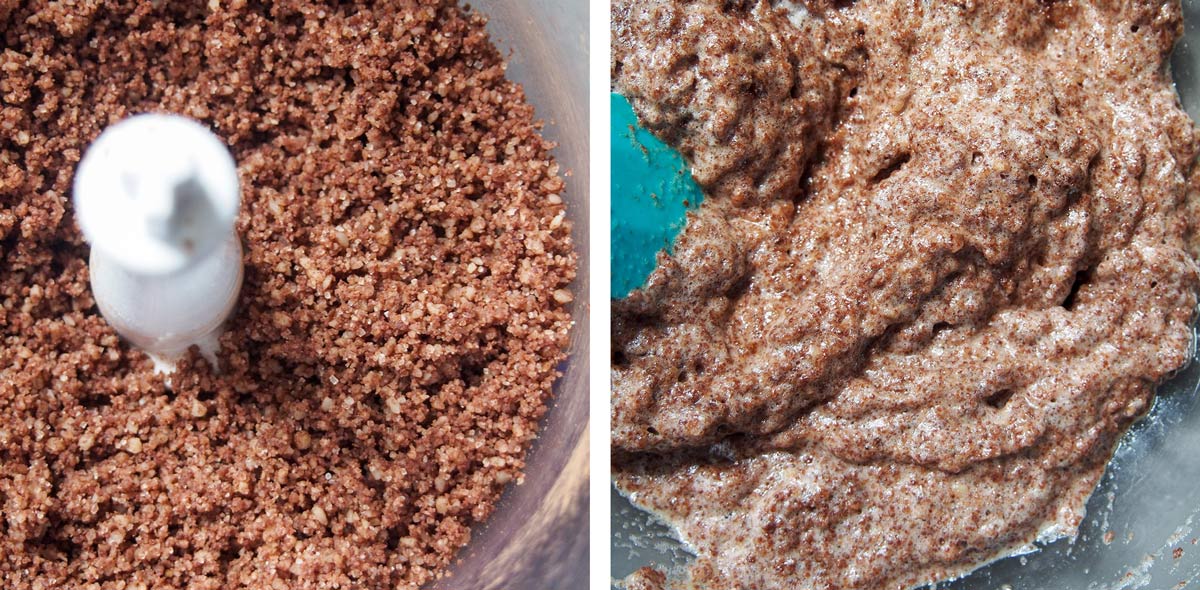
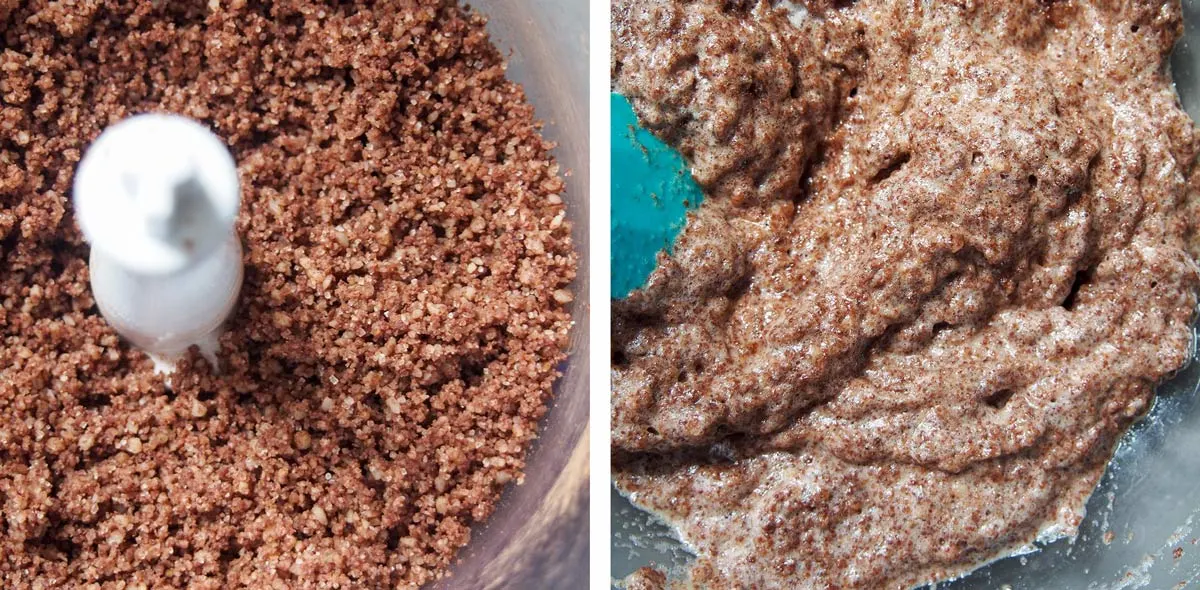
- Once the dough has risen, remove from the bowl and divide into two roughly even pieces. Take one of the pieces of dough, gently knock it back to reduce in size a little, then roll it into a square/rectangle roughly 11 inches square, or slightly longer in one direction.
- Take half of the nut filling mixture and spread it over the flattened dough, leaving around 1/2 in without the filling around the edges. Roll up into a log (as you would a cinnamon roll - you can roll either long or short edge, as you prefer, if you made it more rectangle-shaped). Don't make the roll too tight as you want to allow a bit of space for it to expand.
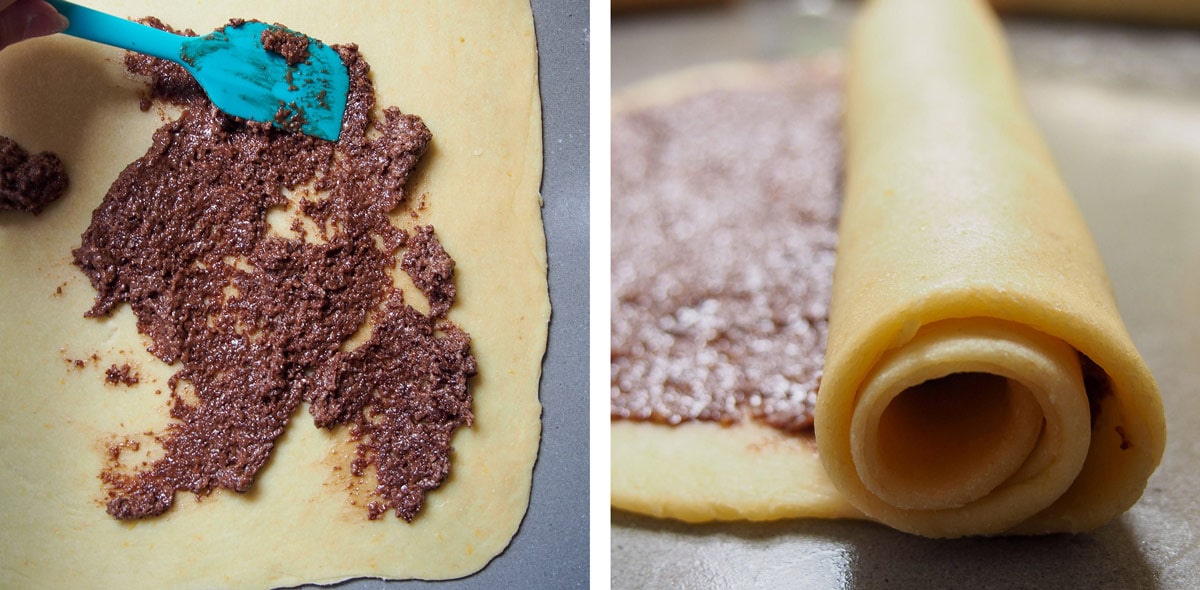
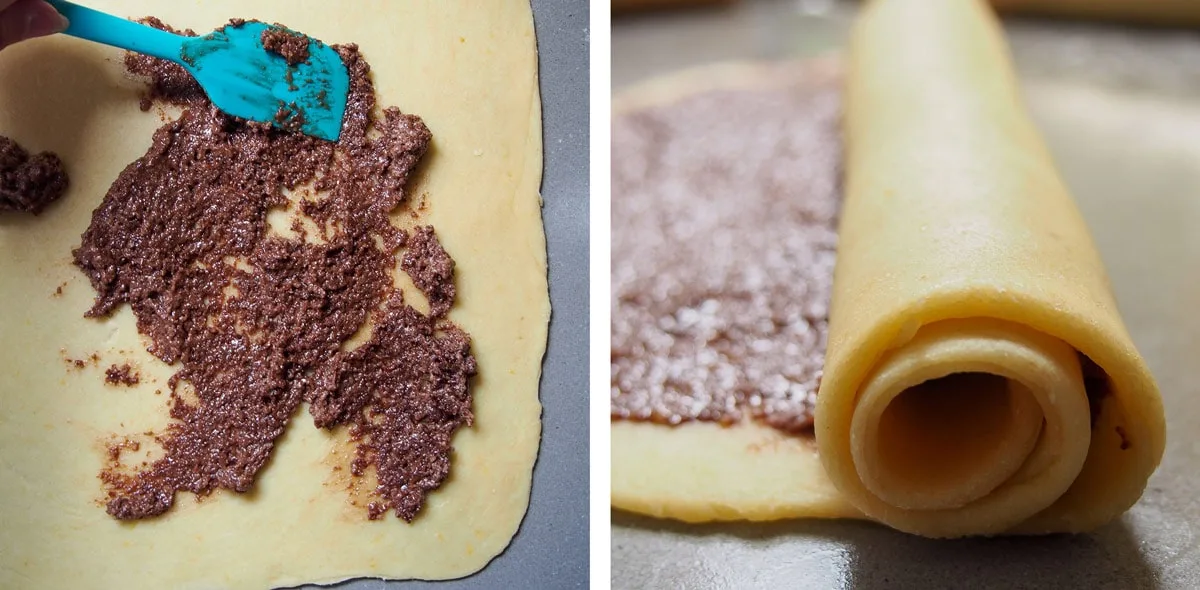
- Repeat with the other piece of dough and filling.
- Grease a loaf tin with butter. Take the two rolls of dough and twist them together all the way down. Carefully, place the twist in the loaf tin, tucking the ends under slightly, if needed. Cover with a damp cloth and leave to rise until it has almost doubled, roughly an hour again. (It may not fill out the tin but that is fine, it will expand more on baking).
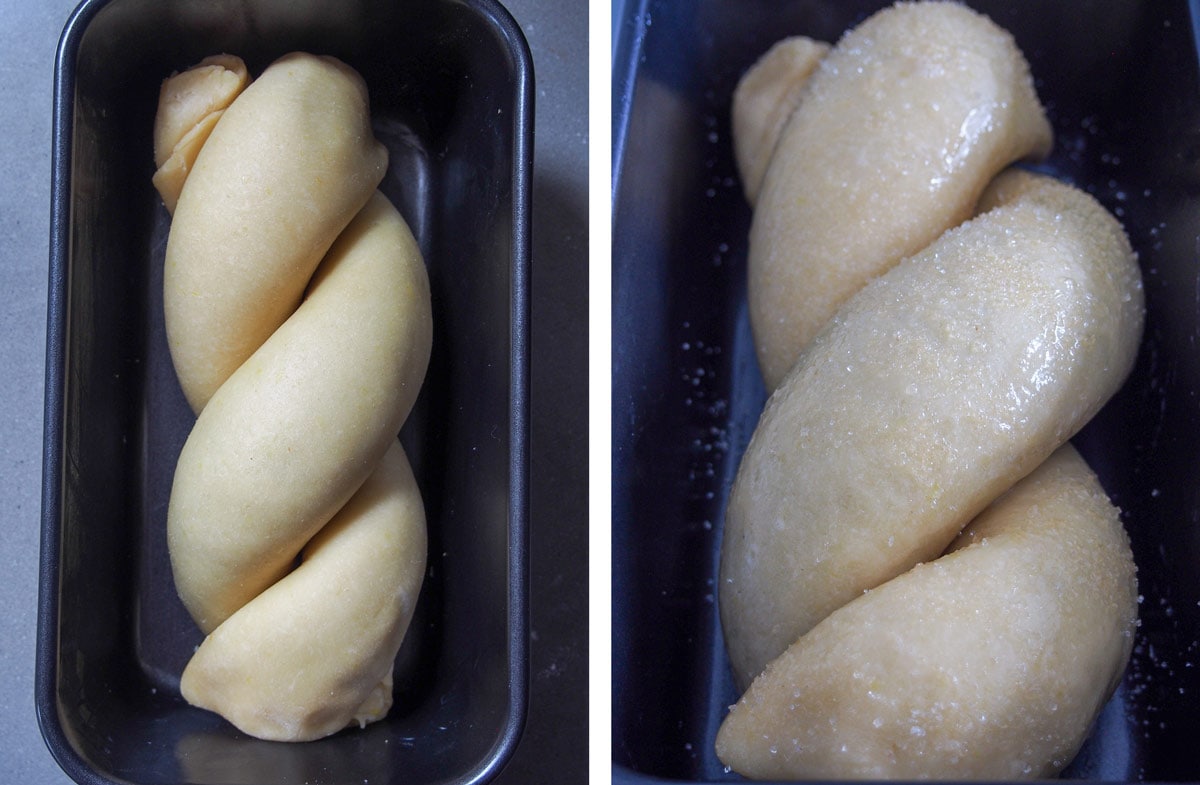
- Just before it is ready to bake, preheat the oven to 350F/180C. Brush the top of the loaf with a lightly beaten egg, then sprinkle some raw sugar over the wash.
- Bake the loaf in the middle-bottom of the preheated oven for approximately 35-45 minutes, until it is golden brown on top and cooked through.
- Allow to cool slightly before removing from the pan to cool completely.
Nutrition Information:
Yield:
12Serving Size:
1 sliceAmount Per Serving: Calories: 151Total Fat: 2g
If you liked this recipe, here are some similar dishes you may enjoy!












Caroline lived and traveled various places before settling in Cambridge, MA. She still fits in some travel with her family, but often settles for traveling through food instead. She shares her recipes at CarolinesCooking.com, where there’s plenty of international inspiration using seasonal ingredients, as well as creative recipes for all to enjoy. Caroline is originally from Scotland, where she grew up hiking and skiing, both things she still loves to do when her two young boys give her a chance. You can follow along with her cooking adventures on Facebook, Instagram, Twitter, and Pinterest.
Ralph Wheaty
Tuesday 21st of September 2021
Do you know of any company that ships Cozonac from Romania to the United States? We can get it made here in New York or Miami but we really were looking from a way to get cookies and pastry shipped from Romania.
Silvia Dumitrescu
Wednesday 8th of December 2021
@Ralph Wheaty, hi, I only now stumbled this site. It’s December 2021. I’m in Ohio, there are several European stores that sell Romanian cozonaci. But I don’t think they ship, they don’t do online selling. Unless you find someone you trust to buy them for you and then ship them to you. I wouldn’t know the prices now as everything has changed. There’s also the issue with delivery which, I understand from the owners of these stores has become more and more problematic, and expensive. Another idea is to look for a Romanian church around you, they usually take orders for cozonaci, well in advance of winter holidays. Hope it helps
Sarah Ozimek
Saturday 25th of September 2021
We do not. Maybe one of our readers can help.
Altchineva
Sunday 29th of August 2021
Hi. I am from Romania. My comment is not about the recipe but some other details.
I never heard Cozonac/walnut roll being called Easter bread in Romania nor being referred to as an Easter food/dessert.
Though Romania has an orthodox Christian majority, it does not follow the Julian calendar but the Gregorian calendar.
Ana Maria
Friday 7th of January 2022
@Sarah Ozimek, Hi, I only saw this question now. Kozonac is a sweet bread eaten at major holidays which are both Christmas and Easter. For Easter the main desert is Pasca, which is a cheesecake with a braided sweet bread all around.
Caroline
Friday 10th of December 2021
@Silvia Dumitrescu, Thank you for saying so! So I made this while in Australia, actually, and used plain flour which would be all purpose flour in the US. From doing a little research, it seems 000 flour could equate to either all purpose or maybe pastry flour.
Silvia Dumitrescu
Wednesday 8th of December 2021
@Caroline, Hi, your pictures show the best cozonac made by a non Romanian. So I have a question, if you don’t mind. What type of flour did you use? In Romania it’s recommended flour grade 000, and I have no idea to what translates this in US flours.
The recipe is typical for these type of breads, extensive throughout the world, not pretending Romanian exclusivity, but just a thought, we’ve been here more than 2500 years (roughly), for instance, the city where I’m from, Constanta, was founded about year 600 BC.
Sarah Ozimek
Friday 10th of September 2021
Very interesting. This goes against much of what I have seen, so I am quite curious. So you're saying that in Romania this bread isn't commonly eaten for Easter? How about Christmas? Do you yourself celebrate Easter? Thanks!
Marcela
Tuesday 18th of May 2021
I like to print the recipes (and am familiar with this roll, from my native country, Slovak Republic). However, l have a problem if your recipe is stretched over 4 sheets of paper (very wasteful). I know it can be "condensed" probably to 1 sheet of paper (saving some trees...). Do you have a less wasteful recipe which l can print?
Sarah Ozimek
Friday 21st of May 2021
Hi Marcela. Thanks for bringing this to our attention, the print page should be condensed more now. A lot of the spacing does depend on your device and printing application, but we have removed the images from the printed pages, which will save a lot of space.