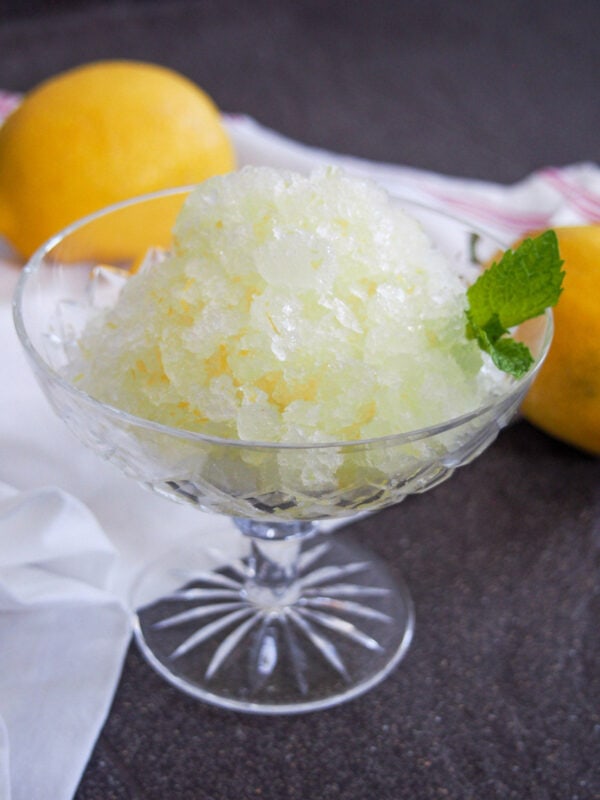
Granita al Limone (Italian Lemon Granita)
Lemon granita is a wonderfully fresh and light frozen treat from Sicily. It's easy to make at home and is perfect to cool you down on a warm day.
What is a granita?
Italy is well known for gelato and sorbetto (sorbet), but in Sicily, the local favorite frozen treat is granita. Just as gelato is a little different from the more custard-style ice cream, granita is a little different from sorbet as well.
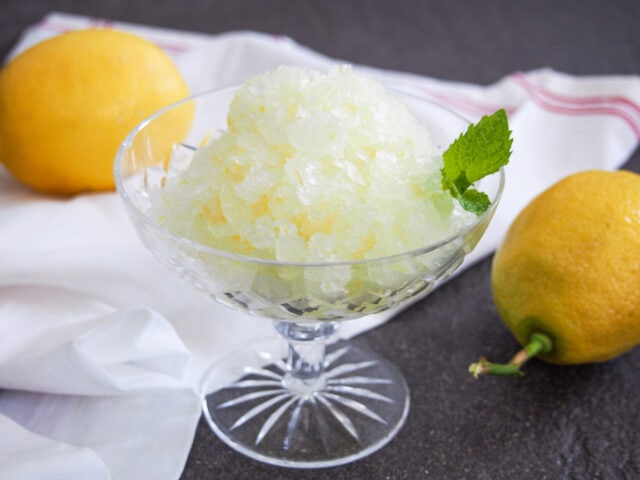
Granita is a water-based frozen treat that is traditionally Sicilian but can be found in other parts of Italy these days as well. It can be made in a few different ways and so is sometimes more slushy-like, while other times the pieces of ice are a little larger and more like shaved ice.
Unlike shaved ice, though, the flavor is mixed through the base (rather than being a syrup added to the ice at the end), and the flavors are always (at least traditionally) completely natural.
Different areas of Sicily are known for different flavors and the texture differences are also generally associated with different regions. Some flavors are seasonal as well, such as using fig, wild strawberries or mulberries.
Some of the most popular flavors use local fruits. Citrus fruits are a popular crop on the island, and they are also wonderfully refreshing, so ideal for a cold treat.
Other flavors are nut-based such as pistachio, another local crop. It may not seem as obviously refreshing, but it does also work well.
Origins of granita
Sicily has a very unique food history compared to other parts of Italy, in part due to the different peoples who have occupied the island.
Granita is believed to originate from the Arab occupation of Sicily when they introduced sherbet ("sharbat"), a drink made with fruit, rosewater and ice.
The idea was then adapted locally by "Nivaroli" (men of snow) who collected snow from Mount Etna and other high mountains in the winter and stored it in caves to be used during the heat and droughts of summer. They then brought the snow down to the coastal towns in warmer weather and some was used for granitas.
At this time, it was more commonly known as "rattata", meaning "grated," as the Nivaroli grated ice from their blocks and added syrups or juices.
Over time, with the invention of refrigeration, the style was adapted more to what granita looks like today. People combined water, fruit juices or purees, and sugar, and then froze the mixture.
Lemon was one of the original flavors, with strawberry, coffee and almond being other early flavors that are still popular today.
The texture tends to vary between the East and West of Sicily, with it generally being a smoother, more consistent texture in the West and more coarse, part liquid and part larger ice crystals in the East. This is partly due to how it is prepared, with slushy-like machines being more common in the West.
How to make a granita at home
At home, you have a few options in how you make granita, but in general, you make the flavored base, chill it, then freeze it.
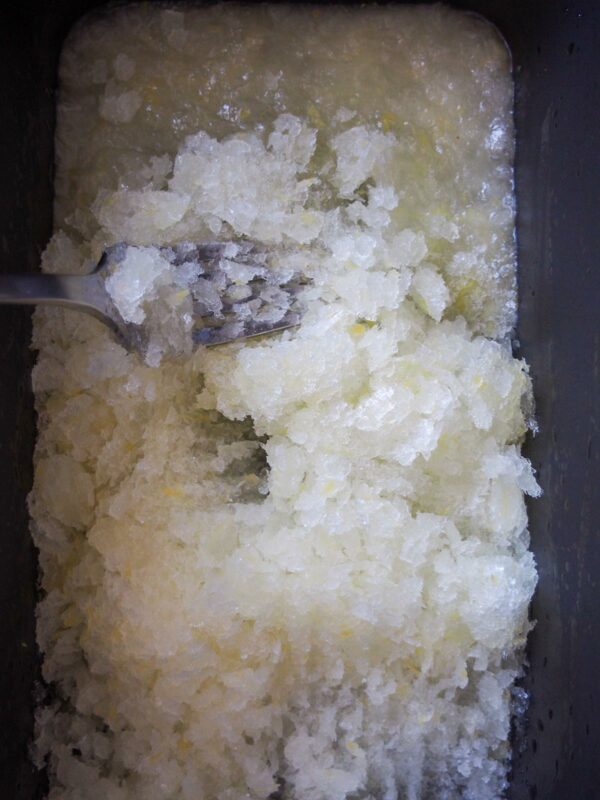
One of the more traditional ways to get that lighter texture is to take the mixture out of the freezer at regular intervals and break it up with a fork.
Alternative methods are to let it freeze completely, and then put in a blender to break it up, or to churn it with an ice cream maker. These give a smoother texture, a little more like the Western Sicilian style, but arguably more like sorbet as well.
Which method you choose depends on the texture you prefer, but here it has been made with the fork method for a distinctive granita texture.
How do you serve a granita?
While for some people, frozen treats are a dessert, that is typically not the case in Sicily. There, granitas tend to be either served as a snack or for breakfast.
Particularly when served for breakfast, when coffee granita is a favorite, they are commonly served with a small brioche roll on the side.
The Sicilian brioche is similar to the French style egg-enriched bread but with added orange and lemon zest. It is also always smaller individual rolls with a small "tuppo" or "top" - a kind of ball sticking on top of the main roll.
The granita itself is nearly always served in a clear glass and depending on how liquidy it is, might be served with a spoon and/or a straw.
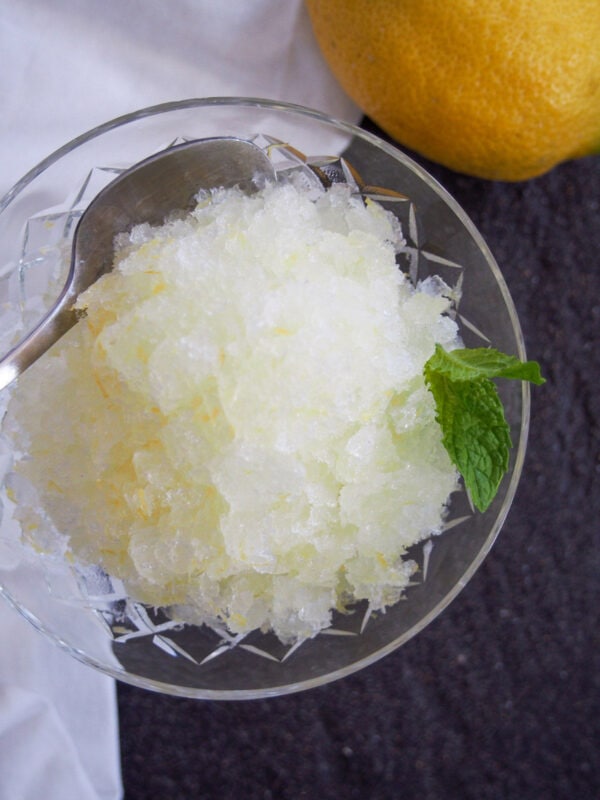
Tips for making lemon granita
For this lemon version, you make your base using lemon juice and warm water to dissolve the sugar. Once it has cooled, freeze it and break up with a fork regularly.
You can make it with or without the lemon zest, as you prefer. If you leave some zest in, you will be able to taste it as a slight graininess when you eat it, but it does add a bit extra flavor.
Another option is to add some zest as you warm the mixture and chill it to help infuse a bit of flavor from it. Then, you can strain it before freezing to avoid the pieces in the end granita.
Especially if you are going to use zest, it's best to use unwaxed, organic lemons.
Also, bear in mind that Sicilian lemons are typically relatively aromatic and sweet, so try to go for a variety that is a little less sharp, if possible. Using part Meyer lemon would be an option as well, if available.
Depending on your lemons and taste, you may want to adjust the amount of sugar in this recipe. As it is written, it makes a relatively tart granita, in most cases.
Lemon granita is easy to make and a wonderfully refreshing treat on a warm day. With just a few ingredients and a little effort, you'll be imagining yourself in Sicily all summer long as you enjoy it.
Granita al Limone (Italian Lemon Granita)
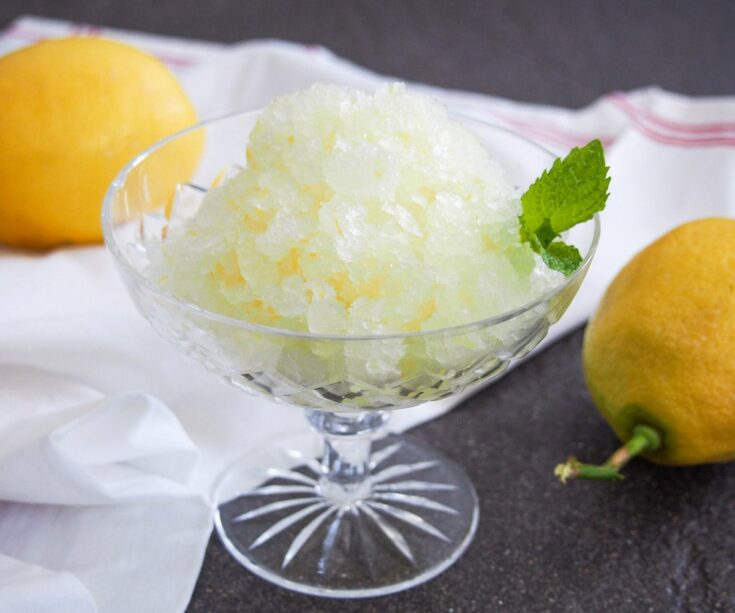
Lemon granita is a wonderfully fresh and light frozen treat from Sicily. It's easy to make at home and is perfect to cool you down on a warm day.
Ingredients
- 1 cup water
- ¼ cup sugar (or a little more if you prefer less tart)
- ¼ cup lemon juice (freshly squeezed, roughly 1 large lemon)
- ½ - 1 organic lemon, zested (optional, to taste)
Instructions
- Place the water, sugar, lemon juice and zest, if using, in a small pan. Warm over a medium heat until it at most reaches a simmer (don't boil), stirring occasionally, until the sugar dissolves.
- Remove the pan from the heat and set aside to cool. You can speed this up after a few minutes by placing the mixture in the fridge.
- Once cool, strain the mixture if you prefer not to have the zest in there, and pour into in a wide, shallow container such as a loaf pan. Place the container in the freezer.
- Take it out at roughly 30 minute intervals. When you take it out, use a fork to break up the ice crystals, pulling them in from the edge of the container. Once broken up evenly, re-freeze and repeat after another 30 minutes.
- Once the mixture is close to completely frozen, fluff it up one last time then scoop into glasses to serve.
Notes
*Freezing time will depend on how cold your freezer is and how shallow the layer of granita mixture is in the dish.
Nutrition Information:
Yield:
2Serving Size:
½ of recipeAmount Per Serving: Calories: 103

Caroline lived and traveled various places before settling in Cambridge, MA. She still fits in some travel with her family, but often settles for traveling through food instead. She shares her recipes at CarolinesCooking.com, where there's plenty of international inspiration using seasonal ingredients, as well as creative recipes for all to enjoy. Caroline is originally from Scotland, where she grew up hiking and skiing, both things she still loves to do when her two young boys give her a chance. You can follow along with her cooking adventures on Facebook, Instagram, Twitter, and Pinterest.