
British Mushy Peas
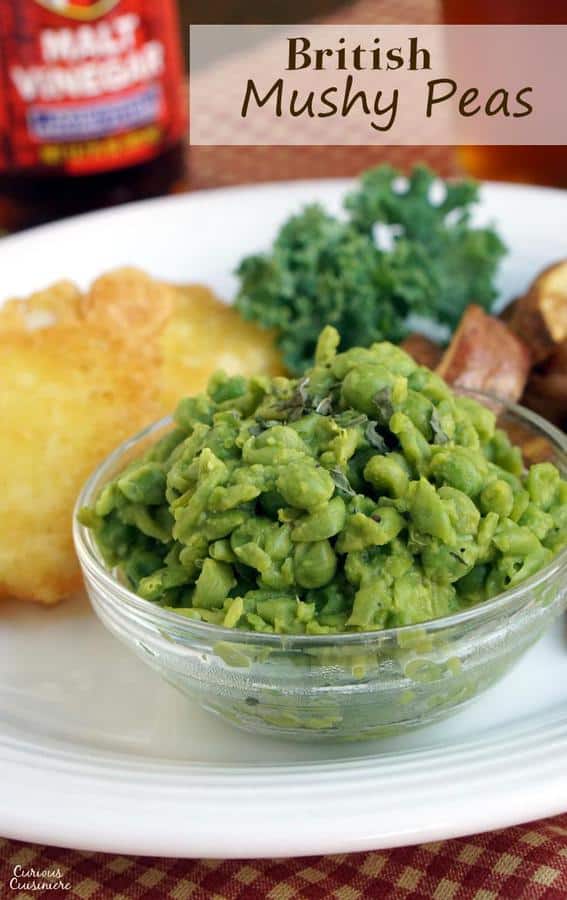
A classic British side dish, Mushy Peas really do bring a whole new dimension to those plain old peas.
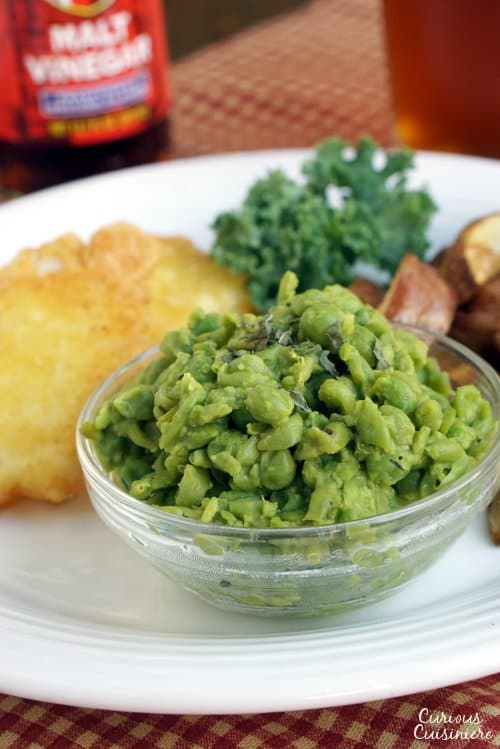 British Mushy Peas
I have to be honest here.
When we first traveled to London and were offered the choice of "regular peas or mushy?" with our fish and chips, we were a bit taken aback.
Mushy peas?
Honestly, it didn't sound that appealing. And, we had no idea what we would be getting ourselves into.
With sadness, I have to admit, that we opted for the "regular" peas, and missed our chance to try mushy peas in London.
But, now that we know about mushy peas and how much of a British staple they are, the next time we find ourselves in Britain, we will be seeking out this classic side dish.
What Are Mushy Peas?
Traditionally, mushy peas are made with mature marrowfat peas, that have been left out in the field to dry. (These are the same type of peas used to make wasabi peas. But, that's another story.)
Marrowfat peas are soaked overnight in water and baking soda. Then they are rinsed and simmered with butter until a nice, mushy consistency is reached.
Then, they are seasoned with lemon, mint, salt, and pepper to create a pea side dish unlike any other peas you have ever tasted.
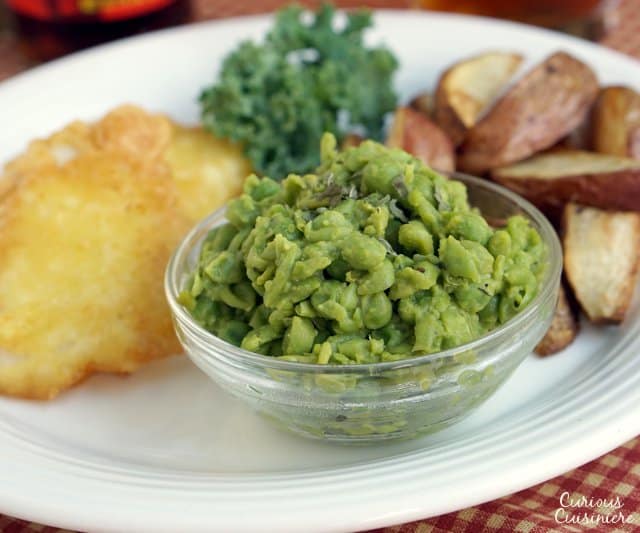
How To Make Our Mushy Peas Recipe
While dried marrowfat peas are traditional for making mushy peas, it is just as acceptable nowadays to use a bag of frozen peas, which is what we have done to simplify our recipe.
These frozen peas are first simmered with butter until they reach quite the overcooked state, so that they are easily mash-able.
Then comes the lemon and mint, giving this side dish its characteristic bright flavors.
Seriously. If you've been on the fence about these peas, you need to give them a chance.
Have you tried mushy peas? What did you think of them?
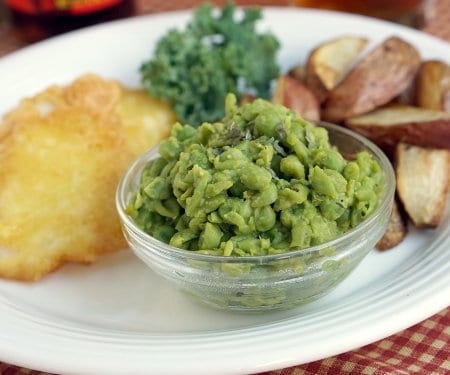
Mushy Peas
Ingredients
- 2 c peas (thawed if frozen)
- ¼ c water
- 1 tablespoon unsalted butter, softened
- 2 teaspoon lemon juice
- ½ teaspoon salt
- ¼ teaspoon dried mint (or ¾ teaspoon fresh mint, chopped)
- ¼ teaspoon ground black pepper
Instructions
- Simmer the peas with water and butter for 10 min.
- Remove the well-cooked peas from the heat and mash coarsely with a potato masher.
- Add the lemon juice, salt, mint, and pepper. Taste and adjust salt and pepper as desired.

Sarah founded Curious in 2010 as a way to save her recipe creations and share culinary experiences. Her love for cultural cuisines was instilled early by her French Canadian Grandmother. Her experience in the kitchen and in recipe development comes from over 10 years working in professional kitchens. She has traveled extensively and enjoys bringing the flavors of her travels back to create easy-to-make recipes.
You can get a much closer approximation by using whole dried peas, they needn't be marrowfat if they are simply not available to you, but we Brits actually insist on them.
If I was served your recipe in the UK they would go straight back to the kitchen 🙂
An essential part of the taste comes from the bicarb soaking into the dried pea.
As an Aside, we make a similar Dish for Bonfire night known as Black Peas, more of a Lentil with the skin on, [ in the UK they are normally classed as 'Pigeon Peas' , same process, but add a splash of malted vinegar just before you eat them with a spoon out of a paper cup.
Often served at UK fairgrounds in Winter too.
Regards,
Tom { yes, I'm a Brit }
BTW, look up the history of MarrowFat peas, u will be surprised at their origins as Peas grown in the UK, the recipe is originally poor mans food, but highly nutritious with loads of fibre and protein, the carbs are mostly indigestible starches and despite their high value contribute only a few calories per serving.
They are becoming popular again here in the UK..
Tom
Very interesting!
Thanks Tom. We’ll have to give it a try with whole dried peas.
Your recipe is actually pea purée. Undeniably delicious but completely different in flavour and texture to traditional mushy peas.
Mushy peas are made by gently simmering dried marrowfat peas until they naturally break down to a thick purée.. the high starch content makes for an entirely different flavour and texture.
The peas, after overnight soaking, are cooked in unsalted water, as salt will slow down the softening process. The peas are seasoned at the end of cooking with the addition of salt and pepper and a little butter. Sometimes a little mint and/or malt vinegar are also added, according to taste.
Hi Nigel. Thanks for your notes. We do actually discuss this difference in the article and the proper preparation for mushy peas. It is quite difficult to find marrowfat peas in some places, so we have found that frozen peas have becom a widely used substitute when they’re not available. Definitely not quite the same, but they do the job in a pinch.
Nigel is right. I absolutely abhor peas. While in London this June I decided to embrace trying mushy peas for the first time with my fish and chips at a traditional English pub. They tasted nothing like peas cooked in butter mashed up with some mint and lemon. I found they had a rather meaty taste like they were cook in beef stock. Not sure if that's the secret ingredient but needless to say I ate them up. But I would not even consider trying to do the same thing at my house unless I had the specific type of peas Nigel mentioned.. They change the taste a lot.
Thanks for sharing your experience Mindy! I wonder if you've tried this version to see how it compares to your memories? But yes, if you're a stickler on the original, then you may want to find some marrowfat peas if you desire to make the 'real deal' at home.