Pain Ordinaire (French Baguette)
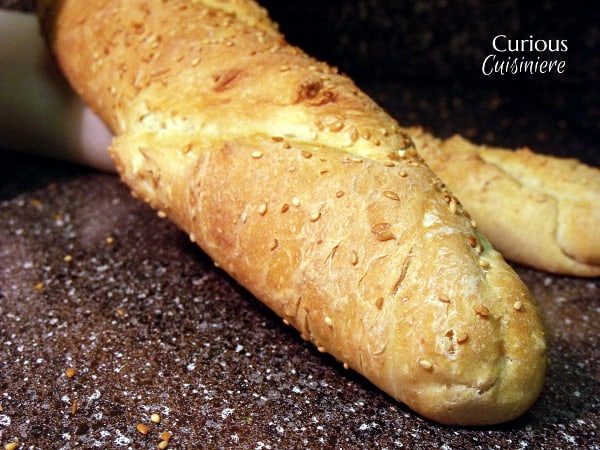
A simple, yet flavorful Pain Ordinaire, or everyday French baguette. This bread is great for munching with cheese or accompanying dinner.
Pain Ordinaire
Pain ordinaire literally translates literally from French as 'ordinary Bread'. But a better translation is 'daily bread'.
To say the French love their bread might be an understatement. When I lived in Paris, my host father would head out each morning to get his newspaper and the baguette for the day. And, let me tell you, there is nothing like tearing into the still warm, crisp, and crackly crust of a fresh baguette.
Unfortunately, in the States, we don't have the luxury of a bakery on every corner. And, while not many of us would venture to make a loaf each day, this recipe is so simple, that you really could.
Making a classic French bread baguette
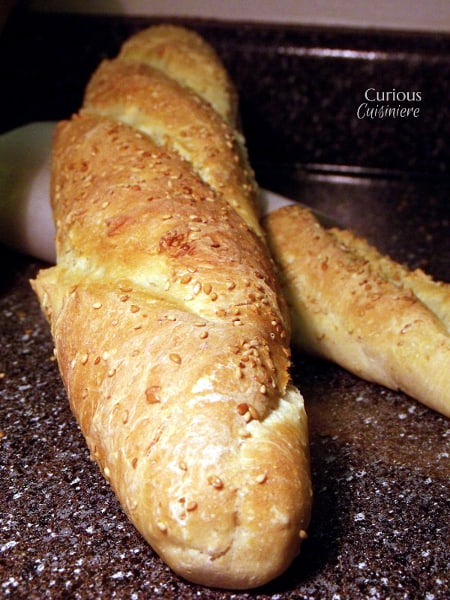
This classic French baguette has enough flavor to be enjoyed alone and is the perfect accompaniment to any meal.
If you would like a good look at how to shape a baguette properly, take a look at this YouTube clip. He goes through the whole baguette-making process, but we are just looking for the final shaping, which you will find at minutes 2:20-3:20. (I am not in any way affiliated with the video. I just find it a good visual.)
Pain Ordinaire (Basic French Baguette)
Ingredients
- 1 ½ c water, warmed to 100F
- 1 teaspoon active dry yeast
- 1 teaspoon sugar
- 4 - 4 ½ c unbleached all-purpose flour
- ½ teaspoon salt
- Sesame seeds (optional, for topping)
Instructions
- Pour warm water into a large bowl. Sprinkle yeast and sugar over the water, and let stand until the yeast begins to foam (5 min).
- Gently stir in 2 c of flour into the water until combined.
- Add the salt and 2 more cups of flour until the mixture forms a stiff dough, adding more flour if necessary.
- Tip dough out onto a lightly floured surface and knead 8-10 minutes, until smooth and elastic. If necessary, use the additional ½ c of flour to keep the dough from sticking as you knead.
- Transfer dough to a greased bowl, turn to coat the dough with oil, and let rise, covered, in a warm, draft-free place until doubled in bulk ( 1 ½ hours).
- Place the dough onto a lightly floured surface. Press gently to degas slightly. And, shape into a baguette, roughly 21" long. (I like to divide the dough into two and make two smaller baguettes, simply for ease of fitting them on a baking sheet.)
- Place baguette(s) onto a baking sheet and let rise, lightly covered, for roughly 30 min.
- About 20 min into this last rising time, preheat oven to 400F.
- Using a sharp knife, make 3-4 diagonal slashes deep into the dough (roughly ½ inch). Sprinkle the top with cool water and sesame seeds if desired.
- Bake 30-40 min or until deep golden in color.
- Immediately transfer to a wire rack to cool.

Sarah founded Curious in 2010 as a way to save her recipe creations and share culinary experiences. Her love for cultural cuisines was instilled early by her French Canadian Grandmother. Her experience in the kitchen and in recipe development comes from over 10 years working in professional kitchens. She has traveled extensively and enjoys bringing the flavors of her travels back to create easy-to-make recipes.
I want to try this. I have on hand KA AP and bread flours, and Anna tipo 00 flour from Italy. Would you still recommend the AP flour? What’s the best thing to make with the 00? I am excited to have discovered your site and have the wheat berry bread rising right now.
Hi Chris. You can use the KA AP for this bread. You could also use the bread flour for a bit more structure and chew to your loaf. You can also use the bread flour for pretzels or bagels, basically anything you want to have a good structure and a bit of chewy texture. 00 flour is very finely ground and is best for making pasta or thin crust pizza dough (you can also blend it with AP for a thicker crust dough).
HI Sarah, thanks for the encouragement and the great pics that go with this recipe. Not to be a debbie downer, but the first thing I noticed in your recipe is that it calls for sugar. In France, bread cannot be sold as "Bread" if it contains anything other than four ingredients: water, salt, flour and yeast. Anything else is a "Pastry." Why are you adding sugar to the supposed "daily" French traditional recipe? Does it have anything to do with the use of conventional active dry yeast? With that regard, do you know anything about obtaining and/or using fresh yeasts? And is it possible to find out what types of yeast are included in conventional French pain ordinaire?
Thanks for your comment Donna. You make a good point. Working with active dry yeast is a bit different than working with fresh yeast. The tiny small amount of sugar in this recipe helps to activate the active dry yeast. Traditional French bread is made in more of an artisan manner, using something called a "preferment", which is similar in concept to a sourdough starter. This preferment is left overnight to develop flavor and get some good yeast action. However, we are doing a shortened version here. This recipe gives you a tasty, crispy baguette with a flavor quite similar to a French bread. But, the process is much more simple than a truly traditional, artisan French bread.
As to your question about fresh yeast. You can typically find in online. Some natural foods stores may carry it, or you could always ask your local bakery if they would be willing to sell you some. The typical conversion from active dry to fresh yeast is x3 by weight. (So 7g active dry yeast = 21g fresh yeast.)
Happy baking!
looks wonderful. Do you do to mimic steam injection when you bake? I know that steam in the first few minutes really helps the crust form. I throw ice cubes in my oven about 5 minutes after I put the bread in.
I have heard the ice cube trick, but haven't tried it before. For this one, we just brushed some water on the loaf, like you would egg-wash, before putting it into the oven. We have also had good results putting a pan of water on the oven rack below the loaves. We'll have to try the ice cube next time!
Wonderful looking bread. 🙂