
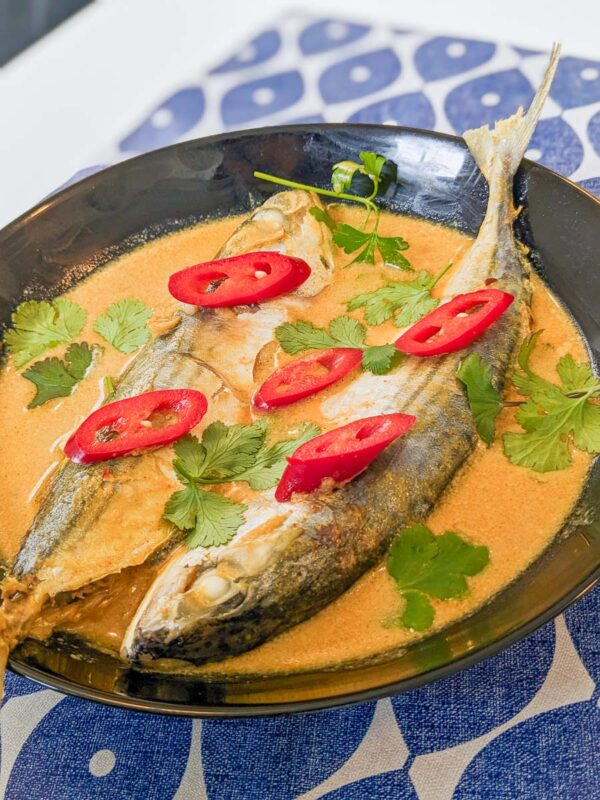
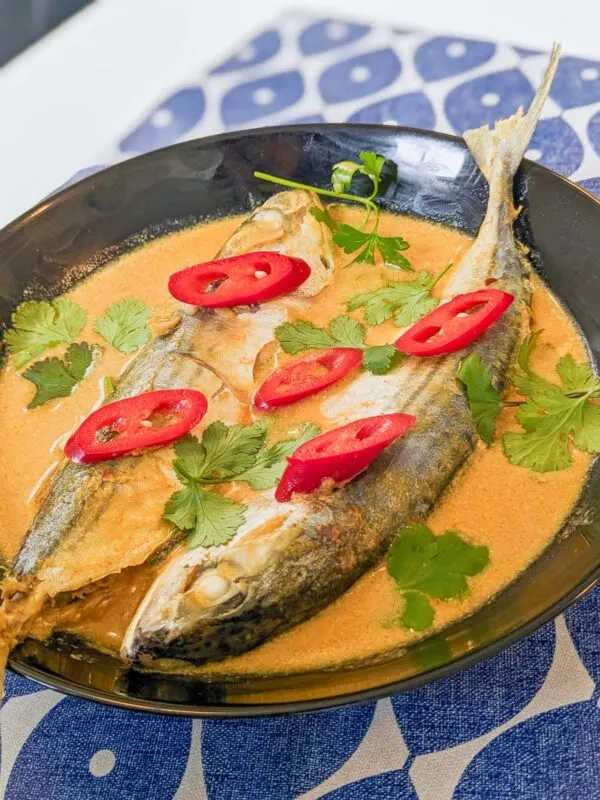
Gulai Panas Ikan Temenung is a Malaysian fish curry that features whole fish in an aromatic sauce of coconut milk and spices.
Traveling to Malaysia
One day, as I travelled Thailand in December 2023, I realized that my visa was about to expire.
I could pay an extension fee, of course, but where’s the fun in that?
How about a short trip to Langkawi – Malaysia’s Rice Bowl, The Island Of The Snake, The Jewel Of Kedah?
As my ferry entered Langkawi’s port, I was thrilled and eager to explore. But, more importantly, I realized (especially my stomach) that I hadn’t eaten since my light breakfast at the Thai morning market.
I quickly got my passport stamped by the Malaysian immigration officer, checked in at my hotel, and went out for lunch.
A first lunch and Malaysian hospitality
After a 2-minute walk, I arrived at a local and busy restaurant. The restaurant’s sign said, “Nasi Campur” (lit. mixed rice).
An array of food trays were laid in the front of the restaurant, and people loaded ladles of curries, stir-fries, and other goods onto their plates of white rice. I didn’t recognize half of the dishes, yet I assembled my plate with colorful and mysterious dishes.
When I arrived to pay at the counter (in such restaurants it is customary to pay before sitting down to eat), a young man who stood next to the cashier noticed me. He exchanged a few words with the cashier and looked at me, smiling.
“You don’t have to pay, welcome to Malaysia”, he said and left.
I stood there, moved, and a bit overwhelmed. This was my first time experiencing Malaysian hospitality.
I sat down to eat, and first tried each dish separately, as I wasn’t familiar with most of them.
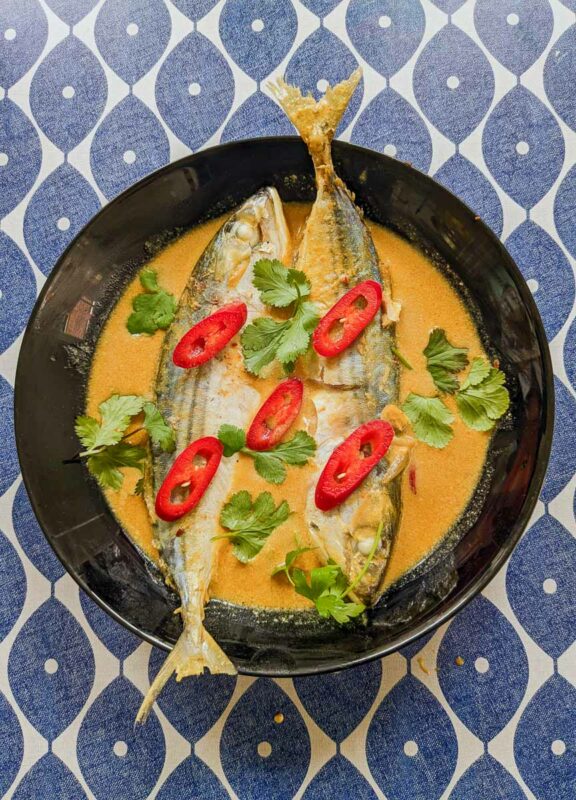
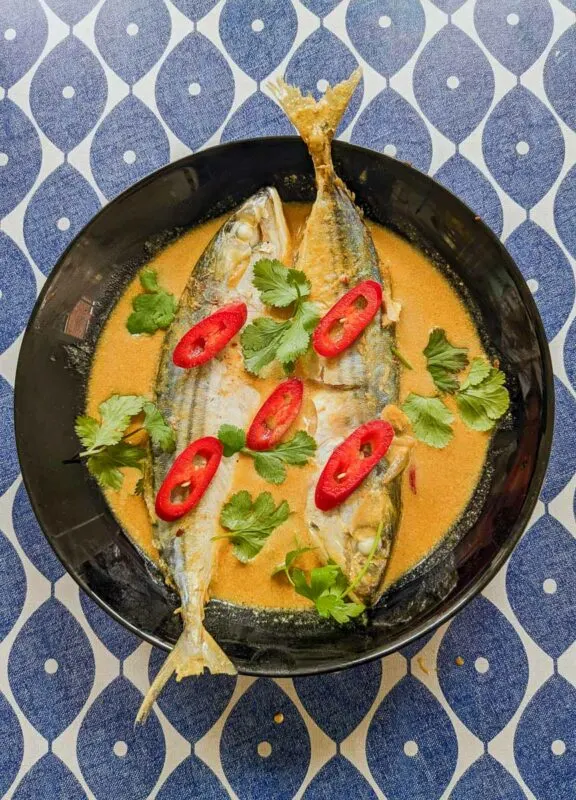
An orange-yellow fish curry became my favorite from the first bite. It was full of spices like fenugreek seeds and curry leaves, with a slight coconut touch to its sauce.
Naturally, I approached the buffet area to serve myself an extra portion, and sadly, it had already run out.
“What is this amazing dish?” I asked one of the locals, pointing at the leftover sauce on the tray.
“It’s gulai panas! A Langkawi specialty. So good!”
I left the restaurant smiling. I found myself a dish to explore.
What is gulai panas?
After asking around and conducting some online research, I learned more about this aromatic dish.
“Gulai panas” literally means “hot curry” in Malay. In Langkawi, the phrase is attributed to the aforementioned fish curry, which is often cooked with Indian mackerel (ikan temenung) or tuna mackerel (ikan aya).
How to make this Malaysian fish curry
To make it, one shall first sauté aromatics like garlic and curry leaves in oil.
Then, fish curry powder and chili powder are added, and diluted in water (the dilution assists in separating the oil from the sauce, a process called “pecah minyak” in Malay). When the sauce is ready, coconut milk, fish, and seasonings are added.
The dish is traditionally served with either rice or pek nga – a coconut pancake that is unique to the region.
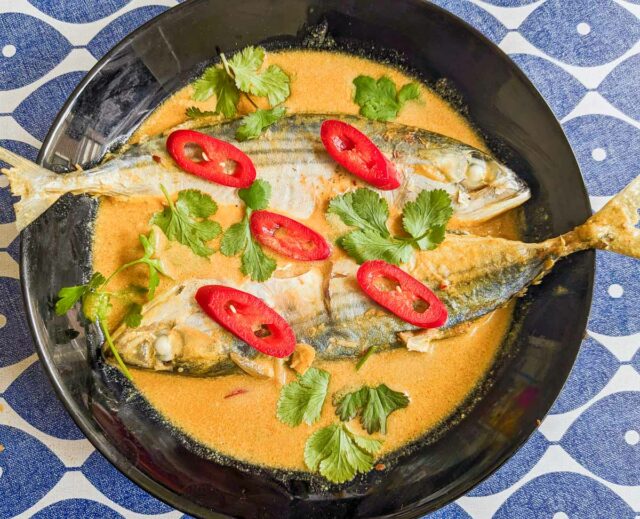
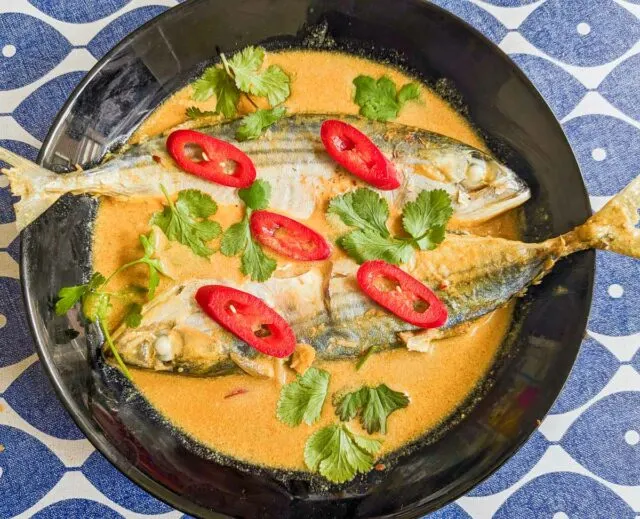
On the remaining days of my trip, I managed to find more local restaurants that specialized in gulai panas.
I was impressed the most by Ummi, a seafood restaurant with a unique dining setting: buckets with various types of fresh fish are assorted in front of the restaurant. Each customer loads his/her choice of fish on a tray and hands it over to the kitchen. There, the fish can be either cooked in a gulai panas curry sauce or an asam pedas (a Malay soup with sour and spicy flavors). It may also be coated in a spiced batter and grilled over charcoal.
As you might have expected, I tried all three options. It was the best gulai panas that I had in Langkawi, with some of the freshest seafood I have had in my life, and most definitely a dining experience that I will never forget.
Gulai Panas (Malaysian Fish Curry)
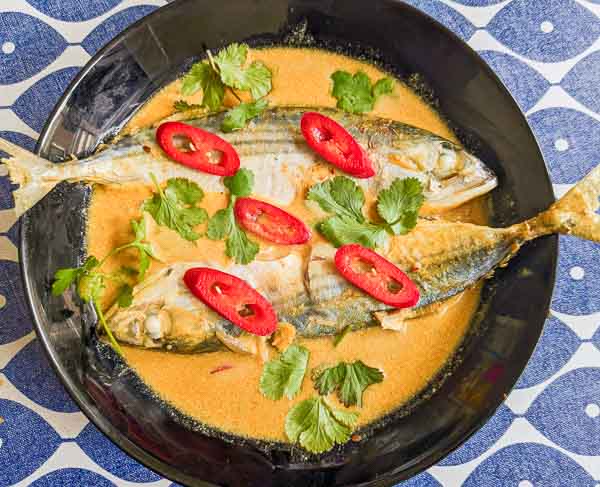
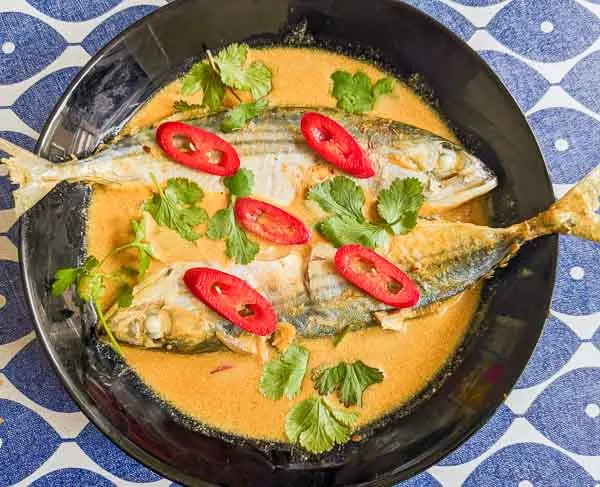
Gulai Panas Ikan Temenung is a Malaysian fish curry that features whole fish in an aromatic sauce of coconut milk and spices.
Ingredients
- 2 Tbsp vegetable oil
- 2 small shallots, sliced
- 2 cloves of garlic, sliced
- 1/2 inch piece of ginger, chopped
- 12 curry leaves*
- 3 Tbsp fish curry powder
- 1-2 Tbsp chili powder
- 1 cup (236 ml) water, divided
- 1-2 Tbsp tamarind concentrate (adjust sourness to taste)
- 1 tsp salt
- 1 2/3 cup (400 ml) coconut milk
- 1 1/3 lb (600 g) whole Indian mackerel, cleaned and gutted**
Instructions
- In a large pot, heat 2 Tbsp of vegetable oil and fry shallots, garlic, ginger, and curry leaves for 2 minutes on low heat.
- Dilute the curry and chili powders in ½ cup of water. Add to the pot and stir.
- When the oil starts to separate from the sauce (about 2-4 minutes), add the tamarind concentrate and salt. Then, bring the mixture to a boil.
- Add coconut milk and the remaining 1/2 cup of water. Bring the curry to a boil again.
Place the fish in the pot and simmer for 10 minutes, or until the fish is cooked through. - To serve, ladle hot curry into bowls for serving, and top with fish. Enjoy alone, or with pek nga pancakes.
Notes
* Use fresh or frozen curry leaves if you can find them (often at your nearest Indian grocery store). If fresh is not available, you can use 24 dried curry leaves. (Curry leaves tend to lose their flavor when dried.)
** Whole Indian mackerel is the traditional fish for this curry, and it has a distinct flavor. If it is not available in your area, talapia or mullet would be equally delicious. (And if you find the idea of staring at fish heads and tails in your bowl a bit off-putting, you could easily make this curry using filets of fish. You'll just miss a little of the experience.)
Recommended Products
As an Amazon Associate and member of other affiliate programs, We earn from qualifying purchases.


Nutrition Information:
Yield:
2Serving Size:
1/2 of recipeAmount Per Serving: Calories: 491
If you liked this recipe, here are some similar dishes you may enjoy!
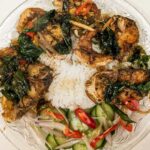
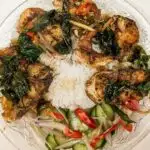 Pad Ped Pla Duk Tod (Thai Catfish Curry)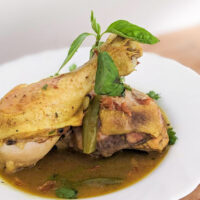
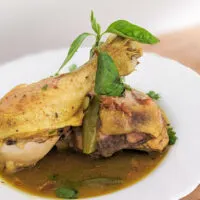 Pad Ped Gai (Thai Spicy Fried Chicken Curry)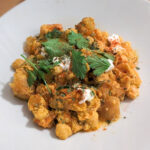
 Himachali Madra (Himachali Chickpea Yogurt Curry)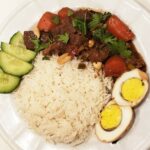
 Thai Massaman Curry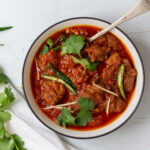
 Lamb Karahi (Pakistani Lamb Curry)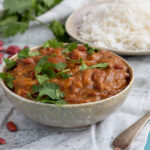
 Rajma Masala (North Indian Kidney Bean Curry)
 Keema Matar (Pakistani Ground Beef Curry with Peas)
 Slow Cooker Madras Beef Curry with Vegetables