Basic Tomato Salsa For Canning
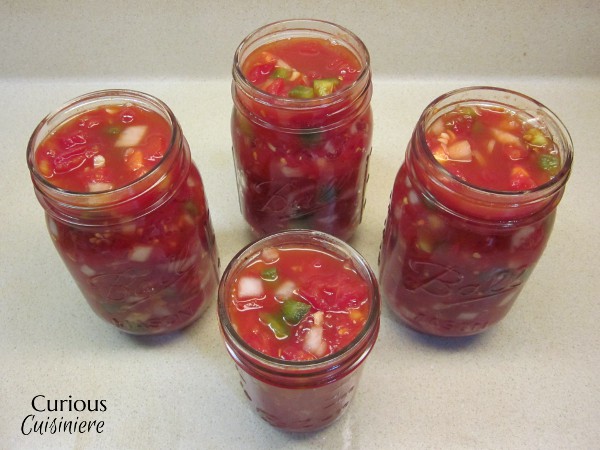
This fresh garden salsa is easy to make and the perfect salsa for canning, particularly if you're new to cold pack canning for vegetables!
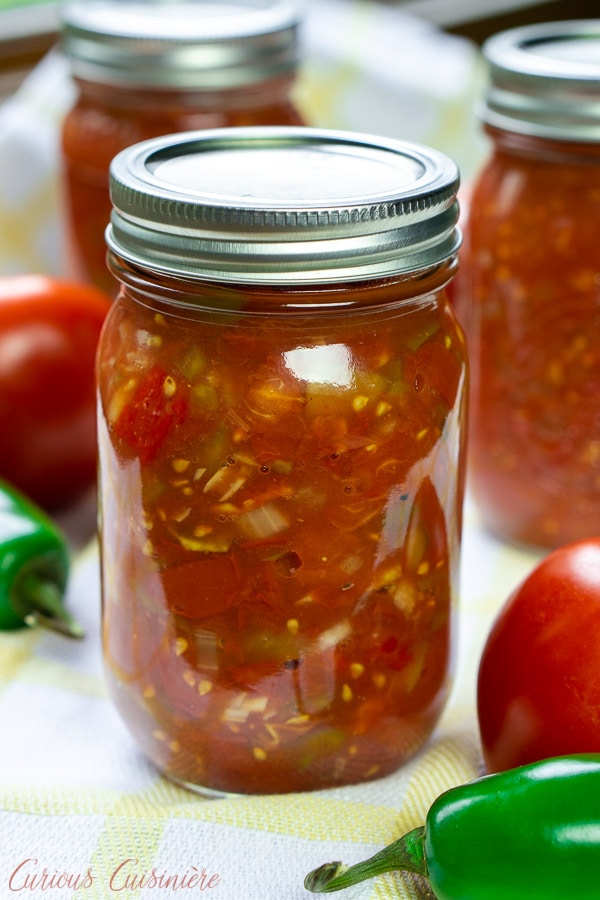
When we find ourselves with a glut of tomatoes, one of the first things we make is salsa.
And, while we love fresh salsa, there is only so much you can eat in one summer.
Canning to the rescue!
How To Choose Hot Peppers For Fresh Salsa
I don't know about you, but I've come across some very heated (pun intended) debates over the amount of spice in salsa.
It's a very personal choice.
We have used both jalapeno and Caribbean hot peppers in this salsa recipe.
Do take a look at this article we put together about how to choose hot peppers, when making your decision. It will walk you through some common types that you may be growing or find easily available at your farmer's market or grocery store.
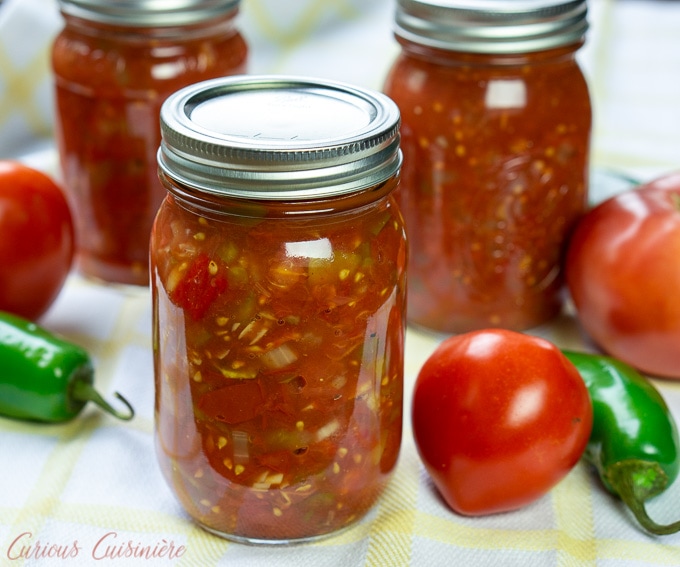
If you are just starting out making homemade salsa, we would highly recommend starting with jalapenos.
Jalapenos will give your salsa a flavor that is similar to a lot of store-bought brands. And, they can be anywhere from mild to spicy, depending on how much veining appears on the skin of each individual pepper.
Keep in mind too that the flavor and spice of the chiles will mellow over time.
A salsa that was quite hot when we packed it became more of a medium salsa when we opened a jar about a year later.
Tasting your vegetable mixture (always with a clean spoon) will give you a good idea how hot your salsa will be. Ideally, you want the vegetable mixture a smidge hotter than the heat you desire from your finished canned salsa.
The Straining Method For Making Fresh Salsa For Canning
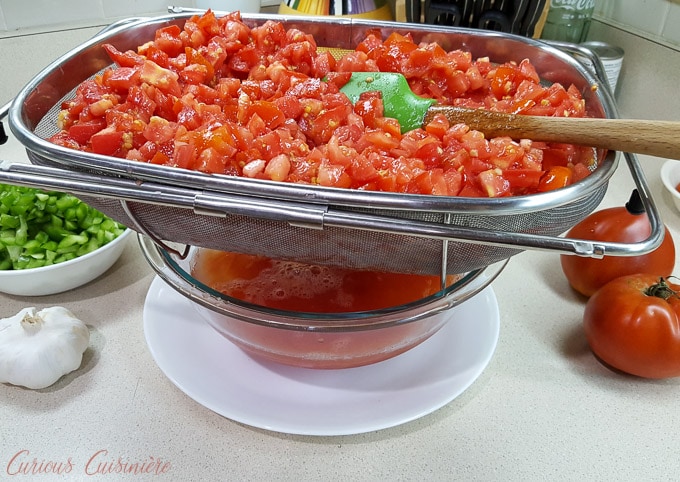
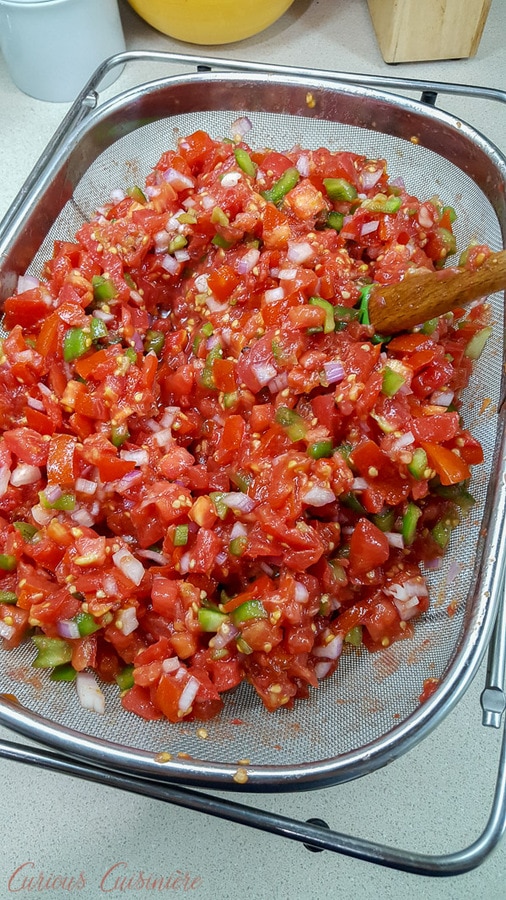
We have adapted our salsa method from Well Preserved. What is special about their method is the straining of the tomatoes before packing them.
This sweating and straining of the tomatoes is the same concept for pulling the moisture out of zucchini or eggplant slices before cooking. (Like if you're making eggplant Parmesan.)
By pulling the moisture out of the tomatoes, you allow the fruit to keep a more crisp texture when canned.
Also, by separating the juice from the tomatoes, you can heat the juice separate from the fruit. This allows you to use the tomato use from your tomatoes as your canning liquid. It will reduce some as it heats, creating a canning liquid with an intense tomato flavor.
How To Can Tomato Salsa: Fresh Pack or Hot Pack
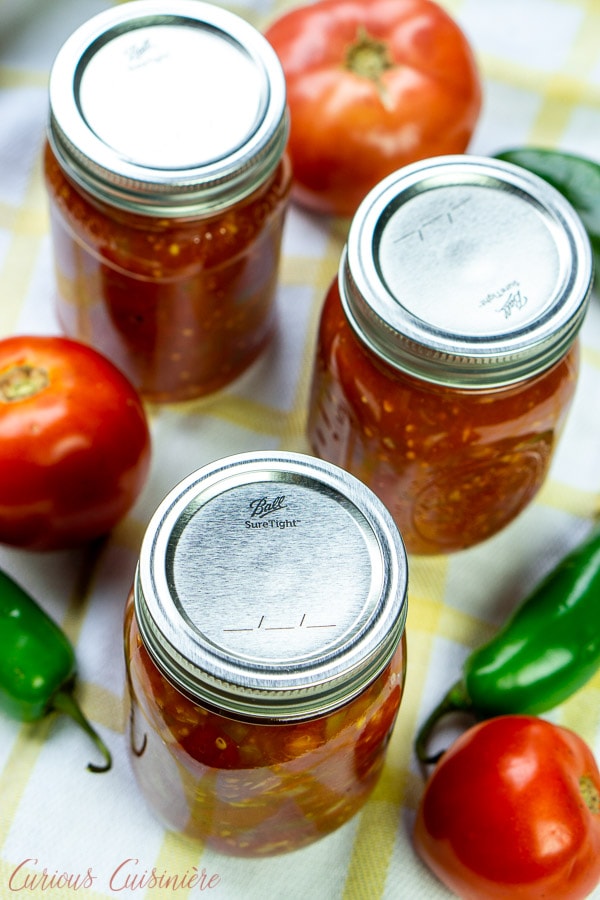
There are two methods for canning salsa: "fresh pack" and "hot pack". And this recipe is a bit of a combination of both.
Fresh packing means that your vegetables and fruit are put into the jars without cooking. The, a hot brine is poured in the jar to fill the air pockets, season and preserve the vegetables.
Hot packing means that the vegetables and brine are cooked together, so everything is nice and hot when it goes into the jars.
We like the texture of a fresh packed salsa, since the vegetables stay a bit more crisp.
However, you can fit a lot of those cool diced vegetables into a jar, which means that there isn't much room for the hot brine. Only a little hot brine means that the inside of the jar isn't always warm enough to go into your hot water canner. (Which could result in shattered jars.)
To prevent this, we give our vegetables a very short simmer in the hot brine. Just enough to warm them up, so they are packed hot. But, they're not really cooked, so they don't lose their fresh crispness.
Can I substitute lemon juice for vinegar when canning?
In our recipe we call for a combination of apple cider vinegar and white vinegar.
Apple cider vinegar has a pH of around 3.10 and white vinegar's pH is 2.40-3.40.
Lemon (or lime) juice has a pH of around 2-3 (depending on the variety).
Lower numbers are more acidic on the pH scale, so yes, you can substitute lemon or lime juice for vinegar in this salsa recipe, because it is a more acidic ingredient. (You never want to substitute a less acidic ingredient when canning.)
In canning, it is best to use bottled lemon juice, since the acidity is standardized and won't vary like it can between types of fresh lemons.
Before you start canning, be sure to check our Canning Basics article for a refresher on the process. For additional reference, here is the USDA safe canning guide from the National Center for Home Food Preservation.
Basic Tomato Salsa For Canning
Ingredients
- 9 lbs tomatoes
- 2 lg green peppers, diced (approx 2 cups diced)
- 2 med white onions, diced (approx 2 cups diced)
- 1 teaspoon salt
- Hot pepper (of choice)*
- ⅓ c white vinegar
- ⅓ c apple cider vinegar
- 6 garlic cloves, minced
- 1 teaspoon cumin
- 6 oz tomato paste
Instructions
Prepare the Veggies
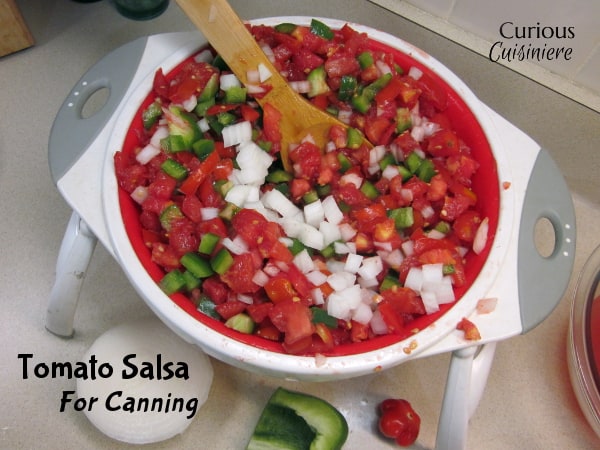
- Dice tomatoes and mix with diced peppers, onions and salt in a large strainer placed over a bowl. (This will pull the liquid from the tomatoes, helping to give you an end result that is not overly liquidy.)
- Dice your hot peppers and add to the tomato mixture.* Let the vegetables strain on the counter for 6 hours. (You will want to check your mixture every so often to be sure your bottom bowl is not overflowing with juice. Keep the juice! We’ll be using it later.)
Preparing Your Salsa For Canning
- About one hour before you want to start canning, bring your water bath canner to a boil and wash and sanitize your jars.
- Mix the liquid that has been strained from the tomatoes in a large sauce pan with the remaining ingredients. Bring to a boil and simmer 5 min.
- Add the diced vegetables and simmer for an additional 5 minutes.
Canning the Salsa
- Carefully ladle the hot vegetables and liquid into the jars, leaving ¼" head space from the top of the rim. (Use a clean butter knife to move the contents of the jar around so that the liquid flows all the way to the bottom.)
- Wipe the rims with a clean, damp towel. Place the lids and bands on the jars. Place jars in the canner, so that they are not touching, and process for 20 minutes. (Your processing time starts when the water returns to a boil after the jars have been added.) If necessary, process the jars in batches.
- When the processing time is up, remove the jars from the water bath and let cool on a wire rack for 24 hours. Once the jars are cool, remove the bands and check the lids for a seal. If the lids are tight, return the bands to the jars (loosely) and store them for up to a year.
Notes
Nutrition
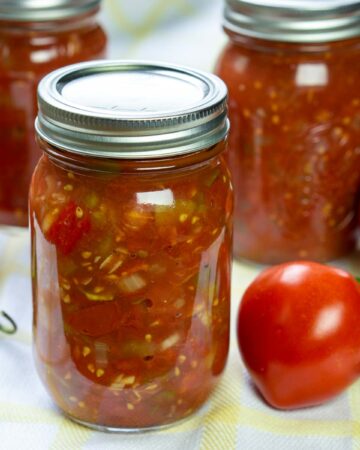
This is one of the recipes from the early days of Curious Cuisiniere. We make it every year to preserve our tomato harvest and we've updated our pictures since we first shared it. But we've left some originals here, in case you've found us in the past and are looking for that old, familiar image.

Sarah founded Curious in 2010 as a way to save her recipe creations and share culinary experiences. Her love for cultural cuisines was instilled early by her French Canadian Grandmother. Her experience in the kitchen and in recipe development comes from over 10 years working in professional kitchens. She has traveled extensively and enjoys bringing the flavors of her travels back to create easy-to-make recipes.
Thanks for a perfect salsa recipe. My husband hates cilantro, we had this with our omelette this morning for the first time and he was so happy. I had a not so great tomato season this year so I only made a half batch. I will definitely plan to make more next year. I used a mix of paste and cherry tomatoes - I always test the PH with a meter and it was @ 3.98.
I'm so glad you both enjoyed the salsa Tracy!
Have you tried a mixture of tomatoes including cherry tomatoes? Would some cherry tomatoes with skins on work for flavour and texture and canning as long as the proportions are right?
Hi Keith. Cherry tomatoes with skins would add some extra texture and nice flavor. But, I'm not sure how they compare in acidity with whole tomatoes. For safety when canning this, I would add 1 Tbsp of lemon juice per pint jar. This is just to ensure your acidity level is safe. Enjoy!
Can I substitute green onions for the white onions?
Hi Teresa. We have never tried it, but it should work, as long as you don't exceed 2 cups.
I am new to canning and have been experimenting with Salsa recipes. So far this one has been the BEST! We loved it. I did pull the skins off the tomatoes, but I read in the comments that you keep yours on, so I may try that next time, because it will save a lot of time.
So glad you enjoyed this salsa recipe Kelly! Happy canning!
Hi
Thus recipe sounds great. O plan on trying this one since I love salsa. One question. Can you substitute the white onions with yellow sweet onions.
Thank you!
Hi Randy. Yes. You can substitute the type of onion, as long as you keep the quantity the same. Enjoy!
Hello I'm wondering why there is no Cilantro or Lemon used in the Canning Recipe?
Hi Elizabeth. We just didn't add cilantro in for this recipe. If you would like to, you could add some in place of some of the green pepper. We use white and apple cider vinegars for the acid in this recipe, so we didn't need lemon juice. If you prefer lemon juice, you could swap some or all of the apple cider vinegar for lemon juice.
Is it okay to cook the salsa and jar it without canning, if it’s refrigerated and consumed in a week to 10 days?
Most definitely! We often will make a jar for the fridge (and not water bath it) from the batch.
Do the diced ingredients stay on the counter or in the fridge for the juicing part
On the counter, unless you need to leave them for significantly longer than 6 hours.
I love canning Thank you
We do too! Enjoy!
Hi I am wondering if some of the vinegar can be substituted for bottled lemon juice?
Thanks in advance!
Hi KayDee. Yes, you can substitute bottled lemon juice for either of the vinegars. (This is a great question. I will add a note in the article about it.) Thank you and enjoy!
Can you substitute Anaheim peppers for the green pepper?
Hi Terri. Yes, as long as the quantity when diced is roughly the same.
Could find nothing about the tomato seeds and mushy insides on some tomato types. Do you keep and use the seeds?
Hi Keith. I'm not sure I understand your question. Some tomatoes have more liquid inside (beefsteak for example vs paste tomatoes). We do not seed our tomatoes before making salsa as we don't mind the texture.