Shami kebab are spiced meat patties that are popular throughout the Indian subcontinent and beyond. Different regions serve the kebab fritters differently. Our recipe today shows how they are served in Iran.
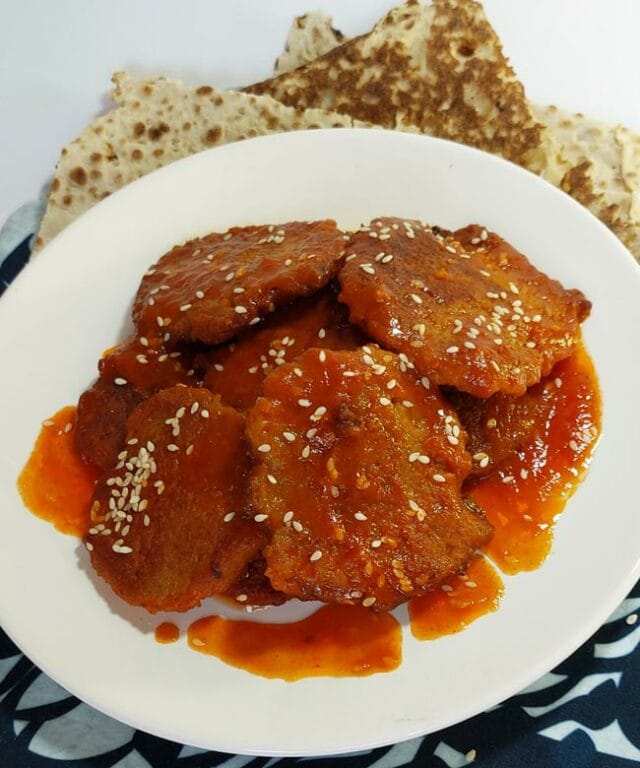
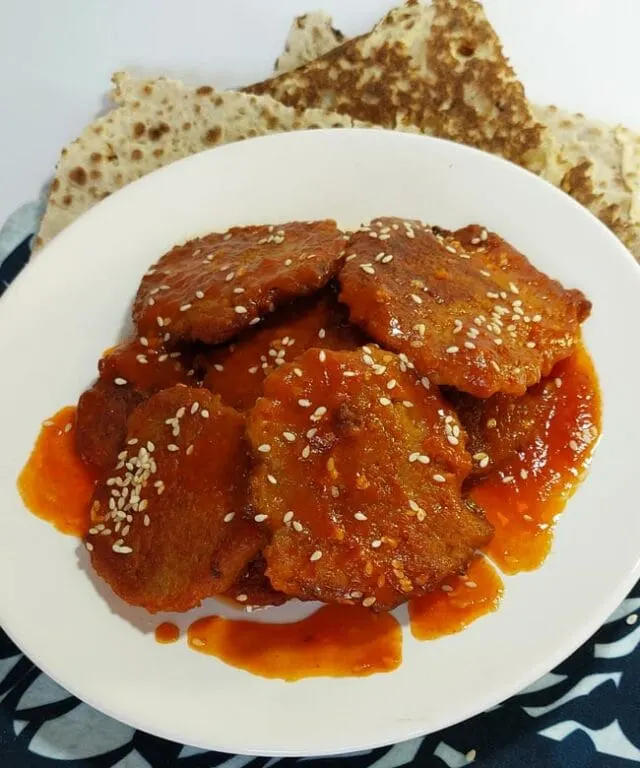
Spice up your week with this sweet, satisfying, healthy dish that’s bursting with protein, minerals, and vitamins. This dish is big on flavor and is great to be served as a filling lunch or dinner. You can serve it with bread as a midweek meal. Here’s a simple recipe for how it is cooked in Iran.
What is shami kebab?
You will find many ways to define shami kebab. This dish is common in Indian, Iranian, Pakistani, and Bangladeshi cuisines. And, as with any widely popular dish, different regions have different recipes for cooking it.
In most countries, however, it is considered a pan-fried kebab.
In Iran, however, it is considered a kotlet (kuku).
‘Kebab‘ in Iran refers to any kind of meat threaded onto a skewer.
‘Kotlet‘, on the other hand, refers to any fritter-like dish that is made from one or two main components. These can be anything like minced meat, grated potato, chopped herb, etc. These ingredients are mixed with egg, seasoned, and then fried. This is how ‘kotlet‘ is defined in Iranian cuisine.
This explains well why despite its name ‘shami kebab’, in Iran we consider it a ‘kotlet‘ and not some sort of ‘kebab‘.

The history of shami kebab
Shami kebab is believed to originate from Lucknow, the capital of the Indian state of Uttar Pradesh, found in northern India bordering Nepal.
Legend has it that these kebabs were created for a great Nawab (nobleman). This Nawab had lost all his teeth because of his general overindulgence. But, since he still wanted to enjoy the delicious food of his chef, he challenged him to create tasty dishes that even those without teeth could eat.
Despite this legend, the history of the kebab is debated. And some culinary experts point out that shami in Arabic refers to Syria or the Levant. So the history of this dish may be more nuanced than the legend would have us believe.
How is Iranian shami kebab different from Indian shami kebab?
Shami kebab is a popular dish in Middle Eastern countries especially in Iran and also in other countries in the Indian subcontinent (India and the surrounding countries). There are many recipes for cooking it. Although the basis of them are the same, each recipe differs from others in certain ways.
The main components of this dish that exist in all shami recipes are potatoes, meat, pulses, egg, and different spices.
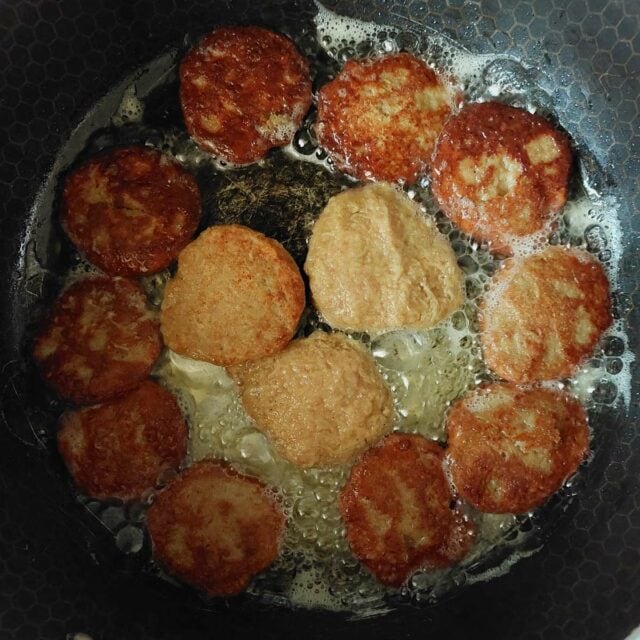
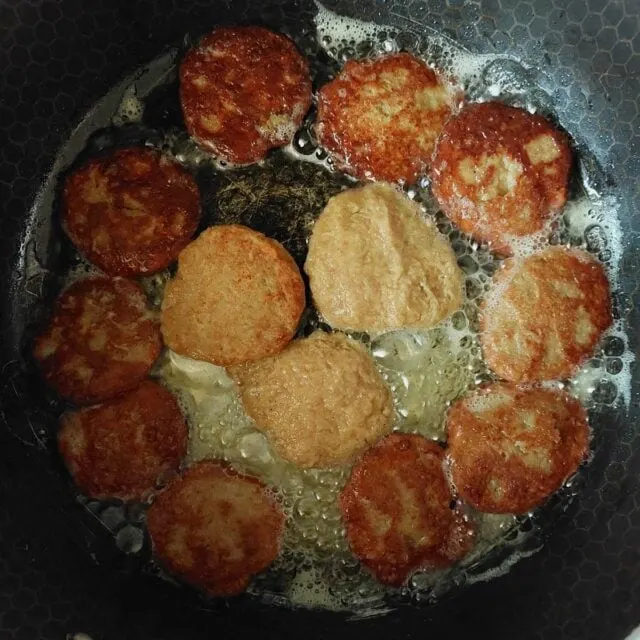
In India, meat and some pulse (usually peas or lentils) are cooked together in a large pot topped with water. Once cooked, they are blended into a smooth mixture. This mixture gets pan-fried to form the fritters.
In Iran though, we use chickpea flour instead of lentils and minced lamb meat instead of chunks of boiled chicken or lamb.
Eggs are also added to the mixture to hold everything together in the Iranian version. The Indian recipes typically don’t contain eggs in the meat mixture. Instead, the shaped meat mixture is dipped in egg before frying.
The main difference between how it is served in Iran and in other countries is that in Iran this dish is usually added to a sweet sauce that changes both its taste and its texture.
As a result, the final texture of shami kebab in Iranian recipes becomes softer, and the final taste will be a soft sweet taste.
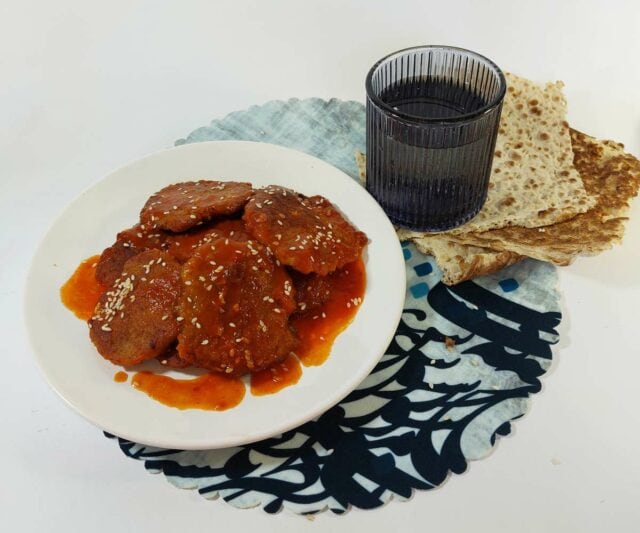
Serve Iranian shami kebab with some lavash bread for lunch or a midweek dinner!
Iranian Shami Kebab (Spiced Lamb Patties)

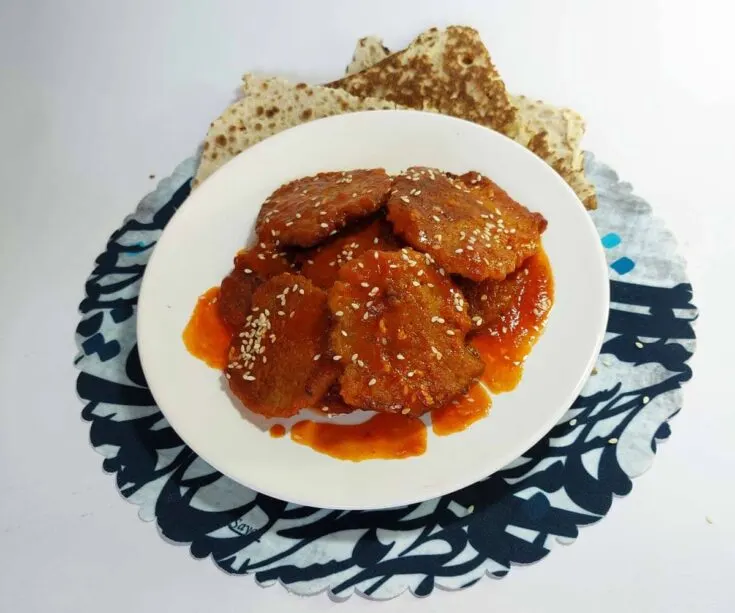
Shami kebab are spiced meat patties that are popular throughout the Indian subcontinent and beyond. This recipe shows how they are made and served in Iran.
Ingredients
For the meat patties
- 4 average potatoes, peeled (1 ¾ lbs / 800 g)
- 1 medium onion
- 2/3 lb (300 g) minced lamb meat
- 3/4 c chickpea flour (garbanzo bean flour)*
- 2 eggs
- ½ tsp salt, or to taste
- ¼ tsp turmeric, or to taste
- ¼ tsp black pepper, or to taste
- Oil for frying (about 1 inch in your pan)
For the sauce
- 1/3 c oil
- 1/4 c tomato paste
- ¼ c sugar
- 5 cups water
- 1 tsp white sesame seeds (optional)
To serve
Instructions
Make your meat mixture
- The first thing you need to do is to grate the raw, peeled potatoes. After you finished grating the potatoes, drain the excess water from the potatoes. (You don't need to squeeze them. All you need to do is to tilt the bowl to expel the excess water or use a spoon to do it. It's important to release the excess water as the mixture you need for cooking shami needs to be dense and dry.)
- Next, grate the onion. You need to throw away the excess water of the grated onion too.
- Add the drained, grated onion to the bowl that contains your grated potatoes.
- Next, add the chickpea flour. (This flour has a yellow color and a sweet nutty taste and is great for sweet baking. Its sweet taste makes it an ideal flour for this recipe.) You can buy this flour or make it yourself at home.*
- Next, add the minced lamb meat. Among all types of meat, lamb meat is the best for this dish.
- Finally add eggs, turmeric, black pepper, and salt. Knead the mixture with your hands to thoroughly mix.
Cook the shami
- Set a skillet over medium heat and add oil to cover the bottom of the pan with ¼ - ½ inch of oil. Wait for the oil to get hot (otherwise, your shami kebab will stick to the pan).
- Next, take small portions of the mixture and make small disk-shaped kotlets.
- Add the shaped kotlets to the pan (being careful not to crowd the pan) and fry until golden. Then flip to the other side and let the other side cook.
- Once both sides are golden, remove the kotlets to a paper towel-lined plate. Continue with any additional meat mixture.
Make the sauce
- Set another large skillet over low heat and add oil, tomato paste, and sugar. Mix and fry for 3-4 minutes.
- Then, add 5 cups of water to the sauce and mix until smooth.
- Finally, add the kotlet to the pan and let it cook for 5 minutes.
- (Optional) Sprinkle the top with sesame seeds.
- Serve Shami Kebabs with lavash bread and enjoy your meal.
Notes
* To make chickpea flour yourself at home, soak the chickpea for 8 hours. Then you need to drain the water. Next, place them on a large tray and let them dry in a sunny warm place. When they are 100% dry, add them to a food processor and grind them.
Nutrition Information:
Yield:
5Serving Size:
6 pattiesAmount Per Serving: Calories: 461
If you liked this recipe, here are some similar dishes you may enjoy!



Sarah founded Curious in 2010 as a way to save her recipe creations and share culinary experiences. Her love for cultural cuisines was instilled early by her French Canadian Grandmother. Her experience in the kitchen and in recipe development comes from over 10 years working in professional kitchens. She has traveled extensively and enjoys bringing the flavors of her travels back to create easy-to-make recipes.